
Solar Street Light Battery Replacement: Signs and Steps
Shinesun's editorial team writes about solar lighting based on our manufacturing, installation, and field-service experience across India.
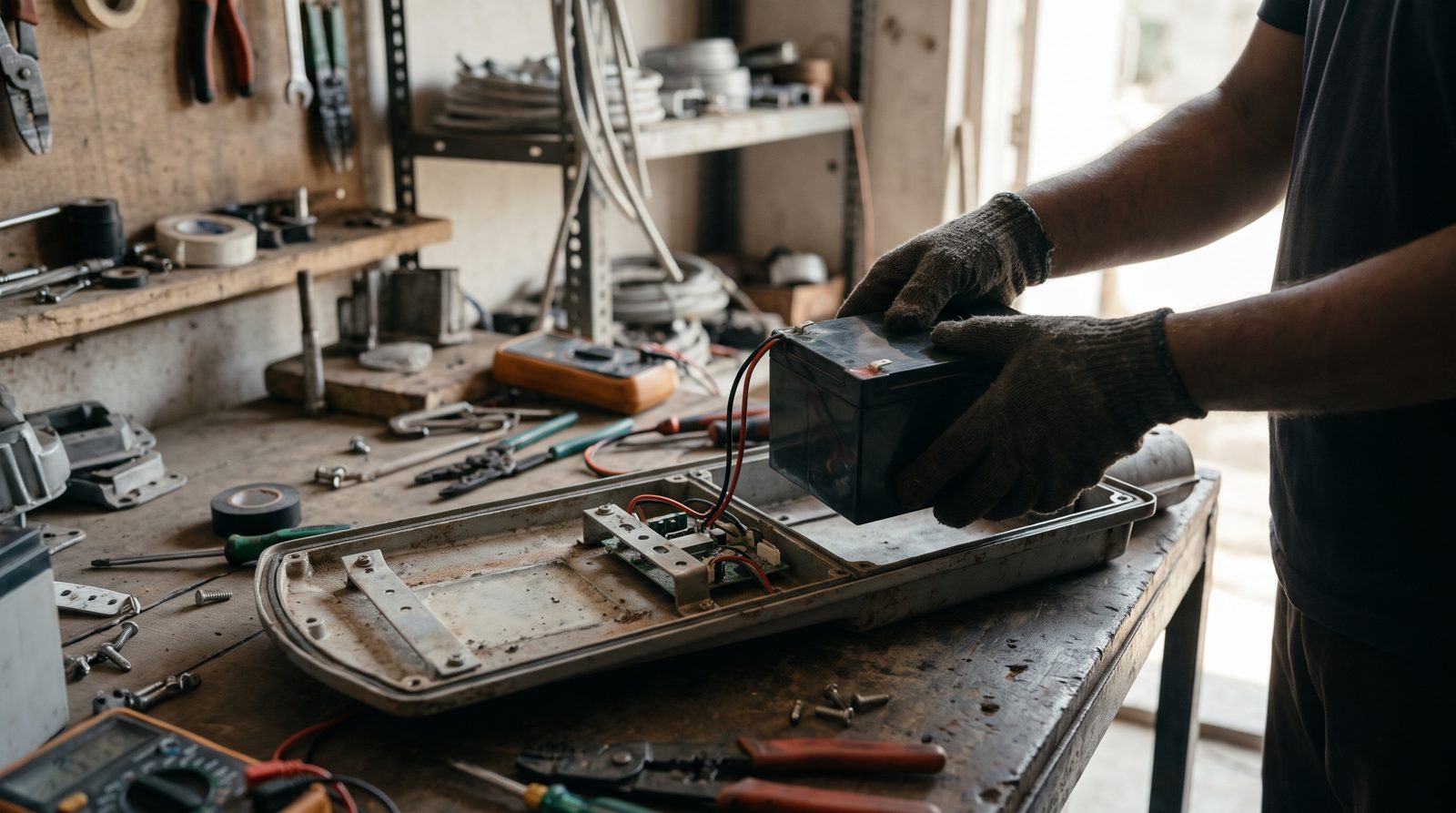
Solar street light battery replacement is due when a light with a clean, unshaded panel still runs out before dawn, or goes dark after a cloudy day it used to ride through. The battery is usually the first part to age, and a new one must match the old in chemistry, capacity and voltage.
This guide covers how to tell that the battery is the problem, how long each chemistry lasts, what a replacement has to match, and when a whole new fixture is the better buy. Most of it applies to any make of solar street light.
Signs the battery is wearing out
A battery loses capacity slowly, so the first sign is a light that switches on at dusk as usual but goes out earlier than it used to. Before blaming the battery, rule out the panel, because a dirty or shaded panel gives exactly the same symptom.
- It runs short on clear nights. If the panel is clean and in full sun and the light still fails before morning, the battery is no longer holding a full charge.
- It fails after one or two cloudy days. A healthy battery carries a reserve for poor weather. When the light goes dark after the first overcast day, that reserve has gone.
- It takes longer to recover. After a dull spell, an ageing battery needs several sunny days to get back to a full night.
- It dims early. Many controllers cut output when the battery sags, so a light that dims soon after dusk may be protecting a tired battery.
- The pack is damaged. A swollen, cracked or leaking battery is replaced, not watched.
Clean the panel and look for new shade before anything else. See how to clean the panel, and the wider checklist in why a solar light stops working.
Why the battery ages first
Every part of a solar street light works every day, but the battery is the one worn down chemically by use. It discharges each night and charges each day, and every cycle takes a small, permanent share of its capacity.
Heat speeds this up. A battery in a closed housing through an Indian summer runs warmer than the air around it, and high temperature ages most chemistries faster. The LED, the panel and a sealed controller have no comparable wear, so they usually outlast the first battery.
How long each chemistry lasts
Solar street light battery life depends mostly on chemistry, then on how deeply the battery is drained each night and how hot it runs. The table sets out the three chemistries you will meet.
| Chemistry | Typical service | Where it stands |
|---|---|---|
| LiFePO4 | 8–12 years | Current standard for street lights; thermally stable to about 60°C; low fire risk. |
| Lithium-ion | Varies by cell | Legacy for street lights; less tolerant of summer heat. |
| Lead-acid | 3–4 years | Budget and legacy; heavy; harmed by deep discharge. |
LiFePO4 suits Indian sites on both counts that matter. It stays thermally stable to about 60°C through the summer, and it carries a low fire risk. Every street light in our range, from the Bat 40W upward, uses a LiFePO4 battery for that reason.
A lead-acid light bought for a low price usually needs a new battery in its fourth year, and again a few years later. Over the life of the fixture that changes the sum a great deal. The chemistry choice is set out in LiFePO4 vs lithium-ion.
What a replacement battery must match
A replacement is not chosen by size and price. It has to suit the controller, because the controller decides how the battery is charged and when the light is cut off to protect it.
Chemistry
Replace like with like. Each chemistry charges to a different level and needs a different cut-off point, and the controller is set for one of them.
Voltage
The nominal voltage must match the original exactly. A pack of the wrong voltage either will not charge or will stress the controller and the LED driver. Our guide to solar light battery voltage explains nominal and working voltage.
Capacity
Capacity in Ah should match the original, or rise only a little. A much larger pack may never fill from the existing panel, so it sits partly charged, which wastes the extra capacity and shortens its life.
Fit and sealing
The pack has to fit the housing or battery box, use the same connector and seal properly against rain. A loose pack or a badly closed lid lets in water and dust, and the housing no longer protects what is inside.
Why changing chemistry is not plug-and-play
Moving from lead-acid to LiFePO4 is a sound upgrade in principle, but it is rarely a simple swap. A controller built for lead-acid charges to the wrong level for LiFePO4 and cuts off at the wrong point, so the new pack can be undercharged or overcharged.
Some controllers can be reset for the new chemistry; many older ones cannot, and the controller has to change too. A lithium pack also needs its own battery management system to balance the cells and guard against over-discharge. Once the pack and controller both change, the job starts to look like a new fixture.
Safety and disposal
If the fixture is still under warranty, talk to us before opening it. Treat any street light battery with care. Disconnect the panel before the battery, and reconnect the battery first, because many controllers are harmed by panel power with no battery attached. Work from proper access equipment on a 5 m pole, not a ladder leaning on it.
Do not open, puncture or short a lithium pack, and never try to charge a swollen one. Old batteries do not belong in household waste: lead-acid and lithium packs both go to an authorised recycler or a dealer who collects them. For more on lithium safety, see whether solar lights are a fire risk.
Solar street light battery replacement or a new fixture?
Replacing only the battery makes sense when the rest of the light is sound. The housing is sealed, the LED is bright, the panel is undamaged, and the controller suits a pack you can still get.
A new fixture is often the better choice in other cases. These are the ones we see most:
- Lead-acid to LiFePO4. The upgrade needs a new pack and usually a new controller, which is most of a fixture.
- Water inside the housing. Corrosion on the board or a dimmed, patchy LED will not be fixed by a battery.
- No matching parts. An old or unbranded light may have no compatible pack or controller left on the market.
- Undersized from the start. A new battery only restores a light that never lit the ground properly.
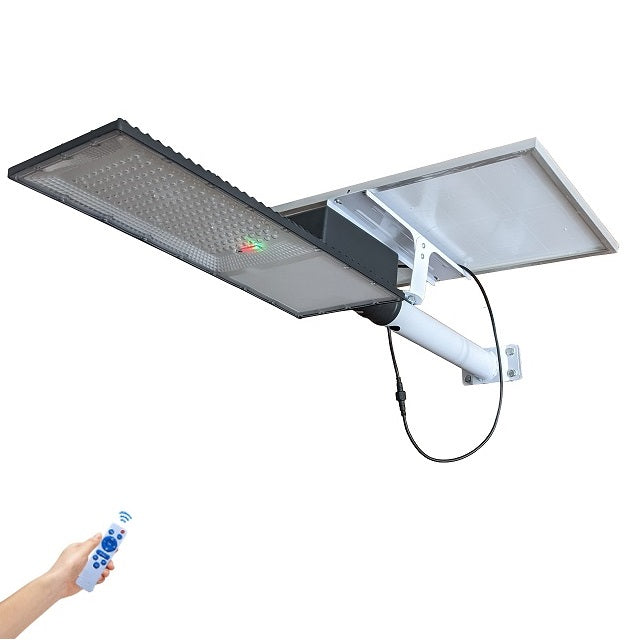
In our Bat range, each LiFePO4 pack is paired with its own panel and charged through an MPPT controller. If you are replacing tired lights across a site, start with the integrated street lights.
Ask us about a specific fixture
If a Shinesun light is running short, tell us the model and what you are seeing. We can advise whether the battery, the panel or something else is the cause, and what the options are for that fixture. The Bat range carries a 2 year warranty.
Frequently asked questions
How long does a solar street light battery last?
LiFePO4 batteries are rated for 8 to 12 years of service, and lead-acid for 3 to 4 years. Summer heat and deep nightly discharge shorten both. Every street light in our range uses LiFePO4.
How do I know my solar street light battery is failing?
The light runs out before dawn even though the panel is clean and in full sun, or it fails after one or two cloudy days. Check the panel for dirt and new shade before replacing anything.
Can I replace a lead-acid battery with LiFePO4?
Not directly. LiFePO4 needs different charge and cut-off settings, so the controller must suit it, and many older controllers cannot be reset. A new fixture with a matched pack and controller often makes more sense.
Can I fit a bigger battery for a longer night?
Only slightly bigger. The panel must be able to fill the larger pack, or it sits partly charged and ages faster. Chemistry and voltage must stay the same as the original.
How should an old solar light battery be disposed of?
Not in household waste. Take lead-acid and lithium packs to an authorised recycler or a dealer who collects them. Never puncture, open or try to charge a swollen lithium pack.
Talk to the people who build them
Shinesun manufactures solar street, flood, garden, pathway and gate lighting in Bangalore and supplies across India. Everything is quoted against the site rather than sold from a cart, because the right fixture depends on where it is mounted and what the ground is used for. Browse the street light range or tell us about the site.
Shinesun Solar Street Lights
See the full range ›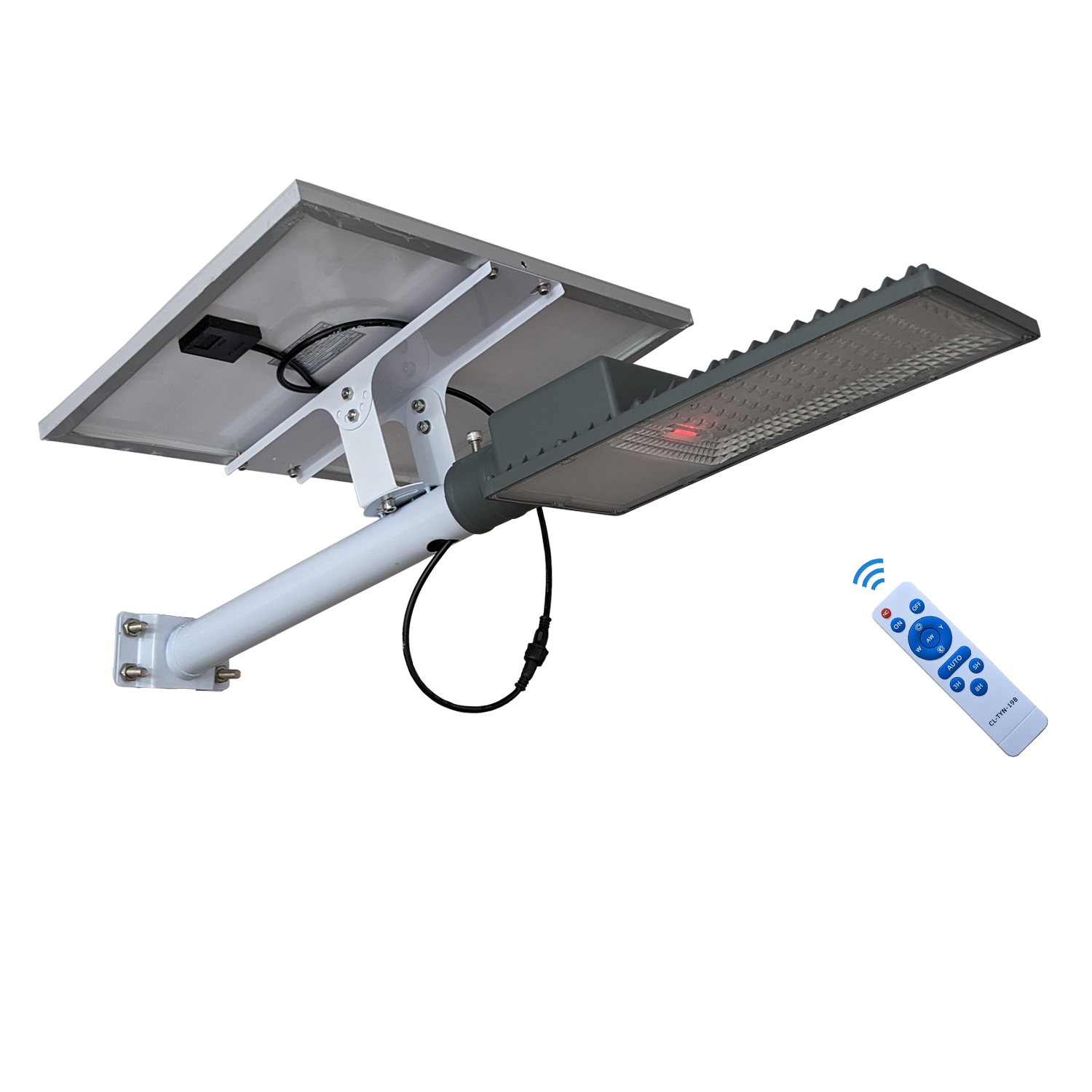
Related reading
Why Solar Street Lights Fail, and How to Prevent It
Solar street lights on shared roads usually go dark because of choices made at tender and handover. The real causes, and how to specify and run a proj...
Read more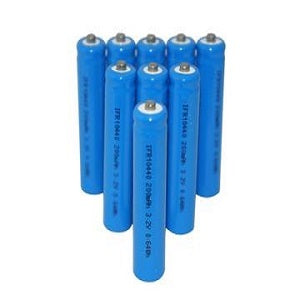
LiFePO4 vs Lithium-Ion in Solar Street Lights: Which and Why
LiFePO4 and lithium-ion get used as if one were simply the better version of the other. They are different chemistries with different jobs, and the ri...
Read more
How Many Solar Street Lights Do I Need? Worked Examples
Divide the length to be lit by a pole spacing of 12 to 15 m and add one pole. Worked counts for a driveway, a 150 m road, wider roads, a compound peri...
Read more