
LiFePO4 vs Lithium-Ion in Solar Street Lights: Which and Why
Shinesun's editorial team writes about solar lighting based on our manufacturing, installation, and field-service experience across India.
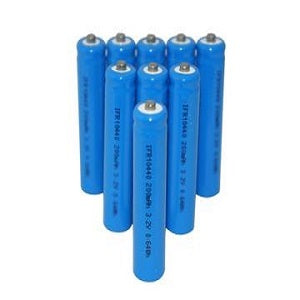
The battery decides almost everything about a solar light: how many years it lasts, how it behaves in a Bangalore May, how it fails, and what fraction of the price you are actually paying for. Two chemistries dominate the market and they are routinely presented as if one were a premium version of the other. They are not. They are different materials with different strengths, and the sensible choice changes with the fixture.
The short version
- LiFePO4 (lithium iron phosphate) — long service life, very stable in heat, benign failure behaviour, heavier and bulkier per unit of energy. The right choice for pole-mounted street lights.
- Lithium-ion (typically NMC or similar) — more energy in less space and weight, shorter service life, more sensitive to heat. The right choice for compact accent fixtures where size is the binding constraint.
- Lead-acid — cheap, heavy, three to four years. Still shipped in budget imports, and the reason some quotes look impossibly good.
Service life is the real difference
LiFePO4 tolerates far more charge and discharge cycles than lithium-ion before its usable capacity drops. In a solar light that matters more than in almost any other application, because the battery is cycled every single day — charged through daylight, drained through the night, with no rest days. A chemistry that manages two thousand cycles gracefully and one that manages several hundred will diverge quickly on that duty.
In practice we specify LiFePO4 in street lighting for 8 to 12 years of service, and the LED and housing typically outlast it. A compact lithium-ion fixture on the same daily cycle is a 4 to 6 year product. Neither figure is a defect; they are different tools.
Set that against the alternative. A lead-acid fixture needs its battery replaced in three to four years, which means two or three replacements — plus the labour of getting to a pole top — inside the life of one LiFePO4 unit. The cheaper quote stops being cheaper somewhere in year four.
Heat, which is the Indian variable
A sealed fixture on a pole in open sun is a hot place. Ambient temperature is the least of it; the housing sits in direct radiation all day with no shade and limited airflow.
This is where LiFePO4 earns its place. It is thermally stable across a much wider band and degrades far more slowly at sustained high temperature. Lithium-ion loses capacity measurably faster when it is held hot, which is precisely the condition an Indian summer creates for months at a time. A specification that looks equivalent in a datasheet written for a temperate market does not stay equivalent here.
This is also why a compact gate or pillar light can reasonably use lithium-ion: it is small, often mounted where it catches shade for part of the day, and it is not being asked to deliver street-light output. The thermal duty is genuinely lighter.
Fire behaviour
Since the run of electric two-wheeler and inverter battery fires from 2022 onwards, this is a question buyers actually ask, and it deserves a straight answer rather than reassurance.
Lithium iron phosphate is the more chemically stable of the two. Its phosphate cathode does not release oxygen the way common lithium-ion cathode materials can when a cell is driven into thermal runaway, so a LiFePO4 cell that fails tends to vent and stop rather than propagate. That is a genuine, material difference, and it is one of the reasons the chemistry became standard in stationary storage and outdoor lighting.
It is not a licence to be careless. Any lithium chemistry needs a proper battery management system, correct charge control and a sealed housing. What the chemistry buys you is a wider margin when something does go wrong — which, on a fixture bolted five metres up a pole in a residential lane, is the margin that matters. We cover this further in are solar lights a fire risk.
Size and weight, the honest trade-off
LiFePO4 stores less energy per kilogram and per litre than lithium-ion. For a street light that is close to irrelevant — the fixture is already a substantial object on a substantial pole, and a slightly larger battery compartment costs nothing that anyone notices.
For a pillar-top light the size of a lantern, it is the whole problem. Fitting LiFePO4 into that envelope means either a much larger fixture or a much smaller battery, and neither serves the buyer. This is the entire reason our Volcano series gate lights use lithium-ion while the street range uses LiFePO4. It is a fit-for-purpose decision, and we would rather explain it than quietly imply every fixture uses the same cell.
What to ask a supplier
Most specification sheets in this market state a voltage and a capacity in amp-hours and stop there. That is not enough to compare anything. Ask for:
- The chemistry, named. "Lithium" is not an answer — LiFePO4 and lithium-ion are both lithium.
- Capacity in watt-hours, or the voltage alongside the amp-hours. Amp-hours without voltage cannot be compared between fixtures. Solar light battery voltage explains why.
- Expected service life in years, and whether that assumes daily full cycling.
- Whether the battery is replaceable, and at what cost. On an eight-year fixture this is a real question.
A supplier who will not name the chemistry is telling you something. Related reading: types of batteries used for solar storage and lithium-ion batteries in solar street lights.
Frequently asked questions
Is LiFePO4 better than lithium-ion?
For a pole-mounted street light, yes — it lasts far longer under daily cycling, holds up better in sustained heat, and fails more safely. For a compact gate or pillar light where the battery has to fit inside a small housing, lithium-ion is the better engineering answer. Neither is universally superior; they suit different fixtures.
How long does a LiFePO4 solar street light battery last?
We specify 8 to 12 years of service life. That assumes daily cycling in Indian conditions, which is the actual duty a solar light sees. The LED and the housing normally outlast the battery, so this figure effectively sets the life of the fixture.
Are LiFePO4 batteries safer than lithium-ion?
They are more thermally stable. The phosphate cathode does not release oxygen the way common lithium-ion cathodes can during thermal runaway, so a failing cell tends to vent and stop rather than escalate. Every lithium chemistry still needs proper charge management and a sealed housing — the chemistry widens the safety margin rather than removing the need for good design.
Why do some solar lights still use lead-acid?
Cost. Lead-acid is much cheaper at the point of sale and is still fitted to budget imports. It lasts three to four years against LiFePO4's eight to twelve, so across the life of one good fixture you would replace it two or three times — including the labour of reaching a pole top each time.
Can I tell which battery a fixture uses from the price?
Not reliably, but price tracks battery capacity and panel size much more closely than it tracks LED wattage. Two fixtures advertised at the same watts can differ substantially in price, and the difference is usually in the cell and the panel. Ask for the chemistry by name and the capacity in watt-hours.
Talk to the people who build them
Shinesun manufactures solar street, flood, garden and gate lighting in Bangalore and supplies across India. Everything is quoted against the site rather than sold from a cart, because the right fixture depends on the mounting height, the spacing and what the ground is being used for. Send us the layout and we will size it. Browse the solar street light range or tell us about the site.
Shinesun Solar Street Lights
See the full range ›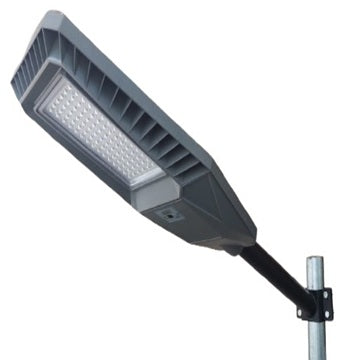
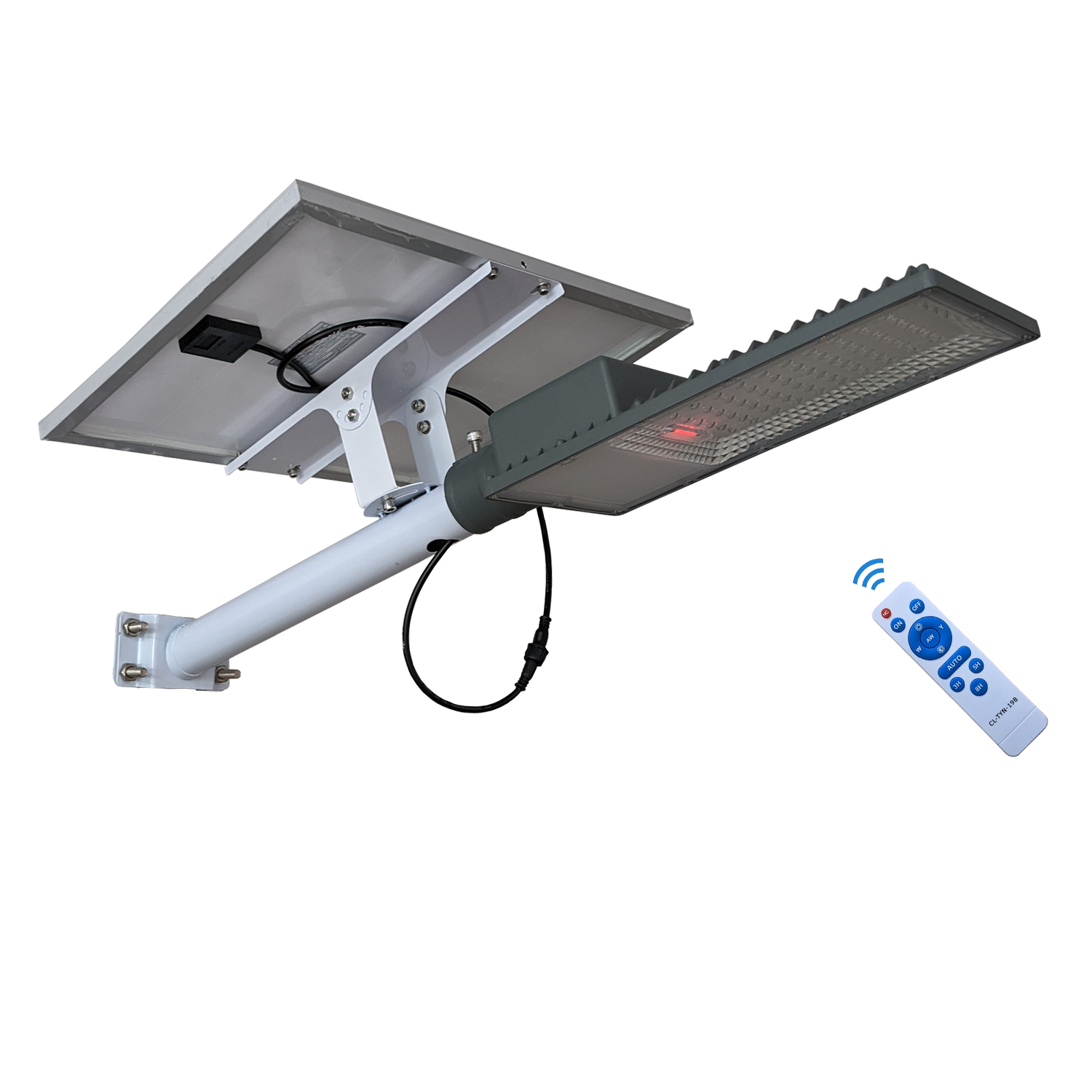
Related reading
How Many Watts of Solar Street Light Do You Need?
Wattage is the number everyone quotes and the worst one to start from. Mounting height and spacing decide the answer, and getting those wrong is behin...
Read more
Lithium-Ion Batteries for Solar Street Lights (2026)
Over the last decade, lithium has been proven to be an extremely reliable and dominant energy storage technology. Lithium batteries are widely used i...
Read more
Why LiFePO4 Beats Li-Ion and Lead-Acid in Solar Street Lights (2026)
Despite India’s rapid growth, many parts of rural India have less or no access to electricity. This decreases total productive working hours since peo...
Read more