
All in One Solar Street Light
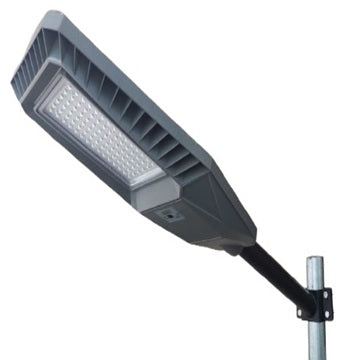
About All in One Solar Street Light
An all-in-one solar street light puts the solar panel, battery, LED and controller inside a single sealed housing that mounts at the top of the pole. There is no separate panel bracket, no battery box at ground level and no external cabling between components. For most buyers that is the deciding factor: installation takes hours rather than days, there is nothing at ground level to steal, and there are far fewer joints for monsoon water to find.
Our all-in-one fixture is the 100 W Owl, with a motion sensor, a LiFePO4 battery and an IP65 housing, at ₹4,499. The sub-40 W all-in-one fixtures were withdrawn in 2026. Where a site needs more output or a separately angled panel, the integrated range runs to 150 W.
Shinesun manufactures and supplies all-in-one solar LED street lights from Bangalore to sites across India — single fixtures through to project quantities for societies, panchayats, factories and contractors.
How to choose the right all-in-one fixture
Solar street light pole height and wattage
The single most common specification error is choosing wattage by budget rather than by pole height. A fixture that is underpowered for its pole leaves dark patches between poles; one that is overpowered wastes money and creates glare. Start from the pole.
| Pole height | Typical wattage | Pole spacing | Typical application |
|---|---|---|---|
| 5 m | 40 W | 12–15 m | Pathways, compounds, parking, society internal roads |
| 5 m | 75–100 W | 15 m | Driveways, approach roads, security points |
| 6–7 m | 150 W | 15 m | Main roads, industrial compounds, large open ground |
Spacing of roughly three to four times the pole height gives even coverage without dark gaps. If your poles are already installed at a fixed spacing, work backwards: measure the spacing, divide by four, and that is the minimum pole height the layout needs to work with.
What is inside a quality all-in-one fixture
Battery — LiFePO4, and check the Ah
Every fixture in this range uses a LiFePO4 (lithium iron phosphate) battery. This matters in Indian conditions: LiFePO4 tolerates the heat inside a sealed pole-top housing far better than lithium-ion, carries a much lower fire risk, and typically lasts 8 to 12 years against 3 to 4 for lead-acid. Battery capacity tracks fixture wattage, and the Ah figure is the number worth asking for on any quote — an impressive LED on an undersized battery is bright until midnight and dark by 3 am.
Ask for the Ah figure, not just the chemistry. Two fixtures sold at the same wattage can carry very different batteries, and the battery is what determines whether the light still works on the fourth cloudy day.
Motion sensor — the reason runtime doubles
Most fixtures in this range include a motion sensor — the individual product page states whether a given model does. Where one is fitted, the fixture runs at a dimmed baseline through the night and ramps to full output when someone approaches, returning to dim after a hold period. In practice this roughly doubles the useful battery hours compared with running at full output all night, because most outdoor locations are empty for most of the night.
For a society road or a factory compound this is close to free capacity. For a main road with continuous traffic the sensor will hold at full output most of the night, so size the battery as though the sensor were not there.
Housing and IP rating
These fixtures carry IP65 housings — dust-tight and protected against water jets from any direction. IP65 is the practical minimum for outdoor mounting in India. For coastal installations, or sites that see driven monsoon rain rather than vertical rain, specify IP66 where it is available and check that the gasket and gland are rated to match.
Solar panel and charging
In an all-in-one fixture the panel is integrated into the top face of the housing, which caps its area. That is the trade-off you accept for the simpler installation. It also means orientation matters more than with a split fixture: the pole-top must sit clear of tree cover and building shadow through the middle of the day, because you cannot tilt the panel independently to compensate.
Price ranges in India (2026)
Our all-in-one fixture is the 100 W Owl at ₹4,499, mounted at 5 m. Across the Indian market, all-in-one fixtures fall roughly into these bands. They are described by the job the ground is doing rather than by pole height, because mounting height for a solar fixture should stay near 5 m whatever the wattage:
- ₹3,000–4,500 — compact fixtures for pathways, compounds and parking areas.
- ₹4,500–6,000 — mid-output fixtures for society internal roads and driveways.
- ₹6,000–7,500 — high-output fixtures for residential streets, approach roads and industrial compounds.
Fixtures priced well below these bands almost always cut the battery first, because it is the most expensive component and the hardest for a buyer to verify. A cheaper fixture with a smaller battery works through its first dry month and then fails on the first sustained cloudy week. Ask for the Ah figure and the chemistry in writing before comparing prices.
Installation overview
All-in-one fixtures are the fastest outdoor lighting to install, because there is no wiring between components and no connection to the grid at all.
- Excavate and cast the foundation with anchor bolts, then allow the concrete to cure. This is the long step — typically 7 to 14 days — and it dominates the project schedule.
- Erect the pole and check it is plumb. Confirm the pole-top has clear sky through the middle of the day.
- Mount the fixture on the pole-top bracket and tighten to the specified torque.
- Earth the pole. For 8 m and taller poles, or exposed sites, consider a surge protection device.
- Commission at dusk and confirm the light switches on automatically and the motion sensor triggers.
Once the foundation has cured, a competent two-person team will complete several poles a day. No electrician, no DISCOM approval and no trenching are required.
Solar street lights for government schemes and society projects
A large share of solar street lighting in India is bought through a scheme or a committee rather than by an individual. The buying process differs from a retail purchase in three ways worth planning around.
Central and state schemes. Central support for off-grid solar street lighting has run through MNRE programmes, with state nodal agencies administering their own allocations alongside them. Terms, subsidy levels and eligibility vary by state and change between financial years, so confirm current wording with your state nodal agency rather than relying on a supplier summary — including ours. Note also that the PM Surya Ghar Muft Bijli Yojana applies to grid-connected rooftop solar, not to off-grid street lighting, and is a common source of confusion.
Panchayat and municipal procurement. These purchases usually run through a tender with a written technical specification. If you are drafting one, the four clauses that most affect what you actually receive are battery chemistry and capacity in Ah, LED system lumens, IP rating, and warranty period with exclusions stated. A specification that names only wattage invites the cheapest possible battery.
Housing societies and RWAs. Committees typically need a written proposal covering pole count, spacing, expected coverage and total cost before approving spend. Send us the site layout and we will provide that as a document you can circulate, rather than a bare price list.
Standards and compliance
For government and institutional procurement, check the tender wording carefully before ordering. ALMM (Approved List of Models and Manufacturers) listing is a common requirement for government-funded solar procurement, and where the tender specifies it, it is not optional. For private commercial and residential buyers ALMM is not required, though it remains a useful quality filter.
Whatever the buyer, insist that the quotation states the IP rating, the battery chemistry and capacity in Ah, the LED system lumens (not chip lumens), and the warranty period with what it covers. A supplier who will not put those four things in writing is telling you something.
What installation actually costs
The all-in-one format exists to make this number small, so it is worth being specific about where the money goes.
The fixture is a single bracket at the pole top. One person, minutes, no tools beyond a spanner.
The pole and foundation dominate. Excavation, concrete, anchor bolts and a 7 to 14 day cure. On a site with poles already standing, this disappears entirely and an all-in-one retrofit is genuinely a same-day job.
What is absent is the part that costs money on a grid installation: no trenching between poles, no cabling, no electrician, no DISCOM approval, no meter. On a road with no existing supply, that is the entire economic case, and it is usually larger than the difference in fixture price.
The comparison worth running is not solar fixture against grid fixture. It is solar fixture and foundation against grid fixture, foundation, trench, cable, connection and however many years of metered supply the project is expected to last.
Related collections
- Solar street lights — the full street lighting range, including split-panel fixtures.
- Integrated solar street lights — higher-capacity fixtures with MPPT controllers for main roads.
- Solar flood lights — for yards, facades and area lighting rather than roads.
Frequently asked questions
How does an all-in-one solar street light work?
The panel on the top face charges the battery through the day. At dusk a light sensor switches the LED on automatically, and the battery runs it through the night. Where a motion sensor is fitted, the fixture holds a dimmed level and ramps to full output when movement is detected. There is no mains connection and no switch to operate — it runs unattended once commissioned.
How much does an all-in-one solar street light cost?
Our 100 W Owl is ₹4,499. Larger or more demanding sites are quoted against the layout, and the integrated range runs to 150 W. Poles, foundations and installation are quoted separately, since they depend on site conditions.
Does the price include the pole?
No. The listed price is for the fixture. Poles vary by height, material and foundation requirement, and are usually sourced locally to the site, so they are quoted against your layout rather than bundled.
What battery do these solar street lights use?
All fixtures in this range use LiFePO4. LiFePO4 is the right chemistry for a sealed pole-top housing in Indian conditions: it tolerates heat far better than lithium-ion, carries a lower fire risk, and typically lasts 8 to 12 years.
What is the difference between all-in-one and integrated solar street lights?
All-in-one fixtures house the panel, battery, LED and controller in a single sealed unit at the pole top. Integrated fixtures separate the panel, which allows a larger panel and a bigger battery, usually with an MPPT controller. All-in-one wins on installation speed and theft resistance; integrated wins on capacity for wider roads.
How long do they run at night?
A correctly sized fixture runs a full Indian night, around 12 hours. With the motion sensor active, the useful battery hours roughly double because the fixture dims when nothing is around.
Do they work through the monsoon?
Panels still produce roughly 20 to 40 per cent of their rated output under heavy cloud, and these fixtures carry two to three days of battery autonomy. The practical risk in a long monsoon is an undersized battery, not the rain itself — which is why the Ah figure matters more than the headline wattage.
What maintenance do they need?
Clean the panel face every two to three months — dust is the largest single cause of reduced output in India — and inspect visually once a year. Expect to replace the LiFePO4 battery at around year 8 to 10.
Can they be installed on existing poles?
Usually yes, provided the pole is structurally sound and the top bracket matches. Check the pole-top diameter against the mounting bracket, and confirm the location has clear midday sun.
Need help specifying?
For quantities above about twenty fixtures, send us the pole height, the existing or planned spacing, and the road width. We will confirm the wattage and battery capacity the layout needs before you order, rather than after.
As all-in-one solar street light manufacturers based in Bangalore, we supply across India and can provide written technical specifications for tender and committee documentation.