
Integrated Solar Street Light
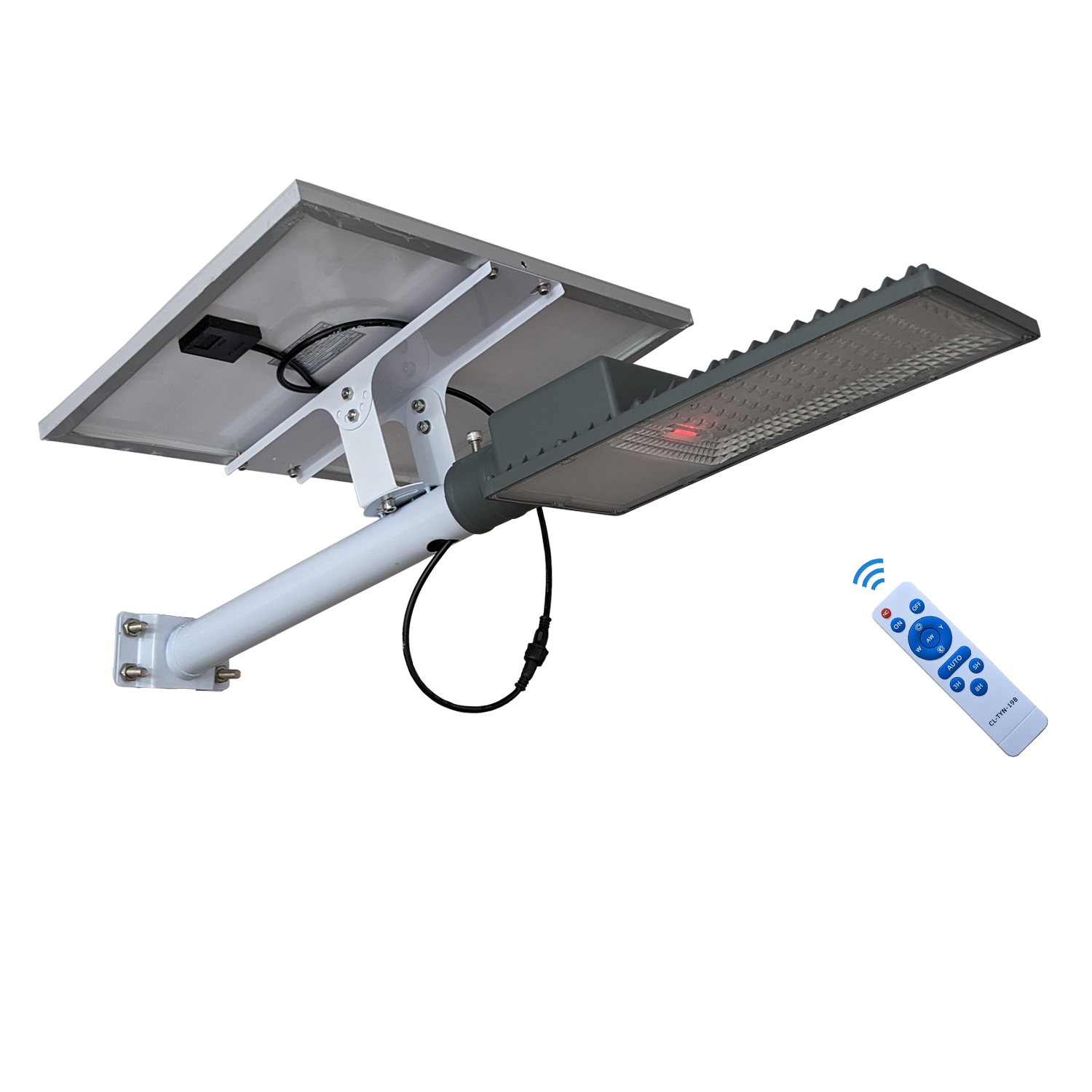 20% off
Solar Bat Street Light 75 Watt - TTBAT75W
Save ₹2,249
 20% off
Solar Bat Street Light 40 Watt - TTBAT40W
Save ₹1,801
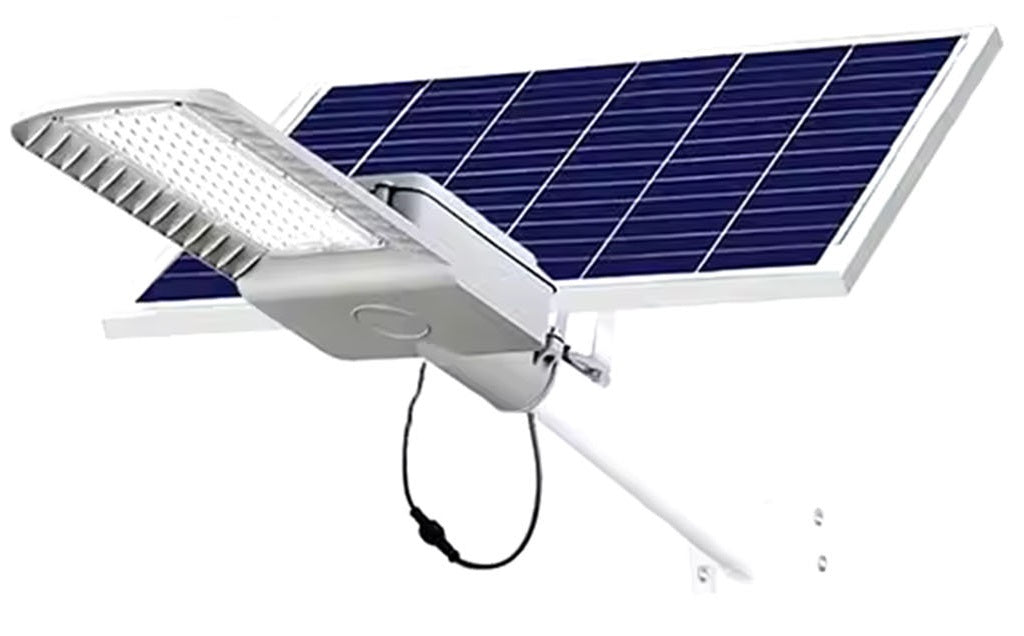 20% off
Solar Bat Street Light 150 Watt - TTBAT150W
Save ₹3,700
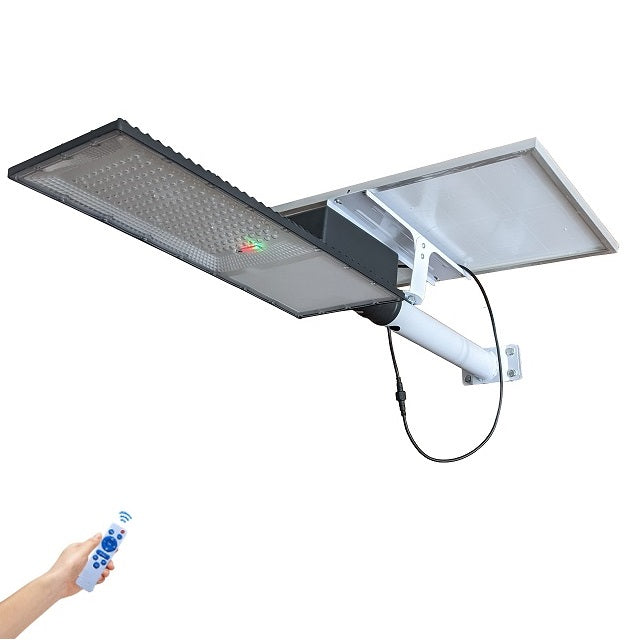 23% off
Solar Bat Street Light 90 Watt - TTBAT90W
Save ₹3,499
About Integrated Solar Street Light
An integrated solar street light separates the solar panel from the light head, mounting the panel on its own bracket while the battery and LED sit in the fixture. That one difference — a panel that is not limited to the top face of the housing — is what lets these fixtures carry far larger batteries and light wider roads than an all-in-one unit of the same nominal wattage.
This range runs from 40W to 150W on LiFePO4 batteries, with MPPT controllers on fixtures above 30 W. Prices run from ₹6,999 for the 40 W to ₹25,599 for the Nightjars 80 W with MPPT. The sub-40 W fixtures were withdrawn in 2026. Shinesun manufactures and supplies integrated solar street lights from Bangalore across India.
Integrated or all-in-one?
This is the decision most buyers actually face, and it is not a question of quality — both are made to the same standard. It is a question of site.
| All-in-one | Integrated | |
|---|---|---|
| Panel | Built into the housing | Separate, independently angled |
| Battery | 10–24 Ah typical | 10–160 Ah |
| Installation | Hours, one bracket | Longer, two mounting points |
| Theft exposure | Low, sealed at pole top | Higher, panel is separate |
| Shaded sites | Poor — panel cannot be moved | Good — panel can be aimed at sun |
| Best for | Paths, compounds, society roads | Main roads, wide roads, monsoon-critical sites |
Put simply: choose all-in-one for speed and security on ordinary roads, and integrated where the road is wide, the site is partly shaded, or the light must not fail in a long monsoon.
Sizing by pole height
| Mounting height | Fixtures | Pole spacing | Application |
|---|---|---|---|
| 5 m | 40–100 W | 12–15 m | Society roads, residential streets, parking, main roads |
| 6–7 m | 150 W | 18–21 m | Industrial yards and large open areas |
Pole spacing means pole to pole, measured along the road, at about three times the mounting height.
Textbooks often quote three to four times the mounting height, and that figure comes from conventional grid-powered street lights, which produce far more light per watt than any solar fixture. A 40 W grid LED puts out four to six thousand lumens; a 40 W solar fixture is nearer sixteen hundred, because everything it produces overnight has to be collected by its own panel that day. Stretch a solar fixture to four times its mounting height and the average illuminance falls below what a residential road needs, with the dark patch appearing midway between poles. Three times is the honest number for solar.
The exception runs the other way. The highest-output fixtures in this range are comfortably bright at 12 to 15 m, and on a narrow road they can be spaced wider. If you are lighting a long run and want the pole count minimised, send us the road width and we will work it out rather than have you buy poles you do not need.
Most of this range is designed around a 5 m mounting height, which is the practical standard for society roads and residential streets in India. Output within that band is chosen by road width and by how far apart the poles have to sit, not by raising the pole: a 100 W fixture at 5 m covers a wider carriageway than a 40 W at the same height and spacing. The 150 W is the exception, mounted higher because its job is to flood an open yard rather than to light a strip of road.
Treat these figures as the basis for a quotation, not as a lighting design. Actual spacing depends on lamp output, mounting height and road width together, and a tender that specifies lux levels needs those numbers calculated rather than estimated from a ratio.
Why MPPT matters on the larger fixtures
A charge controller manages power from panel to battery. The simpler PWM type effectively discards the voltage difference between panel and battery. An MPPT controller converts that surplus voltage into charging current instead, extracting roughly 20 to 30 per cent more energy in cloudy and marginal conditions — precisely the conditions that decide whether a light survives a monsoon week.
On a small fixture the difference is not worth the cost. Above about 30W, and anywhere with a real monsoon, it is. Our Nightjars and higher Bat series fixtures use MPPT for that reason.
Battery capacity is what you are buying
The spread in this range is wide — 10Ah at the compact end, 160Ah on the 80W Nightjars fixture — and it explains most of the price difference. Ah capacity determines autonomy: how many consecutive poor-weather days the fixture keeps working. Two fixtures of identical wattage and lumens can differ by a factor of ten in battery, and only one of them is still lighting the road on the fourth cloudy night.
When comparing quotations, put the Ah figures side by side before the wattages. It is the fastest way to see which supplier has cut the expensive component.
Price in India (2026)
- ₹6,999–11,500 — 40 W to 90 W fixtures for society roads, compounds and driveways.
- ₹14,499 — the 150 W, at a 6–7 m mounting height, for wide roads, industrial yards and large open ground.
- Quoted on request — MPPT fixtures for shaded or monsoon-critical sites, where harvest matters more than headline wattage.
Installation overview
- Cast the foundation with anchor bolts and allow it to cure, typically 7 to 14 days.
- Erect the pole and check it is plumb.
- Mount the light head, then the panel bracket. Face the panel south and tilt it roughly to your latitude.
- Connect the panel to the controller and the controller to the battery, in that order.
- Earth the pole. Fit surge protection on 8 m and taller poles or exposed sites.
- Commission at dusk and confirm automatic switch-on.
Standards and procurement
For government-funded projects, check whether the tender requires ALMM listing — where it is specified it is not optional. Whatever the buyer, insist the quotation states battery chemistry and Ah, LED system lumens, controller type, IP rating and warranty with exclusions. See also our notes on government schemes and society projects.
What installation actually costs
An integrated fixture takes longer to install than an all-in-one, because the panel mounts separately, and it is worth knowing where that time goes.
Foundation and pole are the same as any pole-mounted fixture: excavate, cast with anchor bolts, cure for 7 to 14 days, erect and plumb. This dominates the schedule.
The extra step is the panel bracket and the run between panel and controller. Budget an additional half hour per pole against an all-in-one, and keep the cable short — voltage drop over a long thin run costs charging current and is a common avoidable loss.
What that buys is the ability to put the panel where the sun is rather than where the light is needed. On a road under tree cover, or a compound wall shaded until midday, that flexibility is the difference between a fixture that works and one that disappoints. It is the main reason to choose integrated over all-in-one, and it does not show up on a specification sheet.
As with any solar installation, there is no trenching between poles, no cabling to a supply, no electrician and no metered connection.
Related collections
- All in one solar street lights — sealed single-unit fixtures.
- Solar street lights — the complete street lighting range.
- Solar panels — replacement and add-on panels.
Frequently asked questions
What is an integrated solar street light?
A fixture where the LED, battery and controller sit in the light head while the solar panel mounts separately on its own bracket. Separating the panel allows a larger panel and a much larger battery than an all-in-one unit can carry.
Is MPPT worth paying for?
Above about 30W, and anywhere with a real monsoon, yes. MPPT extracts roughly 20 to 30 per cent more energy than PWM in cloudy conditions. Below 30W the gain rarely justifies the cost.
How many cloudy days will it keep working?
That is set by battery capacity rather than wattage. Fixtures in this range carry 10Ah to 160Ah; the larger the battery relative to the LED load, the longer the autonomy. Ask for autonomy in days at a stated depth of discharge.
Can the panel be mounted away from the pole?
Within cable reach, yes — that flexibility is the main reason to choose integrated over all-in-one on a shaded site. Keep the run short, since voltage drop over a long thin cable costs charging current.
Specifying a project?
Send us the pole heights, spacing and road width. We will confirm wattage, battery capacity and controller type before you order, and provide a written technical specification for tender or committee documentation.