
Solar Gate Lights
Shinesun's solar gate lights are compact, wireless, entry-point fixtures — no cabling, no electricity bill, PIR motion sensor as standard. The Volcano series and other compact gate-mount lights deliver 24/7 entry illumination with Li-Ion batteries appropriate for the small form factor. Compare fixtures below, or scroll past for the full 2026 buying guide.
 25% off
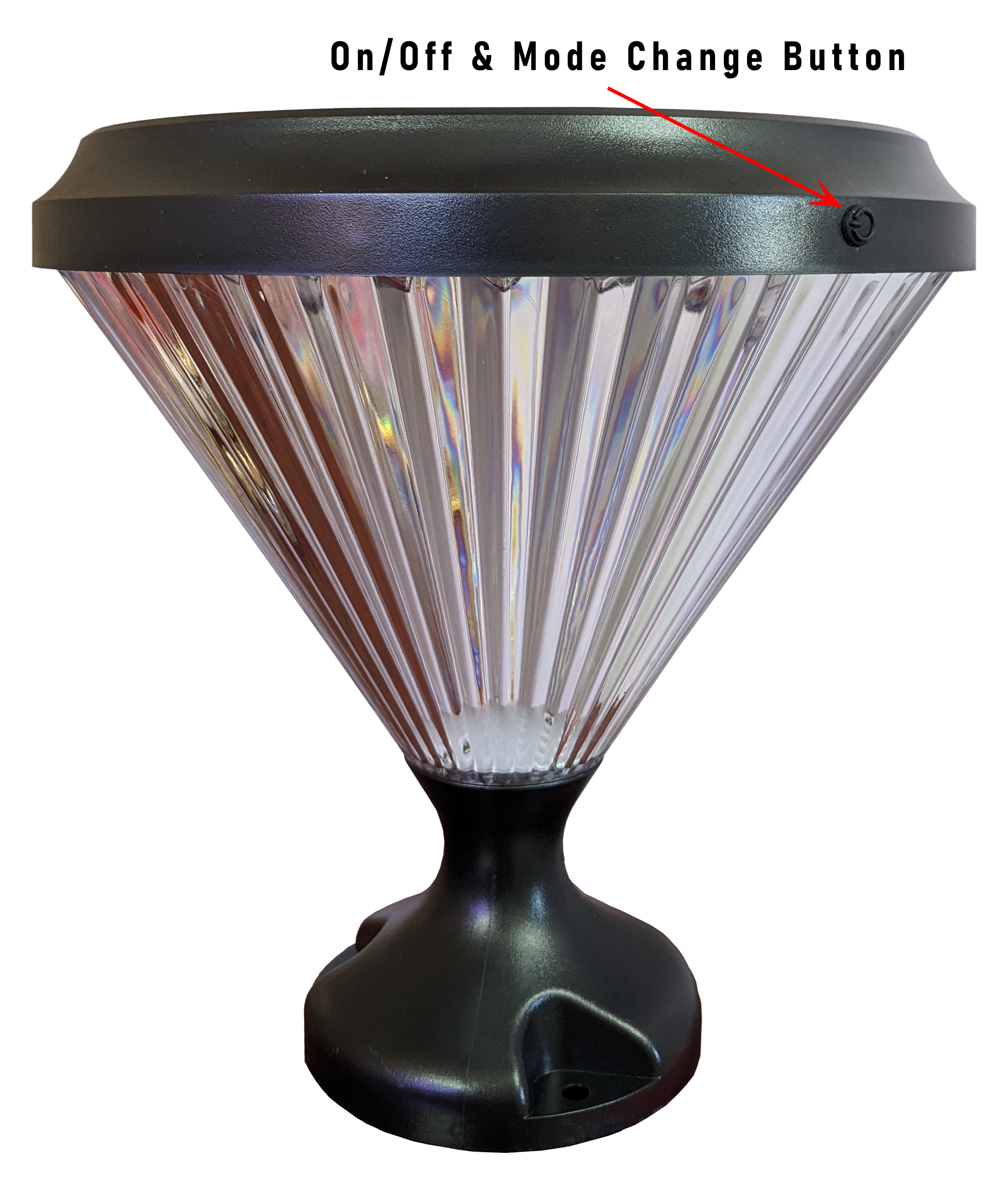
Solar Opal Pillar Light 18 Watt Warm White - TSOPL18W
Save ₹1,500
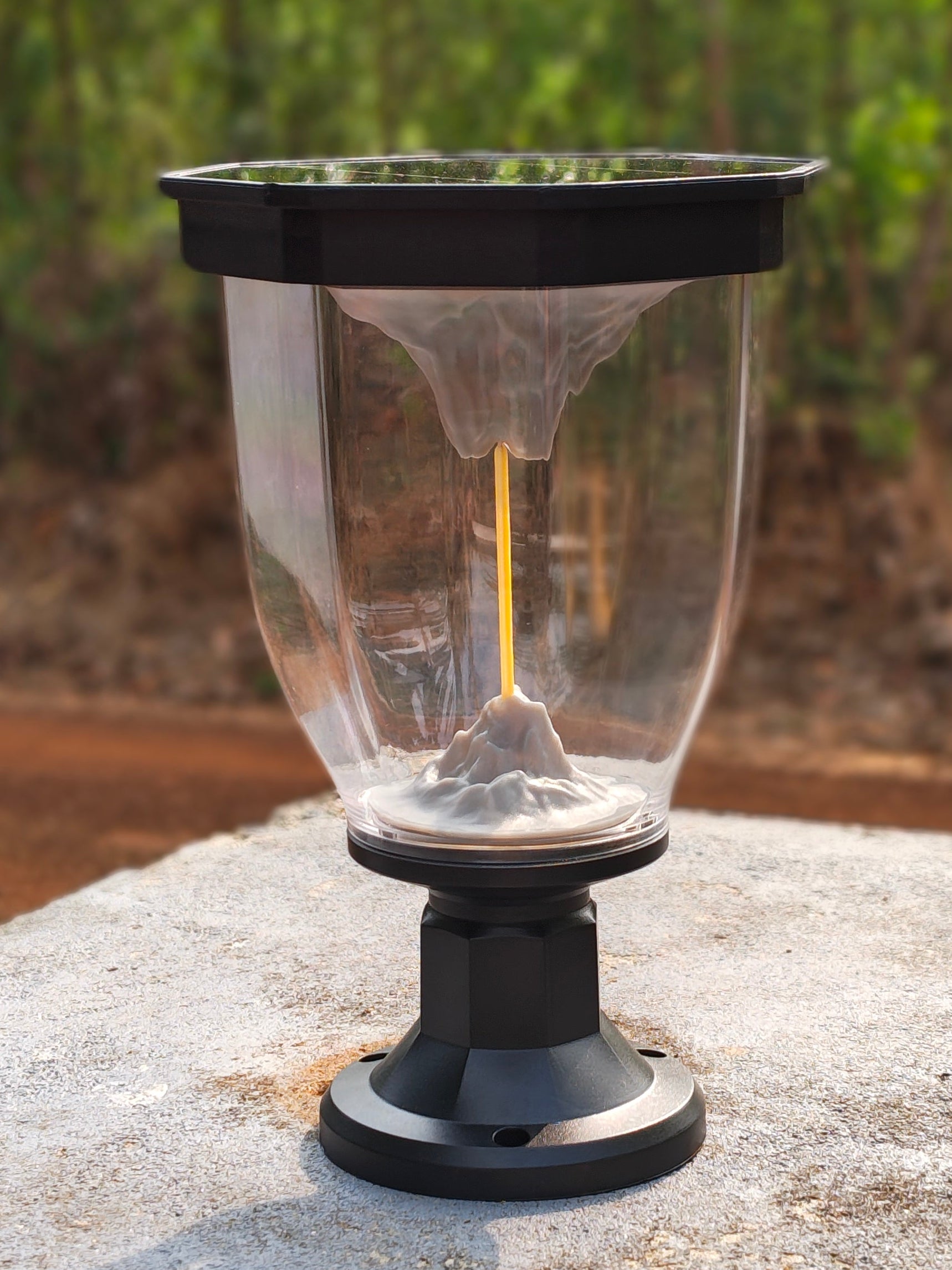
Volcano Series Solar Gate Pillar Light (Warm White, IP65 Waterproof)
About Solar Gate Lights
Solar gate lights are compact, wireless fixtures designed to illuminate residential and commercial entry points without any wiring back to the house or main electrical board. Shinesun's gate light range — including the Volcano series — combines a small monocrystalline panel, a Li-Ion battery sized for the compact form factor, a PIR motion sensor, and an IP65+ housing into a fixture that mounts to a gate pillar, compound wall, or post in under an hour.
Each gate light operates fully independently of the grid: it charges by day from ambient sun, switches on automatically at dusk via LDR sensor, and ramps to full brightness on motion detection. There's no electricity bill, no cabling cost, and no DISCOM coordination — and the fixtures keep working through power cuts, which matters most exactly when visible entry lighting matters most.
When solar gate lights are the right choice
Solar gate lights fit specific applications particularly well:
- Residential main gate — single fixture per pillar, motion-triggered for arriving visitors and 24/7 entry visibility
- Compound entry / side gates — wireless installation avoids running cable across landscaped areas
- Driveway entry posts — illumination for vehicle arrival without trenching from the house
- Boundary wall accents — periodic fixtures along compound walls for perimeter visibility
- Outbuilding entries — sheds, garages, separate buildings where running mains cabling is impractical
- Rental or temporary installations — solar fixtures remove with the resident; no electrical work to undo
For full-area illumination (driveways, parking, large compounds), a solar street light or solar flood light is generally the better fit — gate lights are entry-point fixtures, not area lights.
What to look for in a 2026 solar gate light
Output (lumens and beam pattern)
Most gate lights deliver 200-600 lumens in their illuminated state — sufficient to visibly mark the entry and clearly show approaching faces or vehicles, without overpowering residential atmospheres. A focused downward or front-facing beam is generally preferable to an omnidirectional fixture, which wastes light upward and creates glare.
Battery chemistry
For the compact form factor of gate lights, Li-Ion is the appropriate chemistry (4-6 year typical lifespan in gate light applications). LiFePO4 cells exist in small sizes but the cost premium isn't typically worth it for a fixture where the entire unit is replaceable rather than serviceable. Avoid generic "lithium" without specified chemistry — and reject lead-acid for any modern compact fixture.
Motion sensor (PIR is standard for gate lights)
Gate lights use PIR (passive infrared) motion sensors as standard — the short detection range (1-3m, with sensor cones reaching 4-8m for larger fixtures) suits an entry point, the technology is reliable, and the dim/full-output behaviour matches gate-light use:
- Idle — fixture is dim (typically 20-30% output) for entry visibility
- Triggered — fixture ramps to full output on detection
- Hold — typically 30-60 seconds at full output
- Return to idle — ramps back to dim/off after hold expires
This cycle effectively doubles useful battery hours compared to constant-on operation. See PIR sensors explained.
IP rating
IP65 minimum; IP66 preferred for monsoon and coastal regions. Gate lights mount in the open with full rain exposure — below IP65 the fixture will not last its first monsoon. See IP ratings explained.
Housing material
Die-cast aluminium with powder coating is the longevity choice; ABS plastic is acceptable for budget gate lights but degrades faster in Indian sun. For 5-10 year service life, aluminium is worth the modest cost difference.
Colour temperature — warm vs cool white
For residential gates, warm white (3000K) generally produces a more welcoming entry atmosphere; for commercial or security-focused installations, cool white (5000K) renders faces and vehicle details more accurately. Some Shinesun fixtures ship with selectable colour temperature; check the product specification on each listing.
Mounting and installation
Solar gate lights install in under an hour with basic tools:
- Mark the mounting position on the gate pillar, compound wall, or post — typically 1.5-2m above ground level for entry visibility
- Verify the panel will see direct sun for most of the day at the chosen position
- Drill with masonry bit for concrete/brick (or wood bit for wood); install wall plugs at appropriate depth
- Mount the fixture bracket with included stainless steel screws
- Attach the fixture body; verify it's level
- Switch on (if there's a power switch); confirm dusk operation and motion-triggered behaviour
No electrical work, no cabling, no DISCOM coordination required. See solar light installation step-by-step for related fixture types.
Solar gate light price ranges (2026)
- Compact gate and pillar lights — ₹1,500-5,000
- Mid-range gate lights with PIR (typical Volcano-band) — ₹2,000-6,000
- Premium gate lights with microwave sensor / dual sensor — ₹4,000-8,000
Cheap imports below ₹1,500 typically use unbranded NiMH or unspecified lithium cells with 1-2 year replacement cycles, ABS housings that fade, and no real warranty support.
Gate lights, pillar lights and post lights: which term you want
These names get used interchangeably, and buying the wrong one is a common and avoidable frustration. The distinction is where the fixture mounts.
| Type | Mounts on | Typical use |
|---|---|---|
| Gate light | Wall, gate frame or beside the opening | Marking the entrance, lighting the latch |
| Pillar light | Flat on top of a gate pillar or column | A pair either side of a driveway entrance |
| Post light | Top of a short post or column | Boundary markers, garden entrances |
An outdoor pillar light has to survive rain falling on it from directly above, which is why IP rating matters more here than on a wall fixture under an eave. Specify IP65 as a minimum and check that the gasket seals the top face rather than only the body.
For a normal residential driveway, a pair of pillar lights at the entrance does more than a single brighter fixture: two sources define the width of the opening, which is what a driver actually needs when turning in after dark.
How much light does a gate actually need
Less than most people buy, and placed better.
A gate light at 100 to 250 lumens marks the entrance clearly and lights the latch and the immediate ground. That is enough for a pedestrian gate and for a driver to see the opening. Going brighter without going higher produces glare at eye level, which makes the entrance harder to judge rather than easier.
If the requirement is to light the driveway itself rather than the gate, that is a different fixture: a 5 W gate and garden light at around 1,050 lumens, or a small solar street light on a short pole set back from the entrance.
Installation and running cost
Two screws and no wiring. There is no cable to run from the house to the gate, which on most properties is the expensive part of gate lighting — a trench across a driveway, or a cable clipped along a boundary wall where it will eventually be damaged. Running cost is nil; there is no meter reading and nothing to switch.
The one thing to get right is position. A pillar shaded by a tree through the middle of the day will not charge properly in any season. Watch the spot at midday before fixing anything to it.
Related solar lighting collections
- Solar street lights — for full-area outdoor illumination
- Solar wall lights — for general wall-mounted ambient lighting
- Solar garden lights — for decorative and pathway lighting
- Solar flood lights — for high-output security and area lighting
- Solar emergency lights — for indoor backup during outages
Frequently asked questions
How long does a solar gate light last on one charge?
A properly sized PIR-motion gate light typically runs the full Indian night (~12 hours) on a single day's charge. Cloudy or partly shaded days reduce charging proportionally, but quality fixtures include 2-3 days of stored autonomy.
Do solar gate lights work without direct sun?
They need direct sun for most of the day to charge fully. Light cloud cover still produces useful charging; heavy shading from buildings or tree canopy is a problem. Walk the planned mounting position at 10am, noon, and 3pm to verify sun exposure before ordering.
Can I install a solar gate light myself?
Yes — most gate lights are designed for self-installation with a drill, masonry bit, and a screwdriver. No electrical work required. Total time is typically under an hour per fixture.
What if the motion sensor doesn't reach far enough?
PIR sensors on gate lights typically have a 4-8m detection cone — sufficient for any normal residential gate. For longer-range applications (perimeter, large driveways), see solar flood lights, which use larger PIR or microwave sensors with extended range.
Do solar gate lights work through monsoon?
Yes — IP65 or IP66 rated fixtures are designed for direct rain exposure. Charging continues at reduced rate (20-40% of clear-sky output) through heavy cloud cover, and the 2-3 day stored autonomy handles short stretches of poor weather.
What's the warranty?
Quality solar gate lights typically carry 2-3 year fixture warranty with separate panel and battery terms. Cheap imports often have warranty terms that don't cover anything meaningful — check warranty terms in writing before buying for installations meant to last.
Need help choosing?
For specific gate light recommendations or project quotes, contact the Shinesun team.