How Many Watts of Solar Street Light Do You Need?
Shinesun's editorial team writes about solar lighting based on our manufacturing, installation, and field-service experience across India.
"How many watts do I need?" is the question we are asked most often, and it is the wrong place to start. Wattage describes how much the LED draws, not how much usable light lands on the ground. Two fixtures sold as 40 W can differ by half in delivered lumens, and the same fixture that lights a residential lane beautifully at one spacing leaves dark patches at another.
The sizing that actually works runs in this order: what is the ground for, how high can you mount, how far apart are the poles. Wattage falls out of those three.
Start with mounting height
Mounting height is the strongest lever you have, and raising it is not free. Light spreads as it falls, so a fixture mounted higher covers more ground at lower intensity everywhere. Going up does not brighten a dark patch; it dims the whole area to fill it.
For solar street lighting in Indian residential and commercial settings we standardise on 5 m, and take the 150 W fixture to 6 to 7 m where the area genuinely needs it. That is deliberately lower than the poles you see on highways, because grid fixtures produce several times more light per watt and can afford the height. Pole height sizing goes into the reasoning.
Then spacing
Pole spacing runs at about three times the mounting height, pole to pole, capped around 15 m. At a 5 m mounting height that is 12 to 15 m between poles.
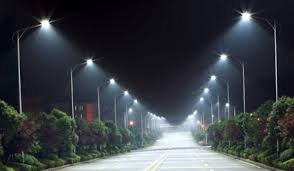
This is tighter than the 3 to 4 times ratio quoted in general street-lighting guidance, and the difference matters. That ratio assumes mains fixtures with far higher output. Stretch a 40 W solar fixture to four times its mounting height and the mid-point between poles drops below the roughly 5 lux a residential road needs — which is the technical description of the pooling effect people describe as "bright under the pole, dark in between". Pole spacing and lux levels works through a layout.
Now the wattage
With height and spacing fixed, the fixture follows from what the ground is used for:
| Mounting height | Fixture | Pole spacing | Suits |
|---|---|---|---|
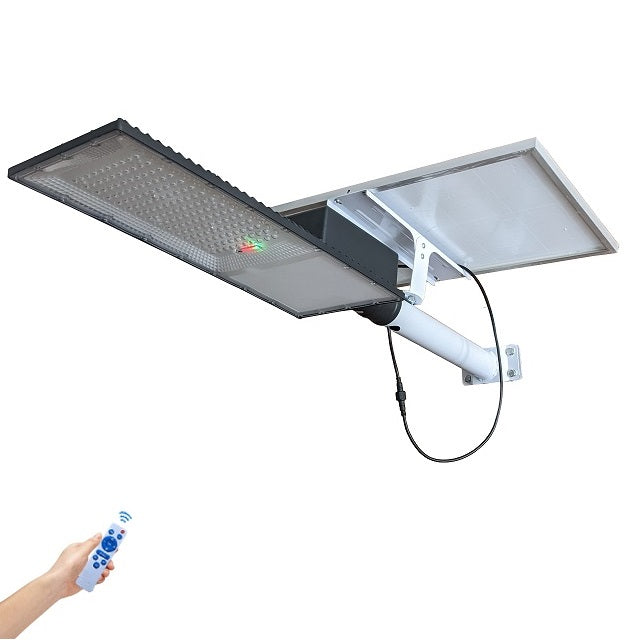
| 5 m | 100 W Owl, motion sensor | 12–15 m | Entry point for driveways, compounds and security positions where faces need to be readable |
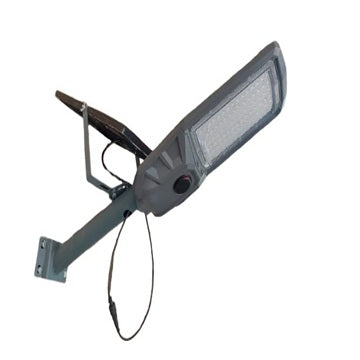
| 5 m | 40 W Bat | 12–15 m | Residential lanes, society internal roads, driveways — the all-rounder |
| 5 m | 75 W / 90 W | 15 m | Arterial roads inside a layout, larger compounds, parking areas |
| 6–7 m | 150 W | 15 m | Wide or double-lane roads, industrial yards, large open ground |
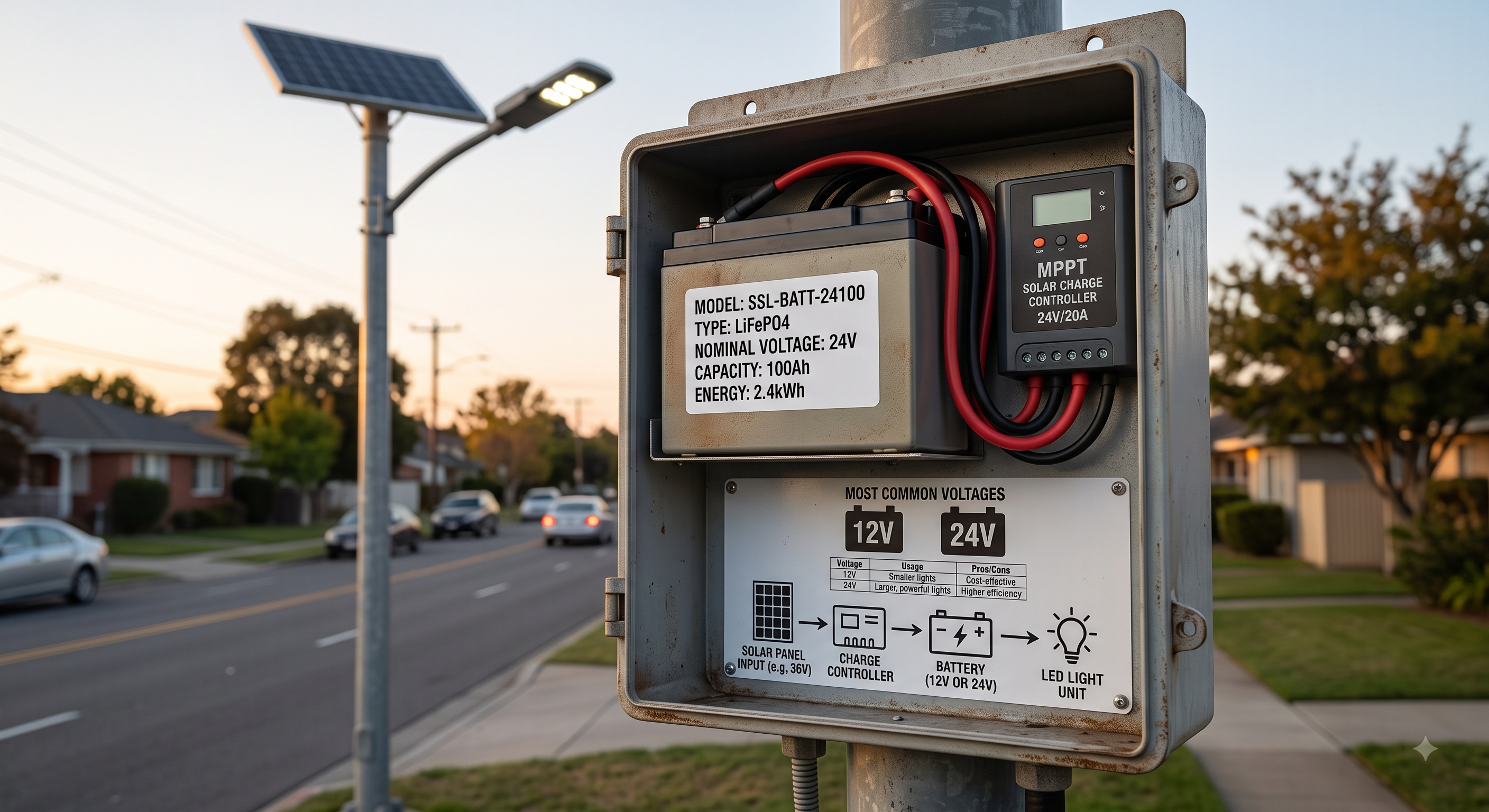
Where the site needs maximum harvest from a limited panel — long monsoon, partial shading, critical uptime — an MPPT controller extracts noticeably more from the same daylight than a PWM design. We fit MPPT above 30 W as standard; MPPT versus PWM explains the difference.
Check lumens, not just watts
Once you have a wattage band, compare fixtures inside it on rated lumens. Wattage is input; lumens are output; the ratio between them is the efficiency of the LED and driver, and it varies widely across this market. A fixture that will not publish a lumen figure is asking you to buy on faith. See lumens in LED solar lights and LED wattage explained.
Three sizing mistakes worth avoiding
- Stretching a garden or wall fixture over a driveway. This is the most common one. Path and accent fixtures are designed to be seen, not to light ground. No quantity of them adds up to a street light.
- Buying wattage instead of spacing. Two 40 W fixtures at 13 m give better, more usable light than one 90 W at 26 m, for less money. Uniformity beats peak brightness for how safe a road feels.
- Ignoring the battery. A high-wattage LED on an undersized battery is bright until midnight and dark at 3 am. Ask for watt-hours alongside the wattage.
If you send us the layout — road length, pole positions if they exist, what the area is used for — we will size it against these numbers and quote it. That is faster and more accurate than picking a wattage from a list.
Frequently asked questions
How many watts do I need for a solar street light?
For residential lanes and driveways at a 5 m mounting height, 40 W is the usual answer. Arterial roads inside a layout and larger compounds take 75 to 90 W. Wide or double-lane roads and industrial yards take 150 W at 6 to 7 m. Confirm the choice against pole spacing rather than area alone.
What is the correct spacing between solar street light poles?
About three times the mounting height, pole to pole, capped near 15 m. At a 5 m mounting height that is 12 to 15 m. This is deliberately tighter than the 3 to 4 times ratio quoted for grid lighting, which assumes fixtures producing several times more light per watt.
Is a higher wattage solar street light always better?
No. Beyond the point where the light is adequate, extra wattage costs money, needs a bigger battery and panel to sustain it, and does nothing for uniformity. Two correctly spaced smaller fixtures almost always give a better result than one large fixture spread too thin.
What mounting height should a solar street light be installed at?
Five metres for most residential and commercial applications, and 6 to 7 m for 150 W fixtures over wide roads or large open areas. Mounting higher spreads the same output over more ground, which lowers the light level everywhere rather than fixing a dark patch.
How many lumens should a solar street light produce?
Compare lumens within a wattage band rather than chasing an absolute number, because the useful figure depends on mounting height and spacing. What matters is that the supplier publishes a rated lumen output at all — the ratio of lumens to watts is where fixtures in this market differ most.
Talk to the people who build them
Shinesun manufactures solar street, flood, garden and gate lighting in Bangalore and supplies across India. Everything is quoted against the site rather than sold from a cart, because the right fixture depends on the mounting height, the spacing and what the ground is being used for. Send us the layout and we will size it. Browse the solar street light range or tell us about the site.
Shinesun Solar Street Lights
See the full range ›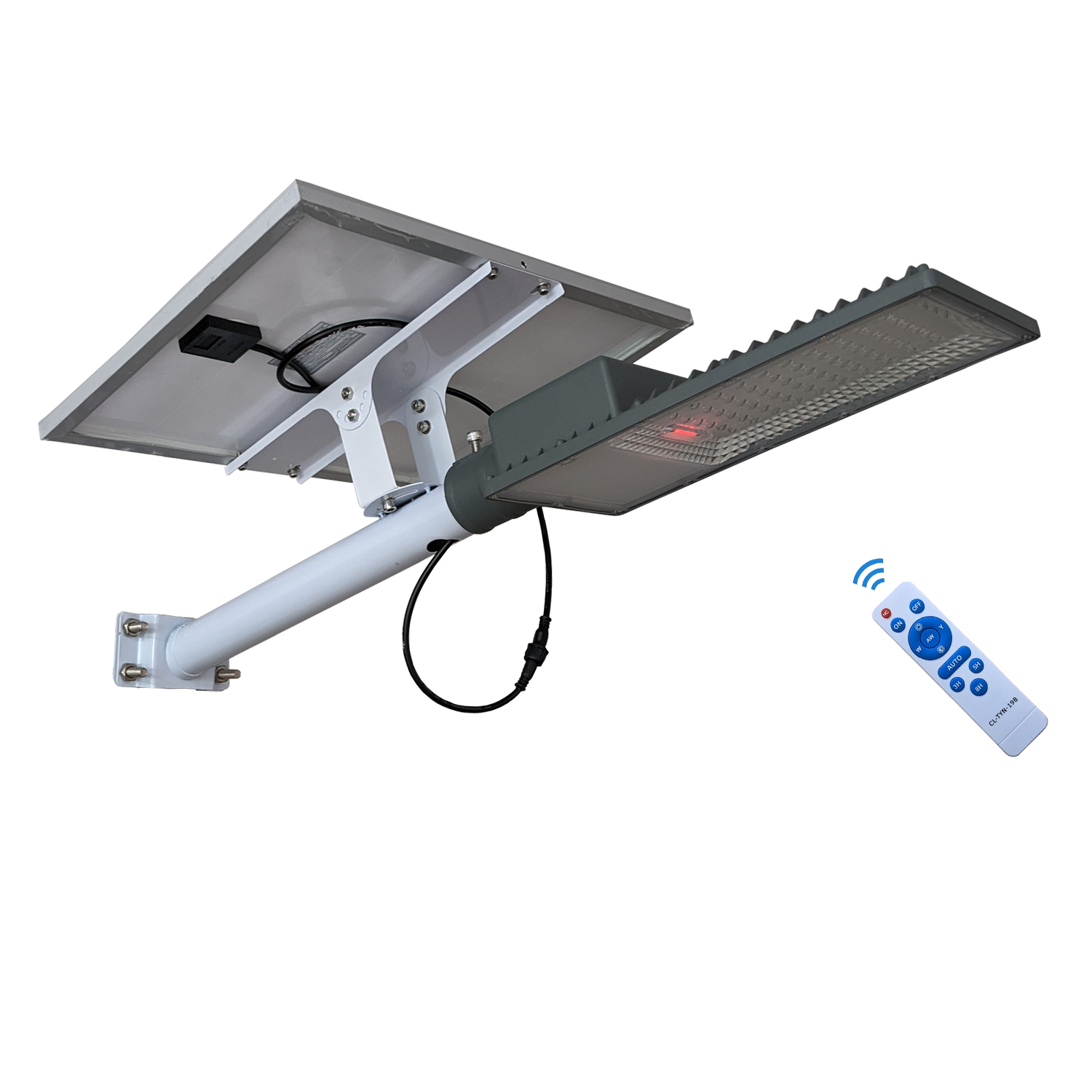
Related reading
LiFePO4 vs Lithium-Ion in Solar Street Lights: Which and Why
LiFePO4 and lithium-ion get used as if one were simply the better version of the other. They are different chemistries with different jobs, and the ri...
Read more
Why Your Solar Light Stopped Working: A Diagnostic Guide
A solar light that has stopped is usually telling you about its position, not its parts. Four checks, in the right order, separate a fixture that is b...
Read more