
Solar Light Stopped Working After the Monsoon? What Failed
Shinesun's editorial team writes about solar lighting based on our manufacturing, installation, and field-service experience across India.
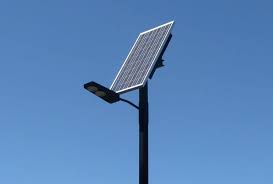
Every year, as the rains ease, we get the same set of calls. Fixtures that ran happily through summer are dim, short-lived or dark. It is tempting to conclude that the monsoon broke them, and occasionally it did. Far more often the monsoon simply removed the margin a marginal installation had been living on.
There are four distinct patterns, and they are easy to separate once you know the signature of each.
Pattern 1: it never really recovered — depleted battery
Signature: the light comes on at dusk, runs for an hour or two, then fades or cuts out. It gets slightly better on clear days.
Weeks of overcast skies mean weeks of partial charging. A fixture that ends every day slightly short of full enters a slow deficit, and by the end of a long monsoon it is running on very little. This is not damage. Given several genuinely clear days it will usually recover on its own.
What turns this from a seasonal dip into a permanent problem is a fixture that was already undersized, or a battery near the end of its life. If your fixture is on lead-acid, this is the season it dies; three to four years is its span. LiFePO4, rated at 8 to 12 years, should ride out a monsoon and come back. If it does not, the problem is upstream of the battery.
Pattern 2: the panel is filmed over
Signature: gradual decline that does not recover after the rain stops.
This one is counter-intuitive, because people assume rain washes panels. It does — while it is falling. What it leaves behind is different. Rain lands carrying dust, runs across the panel and evaporates, leaving a fine mineral haze. Repeated over a season, that haze builds into a film that is genuinely difficult to see because it is even across the whole surface.
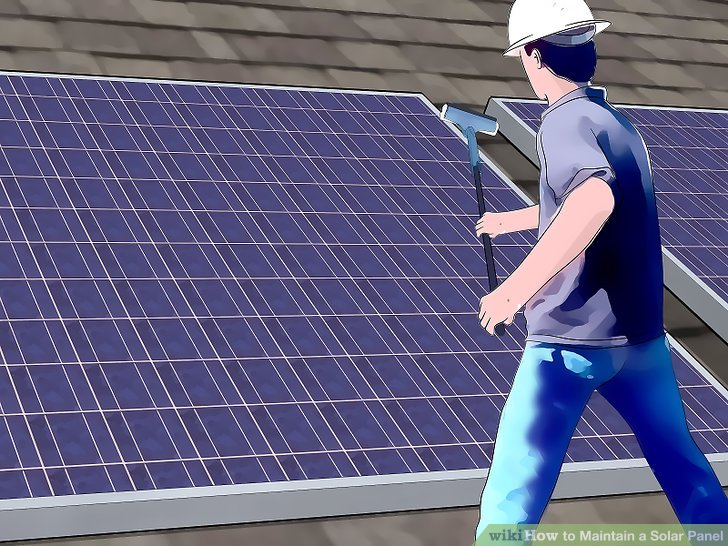
Test it: wipe one corner with a damp cloth and compare. If the cleaned corner is visibly brighter than the rest, that film has been throttling the panel all season. A post-monsoon clean is the single highest-value piece of maintenance on a solar light. Panels mounted flat suffer far worse, because the water pools instead of running off.
Pattern 3: shade that only exists in winter
Signature: performance drops after monsoon and keeps getting worse into December.
This is often misattributed to the rain because the timing coincides. As monsoon ends, the sun is also moving lower in the sky, and shadows that cleared the panel in June now cross it for hours. Add a season of growth on the tree beside it and a position that was adequate becomes inadequate.
Check it the same way as always: stand at the fixture at mid-morning, noon and mid-afternoon on a clear day and look at the panel. If it is shaded at any of those, you have found your answer, and it is a position problem rather than a fault. Panel orientation and shade covers the fix.
Pattern 4: water inside — the real failure
Signature: abrupt failure, flickering, or the fixture working intermittently. Visible moisture, misting or a tide line inside the lens. Sometimes corrosion around the gasket.
This is the only one of the four that is a genuine fault, and it is a specification failure far more often than bad luck.
IP65 is the minimum for anything mounted outdoors in India — dust-tight and protected against water jets. For fully exposed positions we specify IP66 in die-cast aluminium, because monsoon rain does not fall neatly downwards. It arrives at an angle, driven by wind, and a boundary-wall fixture also takes spray thrown up by passing vehicles. An IP65 fixture under an overhang may be fine; the same fixture on an open pole may not be.
Two things commonly turn an adequate housing into a leaking one. First, somebody opened it — to check a battery, to investigate a fault — and the seal never recovered. Second, the gasket has aged, which is a maintenance item on a fixture expected to last a decade. See IP ratings and housing.
Post-monsoon maintenance, in order
- Clean the panel properly. Damp cloth, no abrasives, no harsh solvents. Do this even if the fixture seems fine.
- Check the tilt. Mounts loosen. A panel that has crept towards horizontal will not self-clean through the next season.
- Look inside the lens with a torch. Any moisture is a fault worth reporting.
- Check the gasket line for corrosion, and the fixings for rust.
- Note the shade picture now, while the sun is dropping — this is when winter problems become visible.
- Give it a few clear days before judging a battery. Do not condemn a cell that is simply flat.
Related: how solar street lights perform in rainy weather and routine maintenance.
Frequently asked questions
Why did my solar light stop working after the monsoon?
Usually because a long spell of overcast weather left the battery in deficit, or because rain left a mineral film on the panel that is still throttling charging. Both are recoverable. Water actually inside the housing is the one genuine fault, and it points to an inadequate IP rating or a broken seal.
Does rain damage solar street lights?
Correctly rated fixtures are built for it — IP65 outdoors as a minimum, IP66 where fully exposed. What rain does is reduce charging for weeks at a time, which exposes fixtures that were already marginal because of shade, undersizing or an ageing battery.
Should I clean solar panels after the monsoon?
Yes, and it is the highest-value maintenance you can do. Rain carries dust onto the panel and evaporates, leaving an even mineral haze that is hard to spot. Wipe one corner and compare it with the rest — the difference is usually obvious.
How long should I wait before deciding my solar light has failed?
Give it two to three genuinely clear days after cleaning the panel. A battery run down over weeks of cloud does not refill in one afternoon, and plenty of fixtures get replaced when they only needed sunshine.
What IP rating do I need for monsoon conditions?
IP65 is the outdoor minimum. For fully exposed positions — open poles, boundary walls facing a road — specify IP66, because monsoon rain is wind-driven and arrives at an angle, and roadside fixtures also take spray from passing vehicles.
Talk to the people who build them
Shinesun manufactures solar street, flood, garden and gate lighting in Bangalore and supplies across India. Everything is quoted against the site rather than sold from a cart, because the right fixture depends on the mounting height, the spacing and what the ground is being used for. Send us the layout and we will size it. Browse the solar street light range or tell us about the site.
Shinesun Solar Street Lights
See the full range ›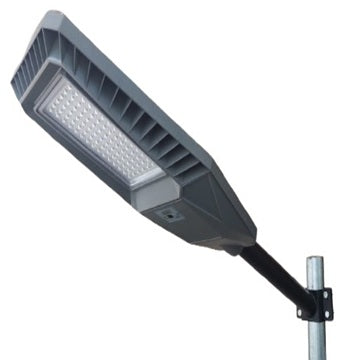
Related reading
Why Your Solar Light Stopped Working: A Diagnostic Guide
A solar light that has stopped is usually telling you about its position, not its parts. Four checks, in the right order, separate a fixture that is b...
Read more
LED Wattage in Solar Lights — Picking the Right Output (2026)
Lumens per watt matters more than raw wattage. 2026 benchmarks (130-160 lm/W system-level), pole-height matching, and why two fixtures sold as '40W' c...
Read more
Which Solar Panel is Suitable for Solar LED Street Lights? (2026)
How to pick the right solar panel for an LED street light in 2026 — the panel-to-LED wattage ratio that actually predicts reliable performance, why mo...
Read more