
Why Solar Street Lights Slash Annual Upkeep Costs to Under 5 percent
Shinesun's editorial team writes about solar lighting based on our manufacturing, installation, and field-service experience across India.
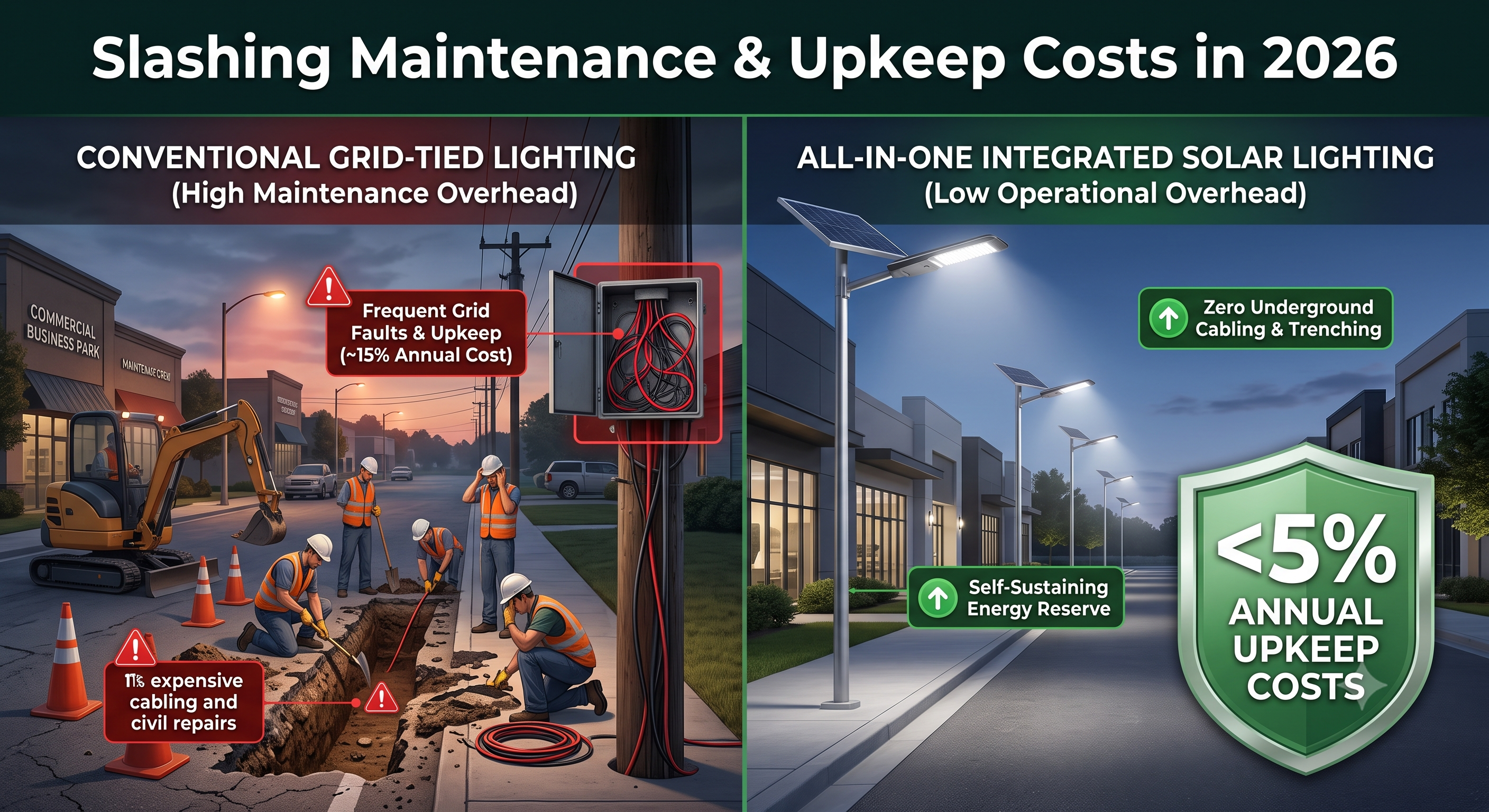
The Rising Cost of Traditional Grid Maintenance
For commercial developers and municipal planners, the initial hardware cost of lighting is only a fraction of the total expense. Traditional grid-tied street lighting systems require extensive underground cabling and complex civil infrastructure. These requirements often lead to substantial ongoing maintenance costs, with operators dealing with cable faults, power grid fluctuations, and mechanical timer failures. The installation itself is expensive, with conventional trenching and cabling adding significantly to the overall deployment cost.
The Financial Advantage of Integrated Off-Grid Systems
Modern solar street lights fundamentally change this financial equation. Standalone solar lighting systems completely eliminate the need for underground cabling. This zero-trenching advantage drastically reduces the initial capital expenditure and simplifies the installation process.
The real savings, however, are realized in the long-term operational phase. High-quality integrated solar street lights house the solar panel, the LiFePO4 battery, and the LED luminaire within a single, sleek unit. By removing the need for separate, externally mounted solar panels or extra PIR motion sensors, these systems eliminate common points of mechanical failure. The India solar street lighting market is expected to reach USD 3.8 billion by 2034, driven by this transition toward reliable, low-maintenance off-grid infrastructure.
True Cost Predictability for 2026 and Beyond
Investing in advanced off-grid lighting means moving from unpredictable, reactive maintenance to steady, predictable operations. For commercial installations, this translates to annual upkeep costs that are drastically lower than those of conventional grid-tied systems. As environmental concerns grow and energy efficiency policies strengthen, the shift to integrated solar lighting provides developers with a robust, financially sound solution for long-term infrastructure.