
What a Solar Light Warranty Actually Covers in India
Shinesun's editorial team writes about solar lighting based on our manufacturing, installation, and field-service experience across India.
Warranty is one of the least standardised things in Indian solar lighting. The same phrase covers wildly different promises, the headline number is often attached to the part least likely to fail, and the exclusions do most of the work. It is worth reading properly, because on a fixture expected to run for a decade the warranty is a real part of what you are buying.
A solar light is four products in one housing
Any warranty discussion has to start here, because the four components inside have genuinely different expected lives:
- The battery — the wear part, and almost always what actually ends the fixture's life. LiFePO4 gives 8 to 12 years; lithium-ion in a compact fixture 4 to 6; lead-acid 3 to 4.
- The LED — typically the longest-lived component, and it usually dims gradually rather than failing outright.
- The controller — electronics, so failures cluster early if they happen at all.
- The panel — very long-lived, and the part headline "25 year" figures in the wider solar industry usually refer to.
This is why a long warranty quoted without saying which component it applies to tells you very little. A generous term on the panel and a short one on the battery is a weaker offer than it first appears.
What we offer, plainly
Across the Shinesun range the standard term is two years, covering functional defects. The exact term is confirmed on every quote, because it can vary with the fixture and the application.
Excluded, and we would rather say so up front than in a footnote:
- Physical damage — impact, vandalism, a pole taken out by a vehicle.
- Tampering — a housing opened by anyone other than us. This matters more than it sounds: opening a sealed fixture breaks the weather seal that its IP rating depends on, and water ingress afterwards is a consequence of the opening, not a defect.
- Shipping — not covered under warranty.
What "functional defect" means in practice is a fixture that fails to do what it was specified to do, in the conditions it was specified for, within the term. It does not cover a fixture that is underperforming because it was mounted in shade, spaced too far apart, or asked to light an area it was never sized for. That is the honest boundary, and it is why we would rather size a job properly at quotation than argue about it later.
The questions worth asking any supplier
- Which components does the term cover, and for how long each? If there is one number for the whole fixture, ask specifically whether it includes the battery.
- Is it replace, repair, or pro-rata? A pro-rata warranty in year four may be worth a fraction of a replacement.
- Who pays freight, both ways? On a heavy pole-top fixture this is a real cost and a common exclusion — ours included.
- Who removes and refits the fixture? Almost never the supplier. Budget for site labour.
- What voids it? Opening the housing is the usual one. Ask before anybody investigates a fault themselves.
- What proof is required? Keep the invoice and note the installation date. On an eight-year fixture, nobody remembers.
Warranty is not the same as service life
This distinction gets blurred in sales conversations, sometimes deliberately. A two-year warranty on a fixture with a LiFePO4 battery rated for 8 to 12 years is not a claim that the fixture lasts two years. The warranty is the period in which the manufacturer carries the risk of a manufacturing defect; the service life is how long the thing is expected to work.
Read them together. A long warranty on a lead-acid fixture is a supplier pricing in replacements they expect to make. A shorter warranty on a chemistry rated for a decade is a different proposition, and the specification tells you more than the term does.
What actually reduces warranty claims
In our experience most claims trace back to specification and siting rather than to manufacturing. A fixture in partial shade, a pole spacing stretched to save two poles, an IP65 fixture in a position that needed IP66 — these produce disappointed owners who reasonably believe the product failed.
The way to avoid that is unglamorous: walk the site at midday before ordering, note which positions are genuinely in sun, size against mounting height and spacing rather than area, and specify the housing for the worst weather the position sees rather than the average. Things to consider before installing covers the site survey.
Frequently asked questions
What warranty do Shinesun solar lights carry?
Two years as standard across the range, covering functional defects. Physical damage and tampering are excluded, and shipping is not covered. The exact term is confirmed on every quote.
Does the warranty cover the battery?
The standard term covers functional defects in the fixture, the battery included, within the warranty period. It does not cover normal capacity loss over a service life — a LiFePO4 cell rated for 8 to 12 years is expected to decline gradually, and that is wear rather than a defect.
Does opening the fixture void the warranty?
Yes. The housing is sealed to achieve its IP rating, and opening it breaks that seal. Water that gets in afterwards is a consequence of the opening. If you suspect a fault, contact us before anyone opens the housing.
Is shipping covered under warranty?
No. Shipping is not covered, in either direction. On heavy pole-top fixtures this is worth budgeting for, and it is a common exclusion across the industry rather than something unusual.
Is a longer warranty always a better deal?
Not necessarily. Check which components it covers and whether it is replacement or pro-rata. A long term on a lead-acid fixture reflects a supplier who expects to be replacing batteries; a shorter term on a chemistry rated for a decade can be the stronger proposition. Read the warranty and the specification together.
Talk to the people who build them
Shinesun manufactures solar street, flood, garden and gate lighting in Bangalore and supplies across India. Everything is quoted against the site rather than sold from a cart, because the right fixture depends on the mounting height, the spacing and what the ground is being used for. Send us the layout and we will size it. Browse the solar street light range or tell us about the site.
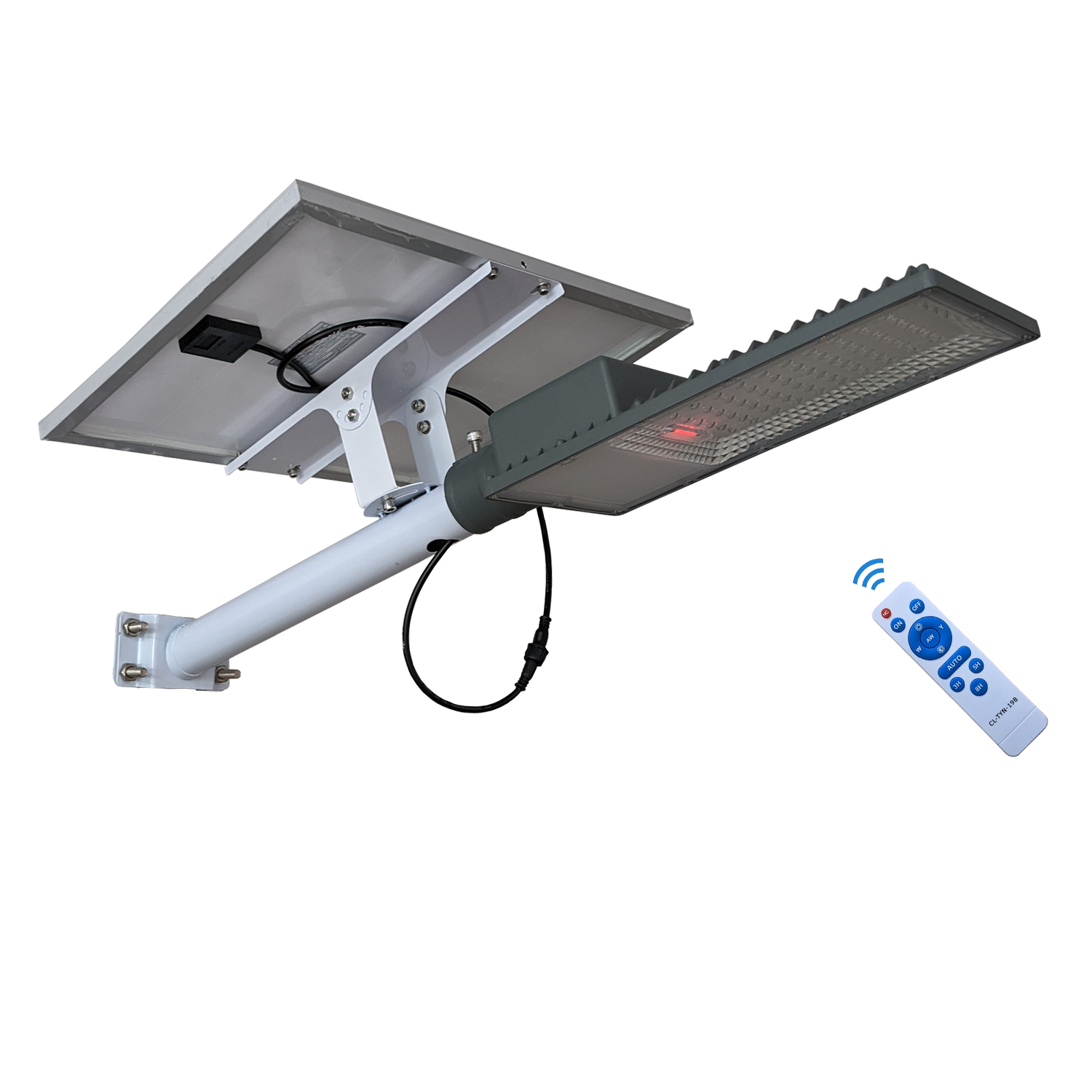
Shinesun Solar Street Lights
See the full range ›
Related reading
Charging a Solar Light for the First Time
More new solar lights are returned in their first week than fail in their first year. Almost all of it comes down to judging a part-charged fixture on...
Read more
Do Solar Lights Work in Less Than Perfect Sunlight? (2026)
It is a fact that solar lights need solar energy for their operation; however, whether they require perfect sunlight or just daylight is a question a...
Read more
Advantages and Disadvantages of Solar Energy (2026)
A balanced 2026 view of solar energy in India — where it clearly wins (off-grid lighting, rooftop residential, agricultural pumping, utility-scale), w...
Read more