
Charging a Solar Light for the First Time
Shinesun's editorial team writes about solar lighting based on our manufacturing, installation, and field-service experience across India.
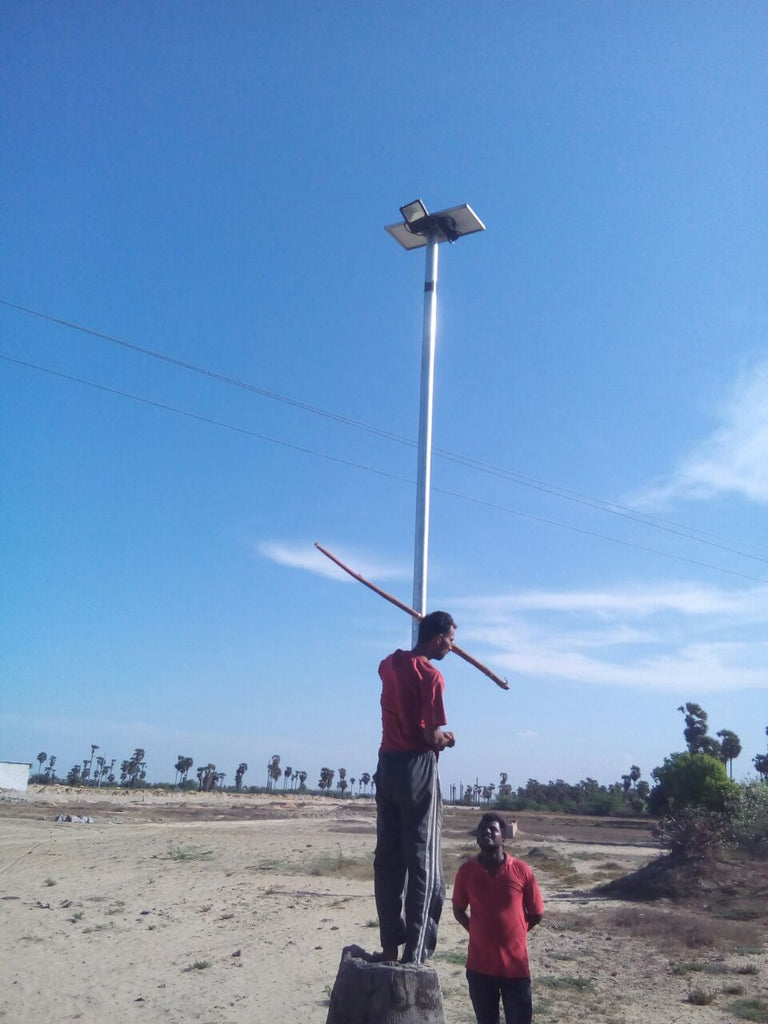
A solar light arrives with a battery that is deliberately not full. Cells are shipped part-charged because it is safer and better for their long-term health, and because a fixture may sit in a warehouse for weeks. The consequence is that a light installed on Tuesday afternoon and judged on Tuesday night is being judged on a fraction of its capacity.
That single misunderstanding produces most of the disappointment in the first week of ownership. Here is what actually to do.
The first 48 hours
Give the fixture a full charge before you ask anything of it. Two clear days is the working figure; in overcast weather allow more.
The most reliable way to do this is to switch the fixture off and let it charge, if it has a switch. With the lamp disabled, everything the panel collects goes into the battery instead of being spent that night. Many fixtures ship with the switch off for exactly this reason — and a fixture that "does not work" out of the box is very often simply still switched off. Check that first.
During those two days, put the panel in the best light you can, even if that is not its final position. A panel on a sunny terrace for two days will start the fixture's life properly.
Then commission it properly
Once charged, install it in its real position and check three things on the first night:
- Does it switch on at dusk, unprompted? If not, something is telling it that it is still daytime — usually another light source falling on the panel. Cover the panel by hand during the day; a healthy fixture lights within about thirty seconds.
- Is the light landing where you need it? Aim the head before you tighten everything. This is much easier to do at night, and almost nobody does it then.
- On a motion-sensor model, walk the zone. PIR sensors respond much better to movement across their field than towards them. Walk across the approach, not up it, and adjust the aim accordingly.
Why the first week is the real test
A single night tells you the fixture works. A week tells you whether it is sized and sited correctly.
Watch what time it goes dark. A fixture that runs to 2 am on night one and to dawn by night five is charging properly and filling up — normal, and a good sign. A fixture that runs to 2 am every night for a week is not receiving enough charge to do better, and that is a siting or sizing problem to solve now rather than in December, when conditions get harder.
Bear in mind that most fixtures are specified against a design night, and the actual night lengthens through winter. A light that just makes it to dawn in October will not in January. Build in margin at the point of installation.
Getting the position right
The two-day charge is also your chance to confirm the position before drilling anything permanent.
- Check shade at three times on a clear day — mid-morning, noon, mid-afternoon — and think about where shadows fall in December, when the sun is lower.
- Face the panel south and tilt it roughly to your latitude. Never mount it flat: tilt is what lets rain carry dust off. See which way a solar panel should face in India.
- Keep other lighting off the panel. A fixture mounted under a corridor lamp or beside a security light may never decide it is night.
Habits that shorten a battery's life
Two are worth naming, because both are easy to do without realising:
Leaving a fixture switched off in storage for months. A cell left to self-discharge into a deeply depleted state can be damaged by it. If a fixture is going into storage, charge it first and top it up every few months.
Leaving it running in a position that never fully charges it. Repeatedly cycling a battery from empty to part-full is harder on it than cycling from full to part-empty. A fixture in a marginal position is not just underperforming; it is ageing faster than it should.
Neither is a reason for anxiety. LiFePO4 in a well-sited fixture is rated for 8 to 12 years and asks very little of its owner beyond a clean panel twice a year. But a fixture that never charges fully will not see the top of that range.
Quick checklist
- Check the switch — many ship in the off position.
- Charge two clear days before judging anything, with the lamp switched off if possible.
- Install, then confirm dusk switching, aim and sensor coverage on night one.
- Watch cut-off time across the first week; it should improve, then hold.
- Clean the panel at the start and end of monsoon thereafter.
Related reading: installation of solar lights and how long solar lights stay on at night.
Frequently asked questions
How long should I charge a new solar light before using it?
Two clear days, and longer in overcast weather. If the fixture has a switch, leave it off during that period so everything the panel collects goes into the battery rather than being spent overnight.
My new solar light does not turn on at all. What should I check first?
The switch. Many fixtures ship in the off position deliberately, so that the battery charges rather than discharges in storage. After that, cover the panel during daylight — a working fixture should light within about thirty seconds.
Why does my new solar light only run for two hours?
Almost always because it is not yet fully charged. Give it two to three clear days and watch whether the cut-off time improves each night. If it plateaus at a couple of hours across a full week, the position is not delivering enough charge and needs to change.
Should I switch a solar light off while it charges?
For the initial charge, yes, if it has a switch. It roughly doubles how quickly the battery fills, because nothing is being drawn off overnight. After commissioning, leave it on and let it cycle normally.
Does a solar light need charging in winter too?
It charges year-round, but collects less: the days are shorter and the sun sits lower at the same time as the nights get longer. A fixture that only just reaches dawn in October may fall short in January, which is why it is worth leaving margin when sizing and siting.
Talk to the people who build them
Shinesun manufactures solar street, flood, garden and gate lighting in Bangalore and supplies across India. Everything is quoted against the site rather than sold from a cart, because the right fixture depends on the mounting height, the spacing and what the ground is being used for. Send us the layout and we will size it. Browse the solar street light range or tell us about the site.
Shinesun Solar Street Lights
See the full range ›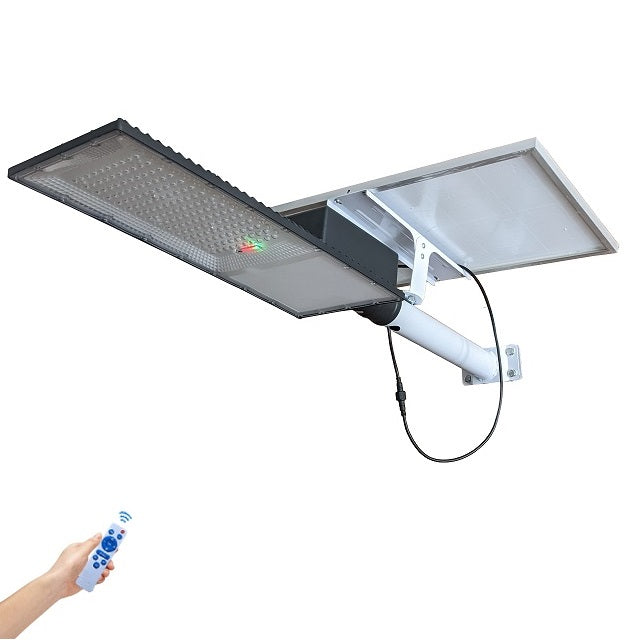
Related reading
What a Solar Light Warranty Actually Covers in India
A warranty on a solar light is really a warranty on a battery, a panel, an LED and a housing — four parts with four different lifespans. Knowing what ...
Read more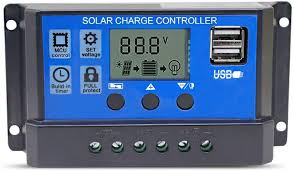
Solar Charge Controller — PWM vs MPPT (2026)
The charge controller is the brain of any solar light. Here's what PWM and MPPT actually do, why MPPT has become the 2026 standard above 30W, and when...
Read more
Advantages and Disadvantages of Solar Energy (2026)
A balanced 2026 view of solar energy in India — where it clearly wins (off-grid lighting, rooftop residential, agricultural pumping, utility-scale), w...
Read more