
Solar Lights for Farms and Farmhouses: What Works Where
Shinesun's editorial team writes about solar lighting based on our manufacturing, installation, and field-service experience across India.
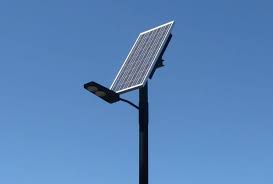
A farm is the clearest case for solar lighting there is. Distances are long, the supply is often unreliable or absent at the far end of the property, and trenching a cable 300 m to a shed costs more than the light at the end of it ever will. Nothing connects to the mains, so there is no cable run, no meter and no electrician.
It is also the site type most often specified badly, for one reason: the areas are bigger than they feel when you are standing in them.
Work out the positions first
Before any fixture is chosen, walk the property around midday and list the positions that need light and the positions that get sun. They are not the same list, and the gap between them determines everything.
Typical farm positions, and what each actually needs:
- The main gate — where vehicles turn in off a road, often at night, and where you want faces and number plates readable. This is a street-light position, not a lamp position.
- The yard or threshing floor — open ground that needs usable light across its whole area, not a bright pool in the middle.
- The approach to a shed, pump house or cattle shed — a short, specific stretch where someone walks carrying something, often in the dark, often in the rain.
- The farm track — the long one. This is where budgets break, because a 200 m track needs a line of fixtures rather than one at each end.
- The farmhouse itself — porch, steps, boundary piers, where appearance matters alongside output.
Gate and yard: street lights
For the main gate and any open yard, use a pole-mounted street light. At a 5 m mounting height our 40 W Bat at ₹6,999 covers a gate approach or a modest yard; the 75 W and 90 W suit larger yards and parking. For a genuinely large open area, the 150 W at a 6 to 7 m mounting height is the right tool.
Where you want the light to come up only when something moves — which on a farm gate is usually what you want, both for runtime and for not lighting a bedroom window all night — the 100 W Owl with a motion sensor at ₹4,499 dims between events and ramps on detection. That roughly doubles useful battery hours.
The farm track: spacing is the whole problem
This is where farm lighting goes wrong. Pole spacing runs at about three times the mounting height, pole to pole, capped around 15 m. At 5 m that is 12 to 15 m between poles — so a 150 m track is ten or eleven poles, not two.
Stretching the spacing to save poles does not give you dimmer light evenly; it gives you bright pools with dark ground between them, which is worse to walk than uniform low light and worse to drive. Mounting higher does not rescue it either — the same output spread over more ground lowers the lux everywhere.
If the budget will not carry a full line, light the sections that matter — the gate, the turn, the junction, the shed door — and leave the straight runs dark, rather than spreading fixtures so thinly that none of them works. A partial scheme that works beats a complete one that does not. Pole spacing and lux levels sets out the arithmetic, and pole height sizing covers the heights.
Sheds, pumps and walls: flood lights
For washing a wall, a shed front or a work area with light, a flood light gives a wide beam where a street light gives a road-shaped one. Our 100 W flood light at ₹6,600 produces 2,300 lumens, comes with a remote, and suits a shed approach, a pump house or a yard wall.
The farmhouse: pillar and pathway lamps
Around the house itself, output gives way to appearance. A Volcano gate and pillar lamp at ₹3,250 or the Opal pillar lamp at ₹4,499 mark boundary piers — in pairs, so neither throws a shadow across the opening. A post lamp at ₹2,499 suits a porch or steps, and pathway lamps from ₹1,789 mark the route from the gate to the door.
Do not try to light the yard with these. It is the commonest substitution and it never works.
Three farm-specific things to get right
- Dust. Unpaved tracks, harvest, cattle, cement work — a farm panel soils far faster than a city one. Clean quarterly rather than twice a year, and before and after the monsoon without fail. See how to clean the panel.
- Specify the housing for the worst weather, not the average. IP65 is the outdoor floor; for fully exposed poles in open fields specify IP66 in die-cast aluminium. There is no overhang anywhere on a farm.
- Think about shade in December, not June. A position clear of a tree line in summer may be shaded for hours in winter when the sun sits lower — and winter is when nights are longest and runtime is tightest. Panel orientation and shade covers it.
Send us the layout — track length, gate position, yard dimensions, where the sheds are — and we will size it against these numbers and quote it. That is faster and more accurate than picking wattages from a list.
Frequently asked questions
Which solar light is best for a farm gate?
A pole-mounted street light at about 5 m, not a lamp. A gate is where vehicles turn in off a road and where faces and number plates need to be readable. A 40 W covers a typical gate approach; a motion-sensor fixture is often the better choice because it ramps up only when something moves, which roughly doubles useful battery hours.
How many solar lights does a farm track need?
More than most people expect. Pole spacing runs at roughly three times the mounting height, capped near 15 m, so a 150 m track is ten or eleven poles at a 5 m height. Stretching the spacing produces bright pools with dark gaps rather than dimmer even light.
Do solar lights work on a farm without any electricity supply?
Yes — that is the main reason to use them there. Each fixture carries its own panel, battery and controller, so nothing connects to the mains. No trenching, no meter, no electrician. On a farm, where the cable run to a far shed can cost more than the light, this is usually the entire economic case.
How often should solar lights on a farm be cleaned?
Quarterly, and before and after the monsoon without fail. Unpaved tracks, harvest dust, cattle and cement work soil a panel far faster than an urban position, and the loss arrives gradually enough that nobody notices until the fixture starts cutting out before dawn.
Can I use garden lights to light a farm yard?
No, and this is the commonest mistake. Garden and pathway lamps are designed to be seen rather than to light ground, and adding more of them does not substitute for a fixture built for the job. An open yard wants a pole-mounted street light, or a flood light if you are washing a wall or work area.
Talk to the people who build them
Shinesun manufactures solar street, flood, garden, pathway and gate lighting in Bangalore and supplies across India. Everything is quoted against the site rather than sold from a cart, because the right fixture depends on where it is mounted and what the ground is being used for. Browse the full range or tell us about the site.