
Solar Lights — Frequently Asked Questions (2026)
Shinesun's editorial team writes about solar lighting based on our manufacturing, installation, and field-service experience across India.
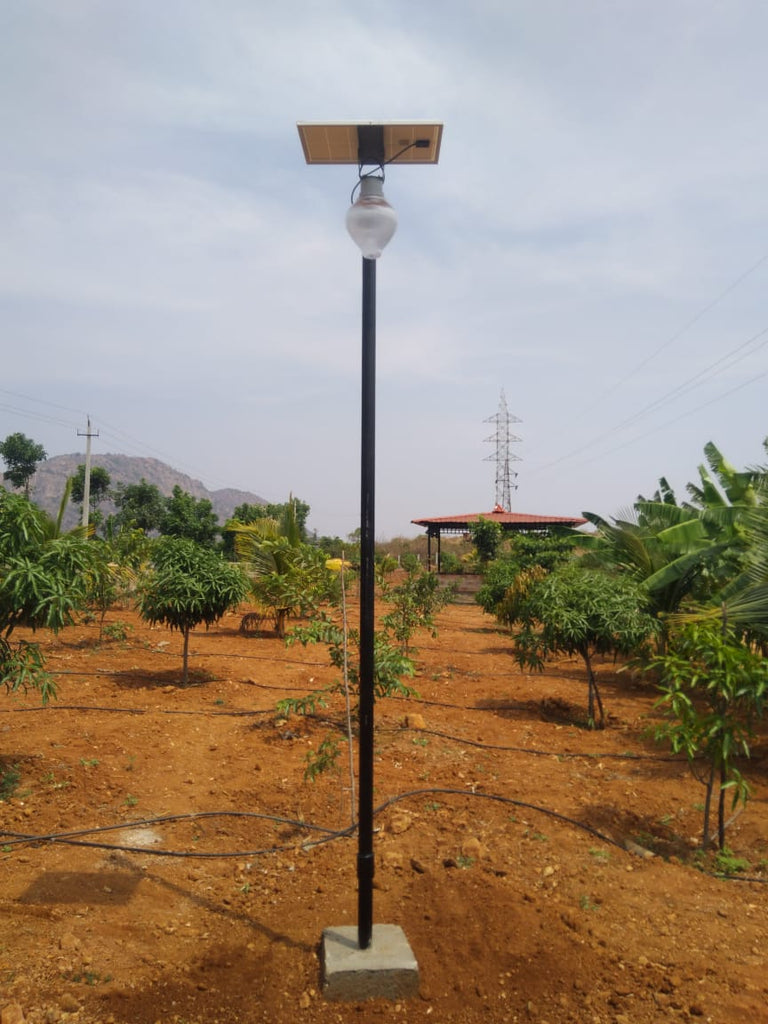
The most common questions buyers ask before choosing a solar light, answered for 2026 conditions and current technology. For deeper guidance on specific topics, follow the in-line links.
How long do solar lights last?
A quality solar street light using LiFePO4 batteries lasts 8-10 years before the battery needs replacement, with LED chips good for 50,000+ hours and solar panels rated for 25-30 years. See durability of solar street lights for the component-by-component breakdown.
Do solar lights work in the monsoon?
Yes — properly sized fixtures have 2-3 days of battery autonomy. Even continuous cloud produces 20-40% of normal panel output, so the battery rarely fully drains. See solar lights on rainy days.
What battery type is best?
LiFePO4 (lithium iron phosphate) is the 2026 standard for outdoor solar street lights — long lifespan, thermal stability, low fire risk. Li-Ion still appears in compact fixtures like gate lights; lead-acid is legacy/budget only. See types of solar light batteries.
How long does a solar light stay on at night?
A properly sized fixture runs a full Indian night (~12 hours) every night. Motion sensors effectively double useful battery hours by dimming when nothing's around. See how long do solar lights stay on.
Are solar lights cheaper than grid-powered lights?
Higher upfront cost, lower total cost over 10 years. You avoid trenching, cabling, and ongoing electricity bills. See solar vs conventional street lights.
What's the difference between all-in-one and split design?
All-in-one fixtures integrate panel, battery, and LED into one sealed unit at the pole top — faster installation, theft-resistant, cleaner look. Split designs offer more configurability and ground-accessible batteries. See all-in-one vs traditional.
How much wattage do I need?
Match wattage to pole height: 3-4m → 12-20W, 6-8m → 30-60W, 9m+ → 75-150W. The Solar Bat 40W covers the most common residential and small-commercial sweet spot.
What's the difference between PWM and MPPT controllers?
MPPT extracts 20-30% more energy than PWM in cloudy or off-peak conditions. Worth the cost premium for fixtures above 30W or installations in low-light regions. See solar street light controllers.
How do I maintain a solar light?
Clean the panel every 2-3 months in dusty regions, inspect for water ingress and loose hardware annually, plan for battery replacement at year 8-10. That's about it.
Can I install it myself?
Garden and small fixtures often install in under an hour. Pole-mounted street lights typically require a concrete foundation and proper pole installation — usually a half-day job per pole.
Do solar lights work in shaded areas?
Not well. The panel needs unobstructed sunlight for most of the day. Heavily shaded sites are the one situation where solar isn't a good fit.
What if my solar light stops working?
Most "not working" cases trace to one of: dirty panel (clean it), aged battery (replace at year 8-10), sensor malfunction (sensor replacement is usually a simple service), or water ingress (often unfixable in cheap fixtures, hence the case for quality).
What does a solar street light cost?
Quality fixtures range from a few thousand rupees for small garden/gate lights to ₹15,000+ for high-output street and security fixtures. Cost depends heavily on wattage, battery capacity, panel size, and build quality. The Shinesun team can quote based on your specific requirement.
Is there a government subsidy for solar street lights?
Direct subsidies for outdoor solar lighting are limited — the PM Surya Ghar Muft Bijli Yojana applies to grid-tied rooftop solar, not off-grid street lights. State-level schemes vary. See rooftop solar subsidies for the rooftop scheme details.
Got a question not covered here? Contact the Shinesun team with your specifics and we'll respond.