
Durability of Solar Street Lights — A 2026 Consumer Guide
Shinesun's editorial team writes about solar lighting based on our manufacturing, installation, and field-service experience across India.
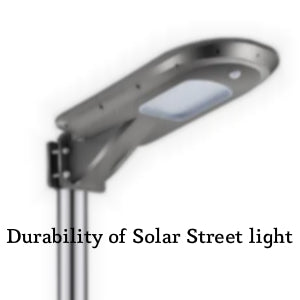
"Durability" in a solar street light is a system question, not a single number. The fixture body, the LED, the battery, and the solar panel all have different expected lifespans. The system as a whole lasts as long as the shortest-lived component before that component is replaced. Here's the realistic 2026 picture, component by component.
The component lifespan picture
| Component | Typical lifespan (good quality) | What fails / degrades |
|---|---|---|
| Solar panel | 25-30 years (output above 80%) | Gradual cell degradation, hail/impact damage, encapsulant yellowing |
| LiFePO4 battery | 8-10 years | Cycle wear, deeper degradation in extreme heat |
| Li-Ion battery | 5-6 years (outdoor) | Thermal stress accelerates capacity loss |
| Lead-acid battery | 3-4 years (outdoor) | Sulphation, water loss, cell failure |
| LED chip | 50,000+ hours (~10-15 years) | Gradual output drop, occasionally driver failure |
| Charge controller | 8-12 years | Capacitor aging, MOSFET failure under stress |
| Fixture body / housing | 15-20+ years | UV-induced colour fade, gasket aging, corrosion in coastal areas |
| Mounting pole | 15-25 years (galvanised steel) | Rust if galvanising fails, foundation issues |
What usually fails first
In well-built fixtures, the battery is almost always the first component to need replacement — typically at the 8-10 year mark for LiFePO4. The rest of the system (panel, LED, fixture body) typically outlasts the original battery by years.
In cheap-import fixtures, the failure pattern is different and faster:
- Lead-acid battery failure at 2-3 years — by far the most common.
- Cheap LED driver burnout — sudden complete failure, often before 5 years.
- Water ingress through inadequate gaskets — kills electronics and corrodes connectors.
- Panel encapsulant delamination — produces visible bubbles, dramatically reduces output.
What you can do to extend life
- Buy quality up front. The cost difference between a quality fixture and a knock-off is small; the cost of replacing a failed knock-off is large.
- Clean the panel. Every 2-3 months in dusty regions. The single highest-ROI maintenance task.
- Inspect the fixture annually. Look for water ingress, loose hardware, corrosion. Address before they cascade.
- Don't disable the motion sensor. Sensors reduce battery cycling depth and extend pack life.
- Match the fixture to the climate. LiFePO4 for hot regions, IP66 for coastal, oversized panel for monsoon.
- Plan for the battery replacement. At year 8-10, the battery will need swapping. Quality fixtures have serviceable battery compartments — confirm before buying.
What a "10-year solar street light" actually means
When a quality manufacturer promises a 10-year fixture, they're typically committing to:
- Panel: 25+ year linear output warranty
- LED chip: 5+ year warranty against driver failure
- Battery: 2-5 year warranty depending on chemistry (with 8-10 year expected life for LiFePO4)
- Fixture body: 5+ year warranty against corrosion and IP failure
The full 10 years is achieved through the battery replacement at year 8 — not a single sealed unit that never needs service.
Total cost of ownership view
A quality LiFePO4 fixture costs 30-50% more upfront than a cheap lead-acid fixture, but over a 10-year window, the cheap fixture will likely need 2-3 battery replacements plus possibly the entire fixture replaced once. The labour for pole-top service alone often exceeds the original cost difference.
For a starting fixture sized for typical residential and small-commercial use, see the Solar Bat 40W. For higher-output or specific durability requirements (coastal, high-altitude, extreme heat), contact the Shinesun team with your site details.