
Solar Street Lights for Government Projects: ALMM, Tenders and Specifications
Shinesun's editorial team writes about solar lighting based on our manufacturing, installation, and field-service experience across India.
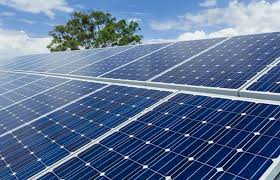
Buying solar street lighting for a panchayat, a municipal ward, a campus or a public works contract is a different exercise from buying it for a gated society. The hardware questions are the same. What changes is that the specification has to be written in advance, tightly enough that the lowest bidder cannot meet it with something that fails in year three.
This is a buyer's guide rather than a tender template. We manufacture and supply fixtures and quote to specification; we are not a tendering consultancy, and the official sources below are the authority on scheme rules.
ALMM: what it is and what it covers
The Approved List of Models and Manufacturers is maintained by the Ministry of New and Renewable Energy. List-I covers solar PV modules, and it has been mandatory for government-supported solar projects for several years. If your project draws on central or state support, the module in the fixture is very likely required to come from an ALMM-listed manufacturer.
Two things are worth being precise about, because they are routinely muddled in tender documents:
- ALMM applies to the module, not to the whole luminaire. A fixture is not "ALMM certified" as a unit. The question to ask a supplier is which listed module is fitted, and to require the listing reference in the submission.
- ALMM is not a quality grade for the rest of the fixture. It says nothing about the battery, the controller, the LED or the housing — which between them decide whether the light still works in year five. A compliant module on a lead-acid battery is a compliant fixture that dies early.
Because the lists and the applicability rules change, verify current status against MNRE's own publications for the scheme you are buying under rather than against a supplier's claim or an older tender document.
The specifications that actually decide longevity
In our experience of what fails and when, these are the clauses worth being unambiguous about:
- Battery chemistry, named. Not "lithium" — LiFePO4 and lithium-ion are both lithium. Specify LiFePO4 for pole-mounted street lighting and state the expected service life. We build to 8 to 12 years. A lead-acid fixture needs its battery replaced in 3 to 4, and on a pole top the labour of that replacement is a real recurring cost that no capital-cost comparison shows.
- Battery capacity in watt-hours, or amp-hours with the voltage. Amp-hours alone cannot be compared between fixtures and is the easiest place to quietly undersize.
- Autonomy in days. State how many consecutive overcast days the fixture must run for. This is the single clause that separates a fixture that survives a monsoon week from one that does not, and it is the one most often omitted.
- Rated lumen output, not only LED wattage. Wattage is input; lumens are what reaches the ground, and the ratio varies widely across this market.
- IP rating. IP65 as an absolute floor; IP66 for fully exposed poles and anything on a road where passing vehicles throw up spray. Specify the housing material too — die-cast aluminium with powder coating outlasts ABS in Indian sun.
- Controller type. MPPT above about 30 W, where it extracts meaningfully more from marginal light than PWM. See MPPT versus PWM.
- Mounting height and pole spacing, stated as a design requirement rather than left to the bidder. Ours is about 5 m, with 150 W fixtures at 6 to 7 m, and spacing near three times the mounting height capped around 15 m. Beware specifications that import the 3–4× ratio from grid lighting: that assumes fixtures producing several times more light per watt, and applied to solar it leaves dark ground between poles. Pole spacing and lux levels works through a layout.
- Lux levels at the worst point, not the average. An average is easy to hit with bright pools and dark gaps; a minimum at the mid-point between poles is what makes a road feel safe.
Clauses that decide whether year three goes well
- Warranty: term, scope and what voids it. Ask which components the term covers, whether it is replacement or pro-rata, and who pays freight both ways. Our standard is two years on functional defects, excluding physical damage and tampering, with shipping not covered — stated plainly because the exclusions do most of the work in this industry. See what a warranty actually covers.
- Who removes and refits a fixture under warranty. Almost never the supplier. On a pole top this is the larger part of the cost.
- Spare battery availability for the stated service life. An eight-year fixture whose battery is unavailable in year six is a six-year fixture.
- Anti-theft provisions. In public locations an integrated fixture sealed at the pole top is harder to remove than a separately mounted panel. It is a genuine advantage of all-in-one designs and worth weighing against their inability to angle the panel independently.
- Foundation and pole specification, which are usually the contractor's scope rather than ours. Tie them to the fixture's weight and wind loading explicitly.
Where public and private procurement genuinely differ
Three differences matter in practice. Documentation requirements are heavier, and a supplier who cannot produce module listing references and test reports will fail at scrutiny regardless of how good the fixture is. Maintenance responsibility is usually contractual and multi-year, which makes service life and spare availability more important than purchase price. And installations are in public locations, which raises theft and vandalism from a nuisance to a design input.
Lowest-cost evaluation is the structural risk. If the specification is loose, the lowest bid wins with the cheapest compliant interpretation, and the cost reappears as replacements inside the maintenance period. Tight clauses on chemistry, autonomy, lumens and IP rating are what prevent that, and they cost nothing to write.
For the engineering detail behind these clauses, see our technical guideline for solar street light projects and why solar street lights suit rural areas.
What we supply
We manufacture solar street lighting in Bangalore from 40 W to 150 W on LiFePO4, with IP66 die-cast aluminium housings and MPPT above 30 W. We quote against a layout and supply the fixtures; poles, foundations and installation are normally the contractor's scope. Send the specification and the site plan and we will respond against it clause by clause.
Frequently asked questions
Is ALMM mandatory for solar street lights in government projects?
ALMM List-I covers solar PV modules and has been mandatory for government-supported solar projects for several years, so the module in the fixture will usually need to come from a listed manufacturer. Applicability depends on the scheme and the lists change, so verify current requirements against MNRE's own publications for the scheme you are buying under.
Does ALMM certify the whole solar street light?
No. It applies to the PV module, not the luminaire as a unit, and says nothing about the battery, controller, LED or housing. Ask which listed module is fitted and require the listing reference — then specify the rest of the fixture separately, because those components decide whether it still works in year five.
What specifications should a solar street light tender include?
Named battery chemistry and service life, capacity in watt-hours, autonomy in consecutive overcast days, rated lumen output rather than only wattage, IP rating and housing material, controller type, and mounting height with pole spacing as a design requirement. Specify minimum lux at the worst point between poles rather than an average.
Why do cheap solar street lights fail in government installations?
Usually because the specification left room for them. Where chemistry, autonomy and lumens are not pinned down, the lowest compliant bid wins with lead-acid batteries and undersized panels, and the saving reappears as replacements inside the maintenance period — including the labour of reaching each pole top.
Do you supply poles and installation for government projects?
We manufacture and supply the fixtures from Bangalore and quote against a layout. Poles, foundations and installation are normally the contractor's scope, which is also how the tender usually divides the work. Tie the pole and foundation specification to the fixture's weight and wind loading explicitly.
Talk to the people who build them
Shinesun manufactures solar street, flood, garden, pathway and gate lighting in Bangalore and supplies across India. Everything is quoted against the site rather than sold from a cart, because the right fixture depends on where it is mounted and what the ground is being used for. Browse the full range or tell us about the site.