
Solar Lights for the Outside of an Indian Home: Which Type Goes Where
Shinesun's editorial team writes about solar lighting based on our manufacturing, installation, and field-service experience across India.
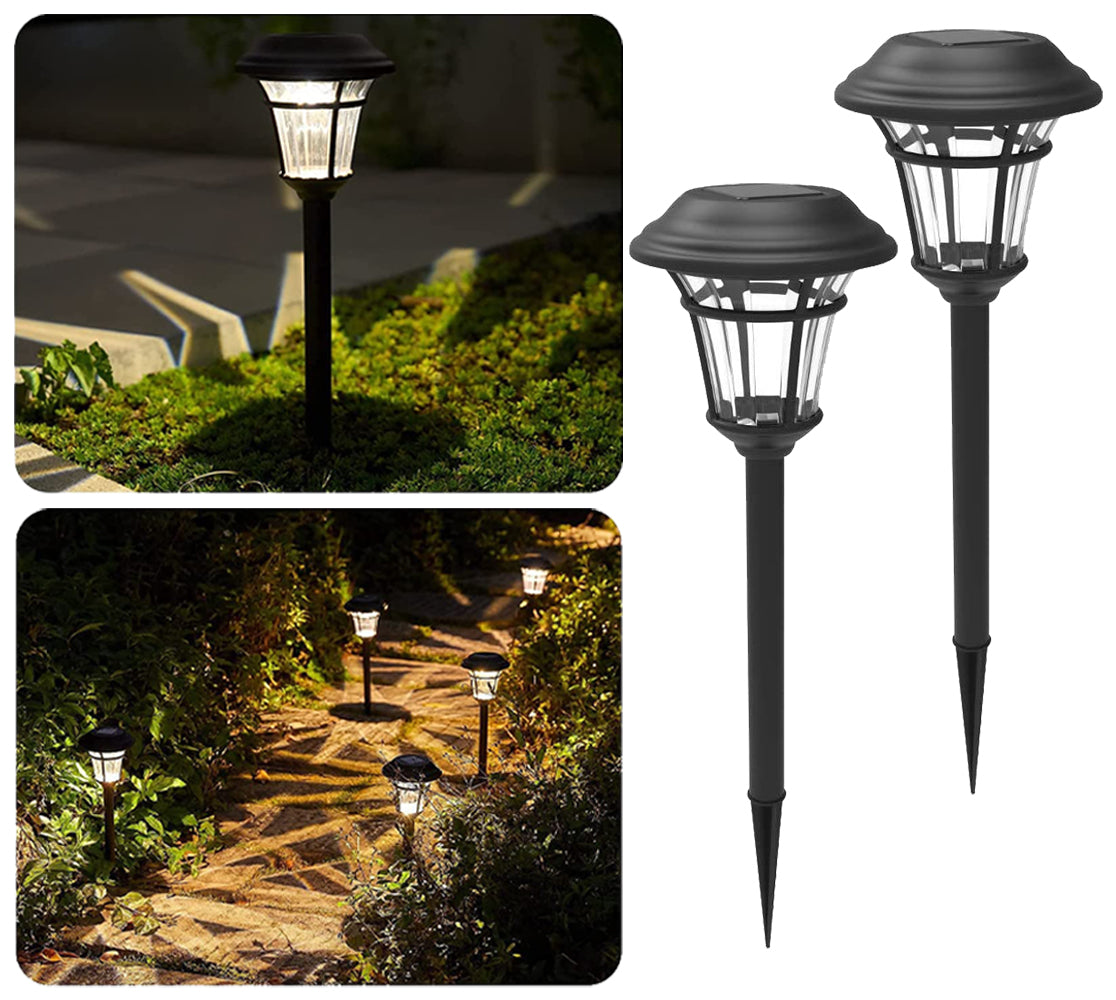
Almost every complaint about outdoor solar lighting traces back to the same thing: the fixture was chosen by price and appearance, then placed wherever it was needed. Solar fixtures are far less forgiving of that than mains ones, because each carries its own panel and battery and is therefore sized for a particular job. A fixture doing the wrong job cannot borrow capacity from anywhere.
So this guide is arranged the way you would actually walk the property — gate to door to garden to parking — naming what belongs at each point and roughly what output it needs.
The gate and boundary pillars
Start by deciding whether you want the entrance marked or lit. An accent pillar light on a 2 W panel makes the gate visible and finished. Lighting the approach — so a car can turn in, or so a face is recognisable at the gate — needs a substantially larger fixture; our 18 W Opal produces 2,016 lumens for that job.
Buy in pairs, one per pillar, or a single fixture will throw shadow across the opening. The full reasoning, including what IP65 means at this position, is in our guide to solar gate and pillar lights.
The boundary wall, side passages and back door
These are motion-sensor positions. Nobody stands in a side passage for an hour, and lighting one continuously from dusk to dawn wastes a battery on an empty corridor.
A wall light producing 400 to 500 lumens at 2 to 2.5 m will cover a doorway and the step in front of it, or two to three metres of passage. Warm white for a doorway or porch where people stand close; 6000K cool white for a back gate or service area, where it reads brighter at the same output. Our guide to what 400 to 500 lumens actually covers goes through mounting height and sensor aim, both of which matter more than the brand on the box.
The path from the gate to the door
Path lighting is not about brightness. It is about marking an edge so the eye can follow it, and this is the one position where more output actively makes things worse — a bright fixture at knee height glares and destroys the night vision you need for the rest of the walk.
A run of low-output pathway fixtures spaced evenly along the edge does the job better than two bright ones at the ends. Spacing matters more than specification here: gaps read as obstacles.
The garden and seating areas
Garden lighting is decorative first and functional second, and warm white is close to mandatory — cool white makes planting look grey and lifeless after dark.
The practical constraint is shade. A garden is, by definition, the part of the property with things growing in it, and a fixture that charged perfectly in March can be under a full canopy by August. When placing garden lights, look at where the shade will be at the height of the growing season, not where it is on installation day.
The driveway, parking area or internal road
This is where people most often try to stretch a wall or garden fixture, and where it always fails. A driveway or parking bay needs a pole-mounted fixture — a solar street light, even on a domestic property.
The relevant numbers: mounting height of about 5 m for most of the range, and pole spacing of roughly three times the mounting height, pole to pole, capped at around 15 m. Below that height the light pools; above it, the same output spreads too thin. Our note on pole spacing and lux levels covers the calculation for larger layouts.
The thing that decides all of it: sun on the panel
Every fixture above carries its own panel, and no specification survives a bad position. Before buying anything, walk the property at around midday and note which of your intended positions are actually in direct sun.
North-facing walls, pillar tops under trees, passages between two buildings and anything under an overhang will underperform all year. It is worth doing this before you order rather than after, because the usual remedy — a separate panel on a short cable, mounted where the sun is — changes which product you should be buying.
What outdoor solar lighting will not do
Three honest limits, because the category is oversold:
It will not match a mains floodlight for raw output at low cost. Solar output is bounded by panel area and battery capacity. Matching a 150 W mains flood means paying for a fixture sized accordingly.
It will not rescue a shaded position. A larger battery extends runtime; it does not create charge.
It will not run at full brightness all night on a compact fixture. Motion sensing and dimming are how small fixtures make it to dawn. A product claiming full output for twelve hours on a small panel is describing something that does not happen.
Within those limits the case is strong: no trenching, no cabling, no meter, no electrician, and immunity to power cuts — which for most Indian properties is the real argument.
Quick reference
| Position | Fixture | Typical output |
|---|---|---|
| Gate pillars (marking) | Accent pillar light | 2 W panel, warm white |
| Gate approach (lighting) | High-output pillar light | 18 W, ~2,000 lumens |
| Doorways, passages, back gate | Wall light, PIR sensor | 400–500 lumens at 2–2.5 m |
| Paths | Pathway light | Low output, evenly spaced |
| Garden and seating | Garden light | Low output, warm white |
| Driveway, parking, internal road | Solar street light on a pole | Mounting height ~5 m |
Getting the choice right for your site
Every figure quoted above is the one on the product page it links to. If you are unsure which output a particular gate, wall or approach needs, send us the dimensions and a photograph of the position and we will tell you plainly — including when the answer is a fixture we do not make. Reach the team on +91 6364058660 or through the contact page.