
Are Solar Lights Worth It? (2026)
Shinesun's editorial team writes about solar lighting based on our manufacturing, installation, and field-service experience across India.
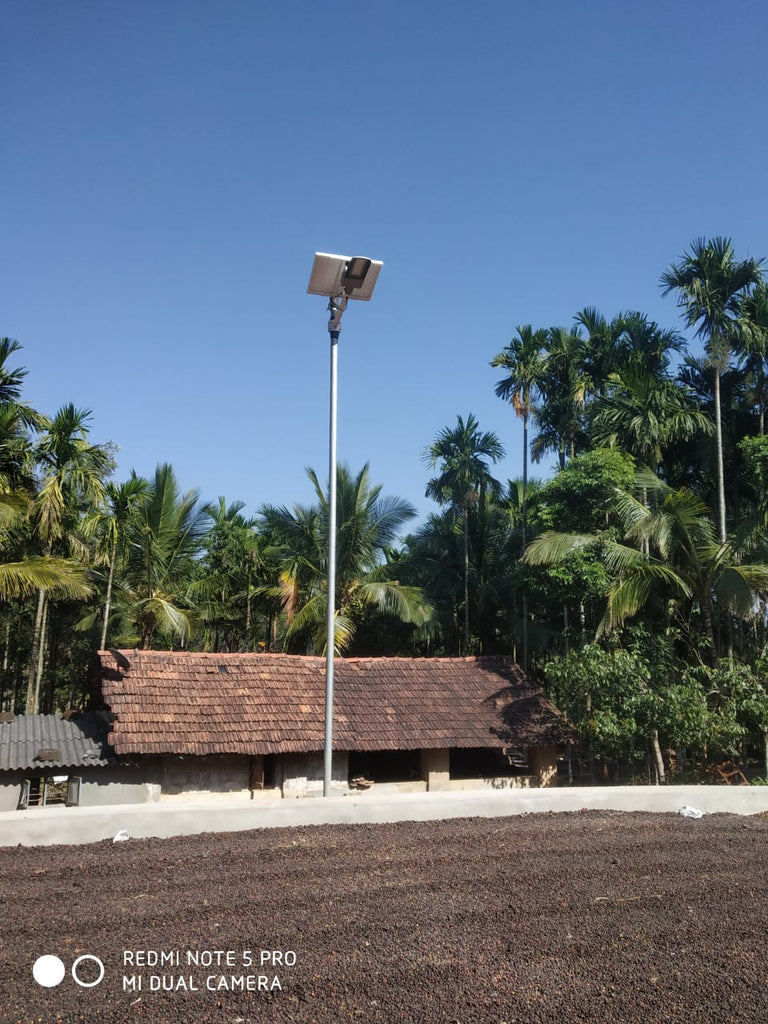
"Are solar lights worth it?" is the right question to ask, and it deserves an honest answer. For most outdoor lighting applications in 2026 India, yes — clearly. For some specific situations, no. Here's the honest breakdown without the marketing fluff.
The short answer
Outdoor lighting (street, garden, gate, flood): Almost always worth it. Solar typically pays back in 3-5 years and continues saving for the next 5-10. The economics, reliability, and convenience all align.
Indoor primary lighting: No. Grid LED is the right answer; solar emergency lighting is a complement for outage backup but not a replacement.
Some edge cases: Heavily shaded properties, very-low-usage situations, and indoor primary lighting are situations where solar isn't the right fit.
The payback math
For a typical residential solar street light (40W, with motion sensor, LiFePO4 battery):
- Upfront cost — ₹8,000-12,000 fixture + pole + foundation (vs ₹4,000-6,000 for a grid-tied LED fixture, before cabling)
- Installation cost saved — no cabling from indoor circuit (often ₹3,000-8,000), no meter changes, no DISCOM coordination
- Annual electricity saved — ~50 kWh × ₹7/kWh = ₹350/year (more in commercial)
- Battery replacement at year 8-10 — ₹2,000-4,000
Total 10-year cost of solar: ~₹10,000-15,000. Total 10-year cost of grid alternative: ~₹10,000 + ₹3,500 electricity + lifecycle wiring maintenance = ~₹14,000-18,000. Solar comes out ahead, often by significant margins after factoring in installation and outage costs.
Where solar clearly wins
1. Outdoor lighting (already covered)
The strongest case for solar. No cabling, no bills, works through outages.
2. Off-grid or weak-grid sites
Rural areas, farm houses, remote installations where grid extension is expensive or unreliable.
3. Sites with frequent power outages
Solar lights keep working through grid failures. For security applications, this is non-negotiable.
4. Commercial installations with high electricity tariffs
Commercial tariffs are higher than residential — solar payback is correspondingly faster. See commercial solar street lights.
5. Sites where new cabling is impractical
Trenching across paved or landscaped areas can cost more than the fixture itself. Solar avoids this entirely.
Where solar is not worth it
1. Indoor primary lighting
Solar PV doesn't compete with grid LED for indoor continuous lighting. Use solar for emergency / backup, not primary indoor.
2. Heavily shaded sites
Tree canopy, north walls, or building shadows that block most of the day's sun make solar fundamentally unworkable. Trim trees or skip solar.
3. Very low usage situations
A garden you use twice a year doesn't justify the upfront cost of any lighting — solar or grid. If you don't need light, don't buy it.
4. Very short-life applications
Construction site lighting for a 3-month project — rent grid power or use temporary fixtures. The solar payback math doesn't have time to work.
The hidden costs people forget
Of grid lighting:
- Cabling and trenching at install
- Electricity bill (forever)
- DISCOM coordination for new connections
- Outage downtime (lights off when you most need them)
- Meter and tariff complications
Of solar lighting:
- Battery replacement at year 8-10
- Panel cleaning (small, ongoing)
- Quality-supplier premium over cheap imports
The honest comparison table
| Factor | Solar | Grid LED |
|---|---|---|
| Upfront cost | Higher (₹8-12k typical) | Lower fixture, plus cabling |
| Installation complexity | Lower (no wiring) | Higher (cabling, DISCOM) |
| Annual electricity | Zero | ₹300-500 per fixture |
| Maintenance | Panel cleaning, battery at year 8-10 | Bulb replacement (less for LED), occasional service |
| Outage resilience | Yes | No |
| Lifespan | 10+ years (with battery refresh) | 10+ years (LED) |
| 10-year total cost | ~₹10-15k | ~₹14-18k |
What changes the math
- Quality fixture choice — cheap solar lights underperform their claims; quality solar lights deliver. Buy from real suppliers.
- Site suitability — direct sun on the panel for most of the day is essential
- Quantity and scale — commercial installs have better economics through bulk pricing and avoided cabling
- Local electricity tariff — higher tariffs make solar payback faster
Common mistakes that make solar "not worth it"
- Buying budget cheap-import fixtures that fail in 1-2 years (extrapolating their failure to "solar doesn't work")
- Installing in shaded sites without measuring actual sun exposure
- Undersizing the system (panel-to-LED ratio under 2×)
- Skipping motion sensor on continuous-on fixtures
- Comparing solar fixture cost only to grid fixture cost (ignoring cabling and bills)
Bottom line
For outdoor lighting in India in 2026, solar isn't a "will this work?" question — it's a "which fixture do I buy?" question. Quality fixtures from real suppliers, sized appropriately for the site, deliver clear economic and practical value over a 10+ year horizon.
For specific fixture recommendations or installation planning, browse the solar street lights, garden lights, and flood lights ranges, or contact the Shinesun team.