
Why You Should Choose Solar Street Lights in 2026
Shinesun's editorial team writes about solar lighting based on our manufacturing, installation, and field-service experience across India.
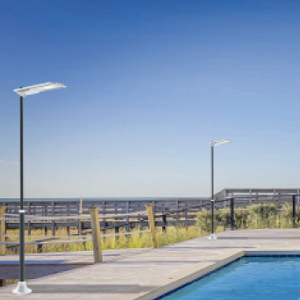
If you're weighing solar street lights against conventional grid-powered fixtures in 2026, the case for solar has strengthened over the past few years. Falling panel prices, mature LiFePO4 battery technology, and rising grid electricity costs have shifted the economics decisively. Here are the five reasons most buyers eventually land on solar.
1. Zero electricity bills, ever
A solar street light costs nothing to run after installation. For a 40W fixture running 10 hours a night, you're avoiding roughly 150 units of grid consumption per year. At commercial tariffs of ₹8-12 per unit, that's ₹1,200-1,800 saved per pole per year. Across a 20-50 pole installation, the savings compound into substantial annual figures.
2. No grid dependency — works through outages
Grid power cuts, storms, transformer failures — solar fixtures keep running regardless. That's particularly important for streets, gated communities, parking lots, and any application where reliable lighting matters most exactly when the grid is least reliable.
3. No cabling, no trenching, no utility coordination
Conventional street lights need cable runs from a meter point to each pole, trenching across the site, conduits, and often utility coordination. Solar fixtures are self-contained — each pole is a complete system. This dramatically simplifies installation, eliminates digging across landscaped or paved areas, and removes one of the largest hidden cost items in conventional street lighting (cable theft and accidental damage during roadworks).
4. Long lifespan with minimal maintenance
Modern LiFePO4 batteries last 8-10 years on the original pack. LED chips run 50,000+ hours. Routine maintenance is essentially limited to panel cleaning every few months in dusty regions. Compared to conventional fixtures (which need bulb/driver replacements and ongoing electricity meter reading), solar is genuinely lower-touch.
5. Real environmental benefit
India's grid mix in 2026 is still substantially coal-heavy. Every fixture you switch from grid to solar directly removes that consumption from the system. For installations that prioritise ESG reporting (schools, hospitals, corporate campuses, religious sites), the carbon impact is meaningful and easy to quantify.
Where to start
For most residential and small-commercial installations, the Solar Bat 40W is the right starting fixture — sized for typical use cases, LiFePO4 battery as standard, integrated motion sensor, reliably in stock. For larger sites, security applications with motion-triggered high output, or sites with specific requirements, talk to the Shinesun team with your pole height, lit area, and use case.
For a deeper comparison with grid-powered alternatives, see solar vs conventional street lights. For technical sizing detail, see how to design a solar LED street light system.