
How to Choose Your Perfect Solar Street Light — 2026 Guide
Shinesun's editorial team writes about solar lighting based on our manufacturing, installation, and field-service experience across India.
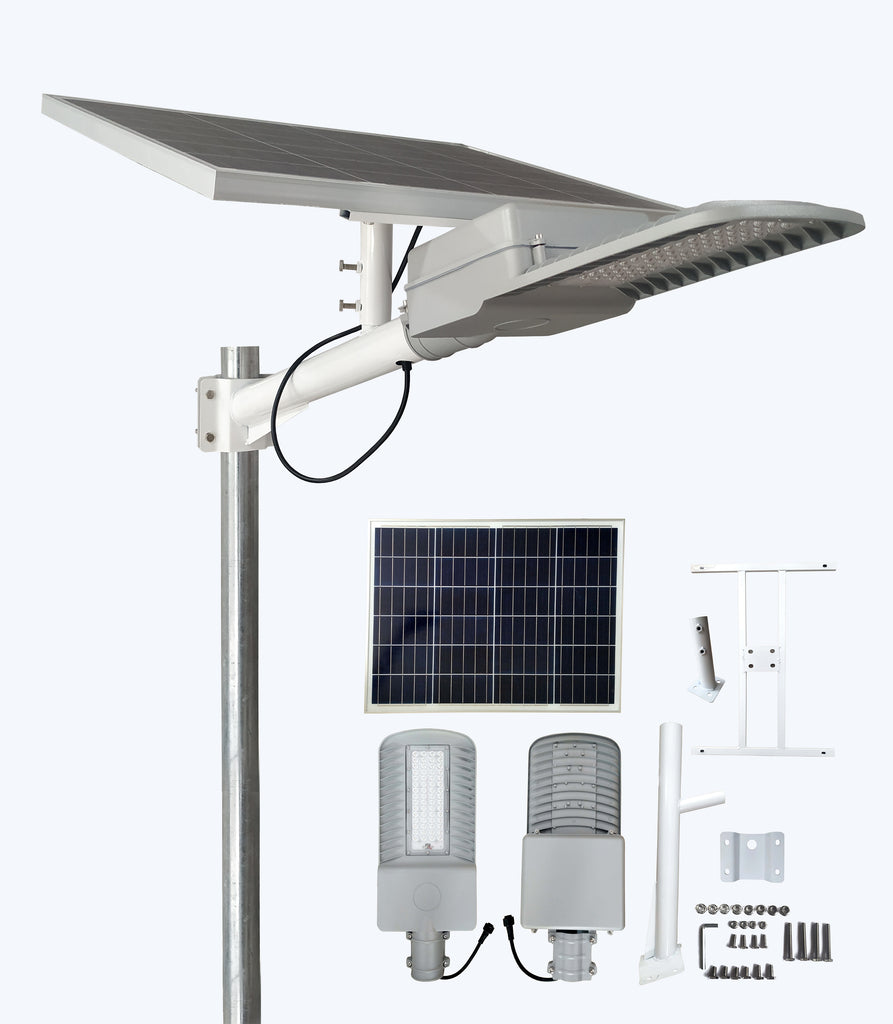
Picking the right solar street light isn't about chasing the highest wattage — it's about matching the fixture to the area, the climate, and the way you'll use it. Get any one of the four key specs wrong and the light either underperforms or dies early. This guide walks through what actually matters in 2026.
1. Match wattage to pole height and area
The most common mistake is buying more wattage than the site needs, then paying for an oversized panel and battery to support it. A working rule of thumb:
- 3-4m poles, small areas (gates, pathways, garden corners) → 12-20W
- 6-8m poles, residential and small commercial (driveways, internal roads, parking, small compounds) → 30-60W — the Solar Bat 40W sits in the sweet spot here for most buyers
- 9m+ poles, roads and highways → 75-150W
2. Insist on LiFePO4 batteries
In 2026, LiFePO4 is the right battery chemistry for any outdoor solar street light. It tolerates the 40-50°C heat that Indian summers put on a pole-mounted fixture, has very low fire risk under failure conditions, and typically lasts 8-10 years on the original cell pack. Li-Ion (still used in compact fixtures like Shinesun's Volcano gate lights) and lead-acid (legacy/budget) are the right choice for narrower use cases — but for street lighting, LiFePO4 is the default.
3. Check the panel-to-battery ratio
A well-engineered solar light recharges fully even on a partly cloudy day. The most common reason buyer-installed lights fade after the first or second monsoon is an under-sized panel that can't keep up. When comparing specs, the panel wattage should be at least 2-3× the LED wattage — a 40W light needs roughly an 80-120W panel.
4. Pick the right sensor
- Motion sensor — dims to ~30% when nothing's there, ramps to 100% on detection. Best for residential, gardens, low-traffic compounds. Effectively doubles useful battery hours.
- Intelligent sensor — full brightness early evening, dims gradually through the night with motion override. Best for streets and public spaces where some lighting is needed all night.
- No sensor / dusk-to-dawn — burns through battery faster. Only justifiable when consistent full brightness is a hard requirement.
5. Don't overlook IP rating and coating
IP65 is acceptable inland. IP66 or higher is what you want for coastal, high-humidity, or heavy-monsoon regions. Check the panel-frame anodisation and the LED housing material — anodised aluminium and powder-coated steel hold up better than cheap painted frames in salt air.
6. Match to climate
Rajasthan/Gujarat heat → LiFePO4 is non-negotiable (Li-Ion fades fast at sustained pole temperatures). Coastal Kerala/Goa → IP66+ and corrosion-resistant frame. Northeast/Northern hill regions → confirm low-temperature charging behaviour (most chemistries lose efficiency below 5°C).
Where to go from here
If you're new to solar street lights, start with the Solar Bat 40W — it covers the most common use cases and is reliably in stock. For larger installations, motion-sensor security applications, or specific site requirements, contact the Shinesun team with your pole height, area, and use case — we'll size the right fixture, panel, and battery for the site.