
How is a Solar Street Light Made? (2026)
Shinesun's editorial team writes about solar lighting based on our manufacturing, installation, and field-service experience across India.
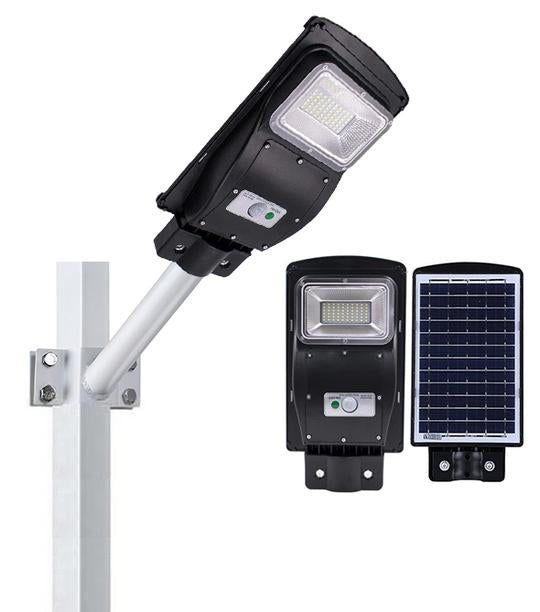
A modern solar street light is the product of about a dozen separate component manufacturing processes, brought together in final assembly. Understanding how these fixtures are made helps explain quality differences in the market and what to look for in supplier selection. Here's the 2026 view of how solar street lights are actually manufactured.
The components and their sources
Solar panel
Manufactured in dedicated PV facilities:
- Raw silicon wafers are cut from ingots
- Cells are doped, coated, and assembled
- Cells are laid up into modules: glass front, EVA encapsulant, cells, EVA, backsheet
- Module is laminated under heat and pressure
- Aluminium frame and junction box added
- Final electrical testing and IV curve verification
India has a growing PV manufacturing base, though many cells still come from established Asian suppliers. Quality solar street light suppliers source panels from reputable PV manufacturers and provide chain-of-custody documentation.
LiFePO4 battery cells
Manufactured in specialised battery cell facilities:
- Cathode (iron phosphate) and anode (graphite) materials prepared
- Electrodes coated, dried, and slit to size
- Cells assembled in dry rooms (moisture-controlled)
- Electrolyte filled, cells sealed
- Formation cycling (initial charge/discharge to stabilise chemistry)
- Capacity grading and quality testing
For solar street light battery packs, individual cells are assembled into multi-cell packs with battery management circuitry.
LED chips
Manufactured at semiconductor facilities:
- Sapphire or silicon substrates prepared
- Epitaxial growth of GaN-based LED layers
- Wafer-level testing and binning by colour and brightness
- Chips diced from wafer
- Packaging into surface-mount (SMD) or chip-on-board (COB) formats
- Phosphor coating for white LEDs
- Final binning and shipment
Quality fixtures use branded LED chips (Bridgelux, Lumileds, Osram, Cree). Budget fixtures use lower-cost no-name chips with wider quality variation.
Charge controller / driver PCB
Manufactured at PCB facilities:
- PCB substrate fabrication (multilayer board)
- Component placement (typically automated SMT)
- Reflow soldering
- Through-hole components added if needed
- Conformal coating (quality outdoor electronics)
- Programming of microcontroller firmware
- Electrical testing and calibration
Sensors
PIR sensors are off-the-shelf components from sensor specialists; microwave sensors are typically separate modules. Both are mounted to the controller PCB or housing.
Housing
For die-cast aluminium fixtures:
- Aluminium ingots melted
- Cast into housing shapes using moulds
- De-flashing and surface preparation
- Powder coating for finish and UV protection
- Sealing gasket grooves machined
Final assembly process
At the assembly facility (often the supplier's primary site):
- Battery pack assembly — cells connected in series, BMS attached, sealed pack tested
- Controller installation — PCB mounted inside housing, internal wiring attached
- LED module installation — LED PCB attached to heat sink in housing, driver connected
- Sensor installation — sensor module mounted in correct optical position
- Panel attachment — solar panel mounted to top of housing, wiring routed to controller
- Sealing — gaskets installed at all joints, housing closed and secured
- Final electrical test — verify all components work together as a system
- Light output test — verify lumens, colour temperature, sensor function
- Environmental test sample — random fixtures tested for IP rating, thermal, vibration
- Packaging — fixture, mounting hardware, instructions, warranty
Quality control in manufacturing
Quality fixtures have multi-stage QC:
- Incoming inspection — components tested as they arrive
- In-process inspection — checks at each assembly stage
- Final test — every fixture functionally tested
- Batch sampling — random fixtures undergo more rigorous environmental testing
- Field performance tracking — quality suppliers monitor warranty returns and field reports
What separates quality manufacturing from budget
Component sourcing
- Quality — branded LED chips, certified battery cells, monocrystalline panels with proper testing
- Budget — no-name LEDs, ungraded battery cells, polycrystalline or lower-quality panels
Build practices
- Quality — conformal-coated PCBs, silicone gaskets, sealed cable glands, proper torque specs
- Budget — bare PCBs, cheap rubber gaskets, basic wire-through-hole seals
Testing
- Quality — every fixture tested; sample environmental testing
- Budget — minimal testing; failures discovered after shipment
Documentation
- Quality — datasheets, test certificates, warranty terms documented
- Budget — minimal documentation, vague specs
India as a manufacturing base
India has developed substantial solar street light manufacturing capacity in the 2020s:
- Multiple PV panel manufacturers operating
- Battery pack assembly common
- LED assembly using branded chips
- Local enclosure manufacturing
- BIS certifications and standards alignment
For Indian buyers, sourcing from Indian-assembled fixtures with documented quality control is often a better choice than mid-range imports.
Quality indicators when buying
- BIS (Bureau of Indian Standards) certification
- Documented component sourcing (LED chip brand, battery chemistry)
- Warranty terms per component
- Available test reports and certifications
- Reference installations and field performance data
- Service network and parts availability
What you can't easily verify (but matters)
- Conformal coating on PCBs (visible inside fixture, rarely inspected at purchase)
- Gasket material quality (silicone vs cheap rubber)
- LED chip authenticity (brand counterfeiting exists)
- Actual battery capacity (vs nameplate)
For these, supplier reputation, warranty terms, and reference installations are your best signals.
Shinesun manufacturing approach
Shinesun assembles its solar street light range with documented component sourcing — branded LED chips, LiFePO4 cells, monocrystalline panels, conformal-coated electronics, IP66 die-cast aluminium housings. For specific manufacturing or sourcing questions, contact the team.