
Solar Charge Controller — PWM vs MPPT (2026)
Shinesun's editorial team writes about solar lighting based on our manufacturing, installation, and field-service experience across India.
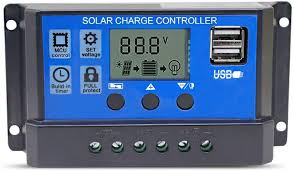
The charge controller is the brain of any solar light — it sits between the panel and the battery, regulating how power flows in and out. The difference between a basic PWM controller and a modern MPPT controller can be the difference between a fixture that runs through monsoon and one that dies in week two. Here's what matters in 2026.
What a charge controller does
A solar panel produces variable voltage depending on sunlight, temperature, and load. A battery requires steady, regulated charging within a specific voltage and current range. The charge controller bridges the two:
- Regulates voltage from panel to battery
- Prevents overcharge and over-discharge
- Manages charging stages (bulk, absorption, float)
- Often controls LED output schedule (dusk-to-dawn, motion-sensored)
- Protects against reverse current, short circuit, and overheating
PWM (Pulse Width Modulation)
The older, simpler technology. PWM controllers connect the panel directly to the battery and switch the connection on and off rapidly to regulate voltage. Properties:
- Low cost — adds little to fixture price
- Simple design — robust, fewer failure modes
- Lower efficiency — typically 75-80% in real conditions
- Voltage matching required — panel must match battery voltage closely
PWM works fine for small fixtures (under 20W) where the efficiency loss is small in absolute terms and the cost saving matters.
MPPT (Maximum Power Point Tracking)
The modern standard for fixtures above 30W. MPPT controllers actively track the panel's optimal operating point and convert excess voltage to extra current — extracting the maximum possible power at any given moment.
- Higher efficiency — typically 95-98%
- Better cloudy-day performance — extracts more power from marginal light
- Voltage flexibility — can match higher-voltage panels to lower-voltage batteries efficiently
- Higher cost — adds ₹500-2000 to fixture price typically
The practical difference: on a fully sunny day, MPPT extracts perhaps 5% more power than PWM. On a cloudy or marginal day, MPPT can extract 20-30% more. Over a monsoon week, this can be the difference between fixtures that still work and fixtures whose batteries drain.
When PWM is acceptable
- Small fixtures under 20W (garden lights, compact wall fixtures)
- Budget-priced products where the cost saving matters
- Installations in consistently sunny regions (Rajasthan, parts of Gujarat) where marginal-light performance matters less
When MPPT should be required
- Any fixture above 30W
- Any commercial / industrial installation
- Installations in monsoon-heavy regions (NE, Konkan, Kerala, Bengal)
- Critical security or safety lighting
- Fixtures expected to deliver 8-10 year service
Controller features beyond charging
Modern integrated controllers in all-in-one fixtures also handle:
- LED output scheduling — dusk-to-dawn, motion-triggered, scheduled dimming
- Battery protection — low-voltage cutoff (LVD) to prevent deep discharge damage
- Temperature compensation — adjusts charging based on battery temperature
- Sensor integration — PIR or microwave motion sensor interface
- Diagnostics — fault indication for service troubleshooting
Common controller-related fixture failures
- Battery deep-discharge damage — usually means LVD failed or was set too low. Premature battery failure follows.
- Overcharge damage — usually means a faulty controller couldn't taper charging. Battery swells or fails.
- "Dead at dawn" — fixture works initially, then loses output. Often a charging issue (controller not matching panel/battery).
- Sensor failures — sometimes the sensor interface on the controller fails before the sensor or LED itself.
What to verify before buying
- Controller type (PWM or MPPT) explicitly stated
- Charging stages supported (bulk, absorption, float)
- Low-voltage cutoff (LVD) value appropriate to battery chemistry
- Temperature compensation (where available)
- Warranty covers controller separately from battery and LED
Shinesun fixtures
Shinesun fixtures above 30W ship with MPPT controllers as standard, with integrated motion sensor support and battery protection. Smaller compact fixtures (gate lights) use PWM where the cost-efficiency tradeoff favours it. For specific controller specifications, see product datasheets or contact the team.