
What Impacts Solar Panel Efficiency in Solar Flood Lights (2026)
Shinesun's editorial team writes about solar lighting based on our manufacturing, installation, and field-service experience across India.
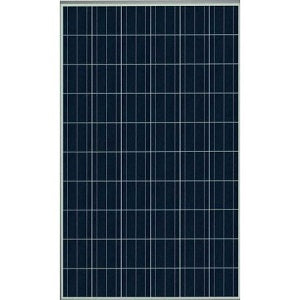
Solar panel efficiency rated in the lab — 20-23% for modern monocrystalline modules — is the best case. In real-world solar flood light installations, several factors reduce that figure. Understanding what affects it helps both at the specification stage and during day-to-day operation.
1. Panel orientation and tilt angle
South-facing orientation in India is optimal. Tilt angle should roughly match the local latitude (e.g., 13-15° in Bangalore, 28° in Delhi). Off-angle installations can lose 10-25% annual output. For flood lights mounted on poles or walls, the panel position is fixed at manufacture — make sure the rated orientation matches your install location.
2. Cell temperature
Counterintuitively, hot panels produce less power. Output drops roughly 0.4% per °C above the rated 25°C. On a 60°C Indian summer afternoon, that's a 14% reduction from the lab spec. Modern monocrystalline cells have better temperature coefficients than polycrystalline, which is one reason mono has displaced poly in premium fixtures.
3. Soiling — dust, pollen, bird droppings
Accumulated dust can reduce output 10-30% in Indian conditions, particularly during dry seasons. Bird droppings are worse because they can create hot spots that damage cells. Routine panel cleaning every 2-3 months in dusty regions is the highest-ROI maintenance you can do on a solar flood light.
4. Partial shading
Even a small shadow on part of the panel can disproportionately reduce output — older panels lose much more than the shaded percentage because shaded cells become a bottleneck. Modern panels use bypass diodes that limit this effect, but unshaded mounting remains the cleanest solution.
5. Spectral irradiance — cloud, time of day
Direct sunlight produces full rated output. Cloudy conditions reduce output to 20-40% of nominal; heavy overcast can drop it under 10%. Early morning and late afternoon also produce less because sunlight passes through more atmosphere. Most solar flood lights are sized for 4.5-5.5 peak sun hours per day to account for this.
6. Panel age and degradation
Solar panels lose output gradually with age — typically 0.5-1% per year for quality monocrystalline modules. A panel that produces 100W new will produce ~90W after 10 years and ~80W after 20 years. Quality panels carry 25-30 year output warranties guaranteeing this curve.
7. Cable losses and connector quality
For flood lights with integrated panels, this is minimal. For larger installations with panel cables, undersized or corroded cables can lose 2-5% of generated energy. Quality MC4-type connectors and properly-sized cable runs minimise this.
8. Mismatched panel and battery voltages
If using a PWM controller with a panel voltage significantly above the battery voltage, the excess voltage is wasted. MPPT controllers solve this by converting voltage to current — see solar street light controllers for the full comparison.
What this means in practice
A 100W rated panel in real-world Indian solar flood light operation typically delivers 70-85W under good conditions and 50-65W under typical mixed conditions. System design accounts for this — a properly sized fixture has panel capacity 2-3× the LED wattage to provide safety margin for all the factors above.
For Shinesun's flood lights and solar street lights, monocrystalline panels are specified with appropriate sizing for Indian conditions. Browse the solar flood lights range or talk to our team for site-specific sizing.