
Things to Know Before Buying a Solar Street Light (2026)
Shinesun's editorial team writes about solar lighting based on our manufacturing, installation, and field-service experience across India.
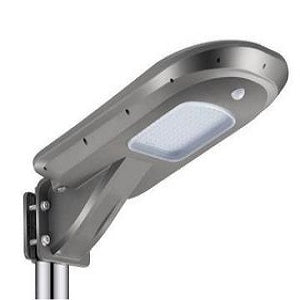
Buying a solar street light isn't complicated once you know what matters — but the market is noisy with vague specs, marketing claims, and budget options that disappoint. Here are the twelve things actually worth knowing before you buy in 2026.
1. Wattage to pole height match
The right wattage depends on pole height:
- 3-4m: 12-20W
- 6-8m: 30-60W
- 8-9m: 60-120W
- 9-10m+: 100-200W
Wrong wattage for pole height means over-lit hotspots or dark zones. See pole height guide.
2. Lumens matter more than wattage
Two "40W" fixtures can deliver dramatically different brightness depending on LED efficacy. Quality LEDs deliver 130-160 lumens per watt; budget LEDs 90-110. Always check rated lumens, not just wattage.
3. Battery chemistry is the single most important spec
For any fixture meant to last:
- LiFePO4 — non-negotiable for street lights (8-10 years)
- Li-Ion — acceptable for compact gate lights (4-6 years)
- Lead-acid — hard pass on new fixtures in 2026
If a supplier won't disclose battery chemistry, walk away.
4. Panel-to-LED wattage ratio
Quality fixtures size the solar panel at 2-3× the LED wattage. A 40W LED needs an 80-120W panel. This is the #1 spec that separates fixtures that work for a decade from fixtures that fade after a season.
5. Monocrystalline panel
The 2026 standard. 20-23% efficiency, longer life, better low-light performance than polycrystalline. There's no good reason to specify polycrystalline new in 2026 — the price gap has narrowed too much.
6. Motion sensor — standard, not optional
A motion sensor doubles useful battery hours and improves perceived security. Quality 2026 fixtures include either PIR or microwave radar motion sensors. Verify:
- Sensor type (PIR / microwave / dual)
- Detection range
- Dim-state brightness (20-30% typical)
- Hold time after detection
7. MPPT charge controller (above 30W)
MPPT controllers extract 20-30% more energy from panels in cloudy conditions than basic PWM. For fixtures above 30W, MPPT should be standard. Adds modest cost; meaningful efficiency benefit.
8. IP66 housing
IP65 is the minimum for outdoor; IP66 is the right specification for Indian monsoon and coastal conditions. Below IP65 is for sheltered locations only. See IP ratings.
9. Die-cast aluminium housing
ABS plastic housings degrade fast in Indian sun. Die-cast aluminium with powder coating lasts decades. The cost difference is small; the longevity difference is enormous.
10. Warranty terms — separately for each component
Quality fixtures carry:
- 5+ years on solar panel
- 2-5 years on battery (8-10 year expected service life)
- 2 years on LED driver
- 2-5 years on overall fixture
Warranty terms that only cover "manufacturing defects" without time periods, or single-line warranties without component-level detail, are red flags.
11. Supplier reputation and service network
For fixtures meant to last 10 years, the supplier needs to still exist (and be able to service the fixture) in year 5 and year 8. Marketplace-only sellers with no real address and no service network are a poor bet for long-life fixtures.
12. Site suitability before buying
Before ordering, walk the proposed installation sites:
- Direct sun exposure verified at 10am, noon, 3pm
- No shading from trees, buildings, future construction
- Foundation feasibility for the pole specification
- Safe access for maintenance (cleaning, future battery replacement)
Installing solar in fundamentally unsuitable sites is the #1 reason solar fails in residential settings. Site fit comes before product specification.
13. ALMM compliance for tendered or institutional projects
From 1 June 2026, MNRE's ALMM List-II (Approved List of Models and Manufacturers — solar cells) becomes mandatory for government, PSU, and CPSU solar projects, alongside the long-standing List-I requirement for modules. If you're buying for a government, CPSU, or institutional project: verify your supplier's modules and cells appear on the relevant ALMM lists, and ask for written certification. For private residential or commercial buyers, ALMM isn't required — but suppliers who use ALMM-listed components typically have better-controlled supply chains than those who don't.
Marketing claims to ignore
- "Smart" / "AI" / "IoT" features on basic fixtures — usually marketing fluff
- "Industrial grade" / "military spec" without specific certification numbers — meaningless
- Wildly inflated wattage claims — "120W solar fixture" with no spec sheet is usually 30-50W actual
- "15-year battery" claims for lead-acid or generic lithium — physically not credible
- "Self-cleaning panel" — coatings reduce dust accumulation but don't eliminate cleaning
- "50,000 lumens super-bright" claims on small fixtures — physically impossible at the rated wattage
Where to start your selection
- Identify pole height (or required mounting height) and lit area dimensions
- Match wattage to that
- Verify battery chemistry, panel sizing, sensor type, IP rating
- Request warranty terms and reference installations
- Get a sample for site testing if scale is significant
- Place order from supplier with documented service presence in your region
For commercial buyers specifically
- Write specifications including all critical components, not just headline wattage
- Filter bidders on demonstrated quality, not just lowest quote
- Sample fixtures for environmental and field testing before bulk orders
- Include installation and service SLAs in contract terms
- Plan for periodic inspection and maintenance over fixture lifetime
What good fixtures cost
- Residential street light, 40W quality — ₹7,000-12,000
- Commercial street light, 60-100W quality — ₹12,000-25,000
- Garden / wall fixture — ₹2,500-8,000
- Gate light — ₹2,000-6,000
- Flood light (motion-activated) — ₹2,500-15,000 depending on output
Cheaper than this for street-light-class fixtures usually means major component compromises.
Shinesun's solar street light range
Shinesun's range covers 15W-150W solar street lights with LiFePO4 batteries, monocrystalline panels, MPPT controllers (above 30W), motion sensors, and IP66 die-cast aluminium housings — designed for 8-10 year service life in Indian conditions. Browse the solar street lights collection, or contact the team for site-specific recommendations.