
IP Ratings and Flood Light Housing — What to Look For (2026)
Shinesun's editorial team writes about solar lighting based on our manufacturing, installation, and field-service experience across India.
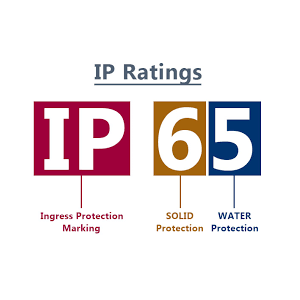
The IP rating on a flood light tells you how well its housing keeps dust and water out. For solar flood lights in Indian conditions — monsoon, dust, coastal salt — IP rating is not a marketing checkbox but a real determinant of whether the fixture survives its first three monsoons. Here's what each rating actually means and what to specify in 2026.
The IP rating decoded
IP = "Ingress Protection." Two digits follow: first is dust resistance (0-6), second is water resistance (0-9K).
First digit (dust)
- 0 — no protection
- 4 — protected against objects ≥1mm
- 5 — dust protected (some ingress, no functional impact)
- 6 — dust tight (no ingress)
Second digit (water)
- 0 — no protection
- 4 — splashes from any direction
- 5 — low-pressure water jets (rain in wind)
- 6 — high-pressure water jets (heavy storms)
- 7 — temporary immersion (up to 1m, 30 min)
- 8 — continuous immersion
- 9K — high-pressure, high-temperature water jets (industrial cleaning)
What's appropriate for solar flood lights
IP44 — indoor / sheltered only
Not adequate for outdoor solar flood lights in India. Suitable only for under-eave, balcony-shelter, or indoor emergency applications.
IP65 — outdoor minimum
Dust-tight and protected against rain. The minimum for outdoor installation in mild-monsoon zones. Most basic solar flood lights are sold at this rating.
IP66 — recommended for India
Dust-tight and protected against heavy rain and pressure spray. The right baseline for Indian monsoon conditions, including coastal regions. Quality solar flood lights typically ship at IP66 in 2026.
IP67 — submersion-tolerant
Withstands temporary immersion. Relevant for fixtures near water bodies, pool/garden settings prone to flooding, or low-mount installations exposed to standing water.
IP68 / IP69K — specialised
Industrial / underwater applications. Rare in residential or commercial flood lighting.
Where IP rating most matters
- Coastal sites — salt spray and monsoon. IP66 minimum, ideally with anti-corrosion coatings.
- Industrial areas — dust and pollutants. IP66.
- Low-mounted fixtures (under 2m) — splashing from runoff. IP67 ideal.
- Pool / pond surrounds — risk of immersion. IP67 minimum.
- Heavy-monsoon zones (NE, Konkan, Kerala) — IP66 absolute minimum.
What IP rating alone doesn't tell you
IP testing is a controlled lab condition. Real-world variables that matter equally:
- Gasket material — quality silicone or EPDM rubber lasts 10+ years; cheap rubber hardens and fails in 2-3 monsoons
- Cable entry sealing — proper cable glands matter as much as the housing rating
- Housing material — die-cast aluminium vs ABS plastic vs cheap injection-moulded plastic
- UV resistance — Indian sun degrades cheap plastics and pigments; powder-coated metal lasts longer
- Drainage / breathing holes — paradoxically, some quality fixtures include controlled drainage to handle condensation
How to verify the IP rating claim
- Look for an IP rating sticker or moulding on the fixture itself, not just the box
- Ask for the test certificate (legitimate manufacturers will have one)
- Inspect the gasket and cable entry visually — quality fixtures look properly sealed
- Verify the warranty covers water-ingress damage — if it doesn't, the supplier doesn't trust their own rating
Common housing issues that defeat IP rating
- Damaged gasket on installation — pinched, twisted, or torn during mounting
- Cable entry not properly sealed — the most common point of failure
- Aftermarket modifications — drilling housings for extra wiring voids the rating
- Aged gasket compression — over 5-7 years, even quality gaskets compress and lose seal; major reason fixtures fail "suddenly" at year 8-10
Practical recommendation
For 2026 India:
- Most residential / commercial outdoor — IP66 die-cast aluminium fixture from a real supplier
- Coastal or industrial — IP66 with extra anti-corrosion coating
- Pool / pond / low-mount — IP67
- Indoor emergency / sheltered — IP44-65 acceptable
Shinesun fixtures
Shinesun's outdoor flood and street lights ship at IP66 as standard, with die-cast aluminium housings and silicone gaskets. For specific installation environments or higher IP requirements, contact the team.