
LED Wattage in Solar Lights — Picking the Right Output (2026)
Shinesun's editorial team writes about solar lighting based on our manufacturing, installation, and field-service experience across India.
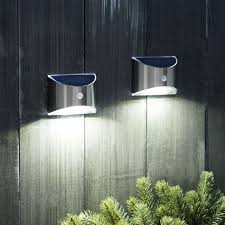
LED wattage is the headline spec most buyers look at first — and the one most often misunderstood. In 2026, lumens per watt matters more than raw wattage, and the right number depends on pole height, area to be lit, and which type of installation. Here's how to think about it.
Lumens per watt — the spec that actually matters
Modern LED chips deliver 130-160 lumens per watt. Budget no-name chips can run 90-110 lm/W; premium branded chips (Bridgelux, Lumileds, Osram) push 150-170 lm/W. The 2026 benchmark for a quality solar street light is around 140 lm/W system efficacy.
Two fixtures sold as "40W" can deliver very different brightness. A 40W premium fixture at 150 lm/W = 6000 lumens. A 40W budget fixture at 100 lm/W = 4000 lumens — a 50% gap. Always look for the actual lumen rating, not just wattage.
Matching wattage to pole height
- 3-4m pole — 12-20W LED. Pathways, garden zones, compound corners.
- 5-6m pole — 20-30W LED. Residential streets, society internal roads.
- 6-8m pole — 30-60W LED. Standard street lighting, commercial parking. The Solar Bat 40W typifies this band.
- 8-9m pole — 60-120W LED. Wider roads, industrial yards, large parking.
- 9-10m+ pole — 100-200W+ LED. Main roads, highway approaches, large open areas.
Watch out for inflated wattage claims
Some cheap imports advertise "120W" when the actual LED package is 30W and the "120W" is a marketing claim derived from… nothing in particular. Verifiable specs to ask for:
- LED chip count and per-chip wattage
- Total system wattage (LED + driver)
- Rated lumens at standard conditions
- LED chip manufacturer name
If a supplier can't provide these, the wattage claim is unverifiable.
Why the panel-to-LED ratio matters
Solar panel wattage should be 2-3× LED wattage. A 40W LED needs an 80-120W panel. Lower ratios mean the panel can't keep the battery topped up through average Indian conditions — leading to fixtures that work for the first dry month and fade thereafter. See how solar street lights work.
Motion sensor effectively boosts useful wattage
A 40W fixture with motion sensor dims to 30% (~12W) when nothing's around and ramps to full output on detection. Net effect: you get the perceived brightness of 40W when needed and the battery life of ~15W average. This is why motion sensor is the single highest-impact feature beyond core specs.
Colour temperature isn't wattage but matters for usage
- 3000K warm white — gardens, residential paths, hospitality settings
- 4000K neutral — mixed-use, society internal roads
- 5000-5700K cool white — streets, industrial, security applications (highest apparent brightness per lumen)
Most solar street lights ship as cool white; warm white variants exist for residential use.
Common wattage mistakes
- Over-lighting gardens — buying 40W for a small garden when 12-20W warm white would be more pleasant
- Under-lighting wide roads — using 40W on a 9m pole spaced 25m apart, leaving dark zones
- Chasing inflated wattage — buying a "100W" cheap import that delivers fewer lumens than a 40W quality fixture
- Ignoring sensor type — wattage without motion sensor delivers fewer practical lit hours than wattage with motion sensor
Quick sizing check
If you know your pole height and the area to be lit:
- Look up wattage range for your pole height (above)
- Check the fixture's rated lumens at that wattage (target ≥130 lm/W for system efficacy)
- Verify panel size is 2-3× LED wattage
- Confirm motion sensor
For specific recommendations, contact the Shinesun team with your pole height, lit area dimensions, and use case.