
Types of Batteries Used in Solar Lights — 2026 Guide
Shinesun's editorial team writes about solar lighting based on our manufacturing, installation, and field-service experience across India.
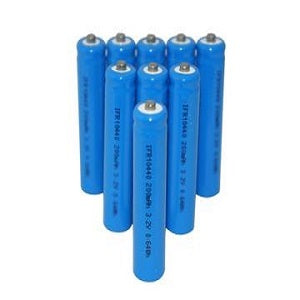
The battery is the single most important component in any solar light. The panel converts sunlight to electricity; the battery stores it; the LED uses it. If the battery fails, the light is dead — regardless of how good the rest of the system is. So when you're comparing solar lights, the battery chemistry is the first specification to check.
Below is a current 2026 view of the four chemistries you'll encounter in the market, including one that's just starting to appear in commercial products.
Lead-Acid and SMF — legacy budget option
Lead-acid (and its sealed maintenance-free variant, SMF) was the default for solar lighting in the early 2010s. It's still around in 2026, but mostly at the extreme budget end of the market and in some industrial-scale standalone systems.
Lifespan: 3-4 years in outdoor solar use. Shorter in extreme heat.
Pros: Cheapest upfront. Mature technology with predictable behaviour. Tolerates overcharging better than lithium chemistries.
Cons: Heavy and bulky — installation typically requires a separate battery box, which adds wiring complexity and creates a theft/tampering risk. Self-discharges quickly when idle. Releases gases during charging and needs ventilation. Lead is a toxic disposal concern at end of life.
Where it still fits: Small standalone gate lights at the lowest price point, or installations where the buyer expects to replace the battery every few years anyway.
Li-Ion (Lithium-Ion) — declining in outdoor solar
Li-Ion (the same chemistry family used in phones, laptops, and early EVs) was marketed as the modern upgrade over lead-acid through the 2010s. It's still widely used, but in solar street lighting specifically it's being displaced by LiFePO4 — for thermal and safety reasons covered below.
Lifespan: 5-6 years in outdoor solar use. Reduced in high-temperature deployments.
Pros: Compact, light, integrates well into all-in-one fixtures. Low self-discharge. No maintenance.
Cons: Thermal runaway risk if damaged or overheated — Li-Ion fires in EVs and inverters have become a visible consumer-safety concern since 2022. Capacity degrades faster at high temperatures, which matters for sun-baked outdoor fixtures.
Where it still fits: Compact fixtures where size matters more than thermal headroom (small gate lights), and sheltered applications like emergency indoor lights.
LiFePO4 (Lithium Iron Phosphate) — the current standard
LiFePO4 has become the default chemistry for serious solar street lights and outdoor fixtures. It addresses both of Li-Ion's main weaknesses — thermal performance and fire safety — while delivering longer lifespan, at a moderate cost premium.
Lifespan: 8 to 12 years in outdoor solar use.
Pros: Stable thermal behaviour up to ~60°C. Very low fire/thermal runaway risk — phosphate cathode is structurally stable, vents rather than ignites under failure conditions. Long cycle life. Maintenance-free.
Cons: Slightly heavier and bulkier per Wh than Li-Ion. Higher upfront cost. Reduced charging efficiency below ~5°C (not relevant for most of India).
Where it fits: Anywhere the fixture sits in direct sun, is meant to last 10+ years, or where replacement is expensive (high pole installations, remote sites). Shinesun's full solar street light range uses LiFePO4 as standard.
Sodium-Ion — what's coming
Sodium-ion is the chemistry to watch. First commercial cells from major manufacturers like CATL and BYD reached the market around 2023-2024, and they're starting to appear in stationary energy storage and a few solar-scale deployments in 2025-2026. The fundamental case is compelling: sodium is essentially unlimited (unlike lithium, which depends on geographically concentrated supply chains), and the chemistry is non-flammable.
For solar street lights specifically, sodium-ion is not yet mainstream — energy density is still lower than LiFePO4, and cell costs haven't fully scaled. But within a few years, expect to see budget-tier solar fixtures with sodium-ion batteries as a credible alternative to lead-acid, with similar safety properties to LiFePO4 at a lower price point.
When it'll matter: 2027-2029 for residential and commercial solar lighting. Worth tracking but not yet a buying decision factor.
How to choose
The decision is mostly driven by the use case:
- Permanent outdoor street lights, security lights, road lighting → LiFePO4. The lifespan and thermal performance justify the cost.
- Small compact fixtures, gate lights, emergency lights → Li-Ion is often the right size/cost fit.
- Extreme budget or temporary deployments → Lead-acid still has a role, with the caveat of shorter lifespan and more maintenance.
For Shinesun's recommended pairings, see the solar street light collection or browse the full product catalog.