
Why LiFePO4 Beats Li-Ion and Lead-Acid in Solar Street Lights (2026)
Shinesun's editorial team writes about solar lighting based on our manufacturing, installation, and field-service experience across India.
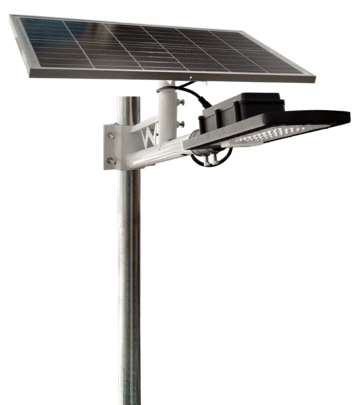
If you bought a solar street light in 2018, the marketing story was "lithium-ion is the modern upgrade over lead-acid." That story is now out of date. In 2026 the right comparison is LiFePO4 vs Li-Ion vs lead-acid — and for street lights specifically, LiFePO4 wins on every meaningful metric except upfront cost.
Quick comparison
| Property | Lead-acid | Li-Ion | LiFePO4 |
|---|---|---|---|
| Typical lifespan in outdoor solar use | 3-4 years | 5-6 years | 8-10 years |
| Operating temperature ceiling | ~45°C | ~45°C | ~60°C |
| Thermal runaway / fire risk | Low | Higher | Very low |
| Maintenance required | Regular (top-up, cleaning) | None | None |
| Weight per Wh | Heavy | Light | Light |
| Self-discharge rate | High | Low | Very low |
| Performance in cold (below 5°C) | Drops sharply | Reduced charge | Reduced charge |
| Upfront cost | Lowest | Mid | Highest |
Why thermal performance matters in India
A solar street light spends every day mounted to a pole, panel facing the sun, battery housed in a fixture that bakes for 8-10 hours straight. In Rajasthan, Gujarat, and most of central India, summer fixture temperatures cross 55°C internally — well above what conventional Li-Ion is rated to safely cycle through. The result is accelerated capacity loss: Li-Ion cells that should last 5 years in a controlled environment may degrade to 50% capacity in 2-3 years on a sun-baked pole.
LiFePO4 cells are designed for this. The chemistry is stable up to about 60°C cycling, with much slower degradation curves at elevated temperature. For a fixture you want to install once and forget for a decade, the choice is straightforward.
Why fire safety has become a buyer concern
The past few years have seen visible incidents of Li-Ion battery fires — most prominently in two-wheeler EVs and consumer inverters during 2022-2024. Public awareness has shifted, and rightfully so: a damaged or overheated Li-Ion cell can undergo thermal runaway, producing flame and smoke that can spread quickly in an enclosed fixture.
LiFePO4 chemistry is fundamentally different. The phosphate cathode is structurally stable; even when punctured or overheated to failure, LiFePO4 cells tend to vent rather than ignite. For a fixture installed on a public pole or a residential compound wall, that difference matters.
Lifespan and total cost of ownership
Upfront, a LiFePO4 street light typically costs 15-25% more than a comparable Li-Ion or 30-40% more than a lead-acid equivalent. Over a 10-year window, however, the math favours LiFePO4:
- A lead-acid system will likely need 2-3 battery replacements over 10 years, plus labour each time.
- A Li-Ion system in Indian outdoor conditions typically needs 1 replacement.
- A LiFePO4 system, properly sized, usually runs the full 10 years on its original cell pack.
For street and security applications where replacement involves a pole climb, the labour savings alone justify the upfront premium.
When does Li-Ion still make sense?
Li-Ion isn't obsolete — it's just the right tool for a narrower set of jobs in solar lighting. The two main cases:
- Compact fixtures where size matters more than thermal headroom. Shinesun's Volcano series gate lights, for example, use Li-Ion because the fixture is small, designed for shaded mounting on gates or walls, and the use cycle is light. The thermal advantage of LiFePO4 is less relevant when the fixture doesn't sit in direct sun all day.
- Indoor or sheltered applications — emergency lights, indoor solar lamps — where the temperature profile is benign.
Where lead-acid still fits
Lead-acid still has a role at the extreme budget end of the market, particularly for small standalone gate lights or temporary deployments where the customer is comfortable with a 3-4 year replacement cycle. For any installation that's meant to be permanent and unattended, the long-term cost case for LiFePO4 is too strong to ignore.
Shinesun's lineup
Shinesun's solar street light range — Bat, Owl, Nightingale, Nightjars, Hawk, Moon series — uses LiFePO4 batteries as standard. Li-Ion appears in the Volcano gate light series where the use case justifies it. Browse the solar street lights collection or see specific battery specifications on each product page.