
Which Solar Panel is Suitable for Solar LED Street Lights? (2026)
Shinesun's editorial team writes about solar lighting based on our manufacturing, installation, and field-service experience across India.
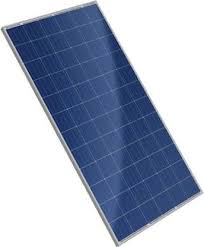
The right solar panel is the foundation of a working solar LED street light. Get the panel right, and the fixture operates reliably for a decade. Get it wrong — too small, wrong type, or poorly mounted — and you're looking at faded output, drained batteries, and premature failures. Here's how to pick the right panel for an LED street light in 2026.
The panel-to-LED wattage ratio (the single most important spec)
Quality fixtures use a panel rated at 2-3× the LED wattage. The ratio accounts for:
- Charging losses (panel-to-battery efficiency)
- Cloudy days and seasonal variation
- Dust accumulation between cleanings
- Battery cycling efficiency
- Safety margin for autonomy days
Examples:
- 20W LED — 40-60W panel
- 40W LED — 80-120W panel
- 60W LED — 120-180W panel
- 100W LED — 200-300W panel
Cheap fixtures often undersize the panel to hit a price point — they look fine the first dry season, then fade through monsoon and never recover.
Panel type — monocrystalline is the 2026 standard
Monocrystalline (recommended)
- 20-23% efficiency
- Better low-light performance
- Longer lifespan (25-30 years)
- Less sensitive to high temperature derating
- More watts per square cm — smaller, lighter for the same output
Polycrystalline (legacy)
- 15-18% efficiency
- Lower cost (gap shrinking each year)
- Slightly shorter lifespan
- Larger panel for the same output
In 2026, the price gap between mono and poly has shrunk enough that monocrystalline is the right answer for almost any new solar street light. See types of solar panels.
Panel voltage and battery matching
Panel output voltage needs to match (or with MPPT, be compatible with) the battery voltage:
- 12V battery system — panel typically 17-22V open-circuit voltage
- 24V battery system — panel typically 34-44V open-circuit voltage
- MPPT controllers can accept higher-voltage panels and step down efficiently
- PWM controllers require closer voltage matching
For most fixtures, this is factory-matched and not something the buyer needs to compute.
Mounting and orientation in India
- Tilt angle — equal to latitude for year-round optimal (15-28° for most of India)
- Orientation — south-facing for fixed-mount installations
- Shading — even partial shade on one cell can disable a whole string. Site selection matters more than panel choice.
- Installation height — high enough to avoid ground-level shading from people, vehicles, vegetation
All-in-one fixtures fix the panel orientation at the top of the pole, so site selection (not blocked by trees or buildings) becomes the key variable.
Physical characteristics to verify
- Tempered glass front — for impact and weather resistance
- EVA encapsulation — bonds cells, protects against moisture
- Anti-reflective coating — improves low-angle performance
- Aluminium frame — sealed edges, corrosion-resistant in coastal sites
- Junction box — weatherproof, with proper cable glands
Common panel-related mistakes
- Trusting the nameplate rating — some cheap panels are rated at unrealistic test conditions; check actual measured output if possible
- Buying on price alone — a budget panel saves ₹500 but costs you 30% less generation over 10 years
- Mismatched panel and LED wattage — undersized panel is the #1 reason cheap fixtures fail in their first monsoon
- Ignoring shade at install — fixture works fine until the neighbouring tree grows in
- Cleaning neglect — even the best panel loses 20% output after a few months of dust accumulation
Panel lifespan considerations
- First 2 years — slight initial degradation expected (1-3% from baseline)
- Years 2-25 — linear degradation of ~0.5%/year
- Year 25+ — quality panels still deliver 80%+ of original output
- Failure modes — usually weather damage (hail, debris impact) or junction box water ingress rather than cell failure
Quality panels carry 25+ year linear performance warranty.
Practical checklist for choosing a panel
- Monocrystalline silicon
- Rated at 2-3× LED wattage
- Tempered glass front with anti-reflective coating
- EVA encapsulation, aluminium frame
- Weatherproof junction box
- 25-year linear performance warranty
- Real measured output reasonably close to nameplate (within 5%)
Shinesun's panel approach
Shinesun fixtures use monocrystalline panels sized at 2-3× LED wattage with anti-reflective coating and tempered glass, rated for outdoor Indian conditions and backed by panel-specific warranty terms. For specific panel specs on individual fixtures, see product pages or contact the team.