
Solar Street Lights — Advantages and Disadvantages (2026)
Shinesun's editorial team writes about solar lighting based on our manufacturing, installation, and field-service experience across India.
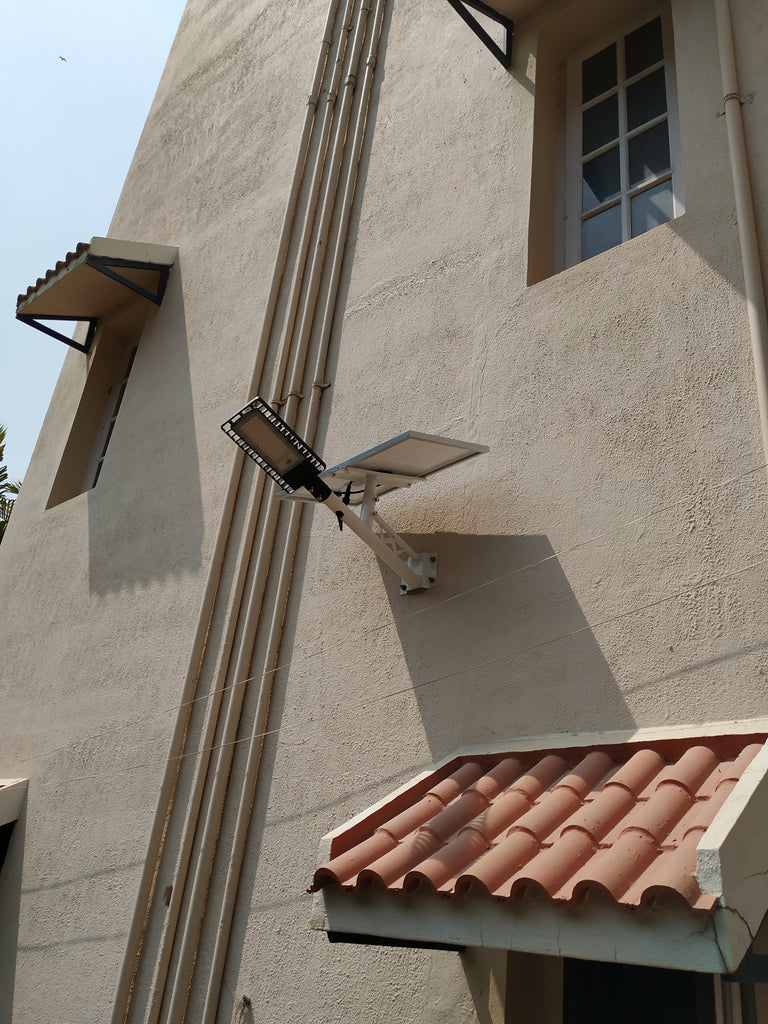
Solar street lights have become the default choice for most off-grid and semi-urban lighting in India, but they aren't a fit for every site. Here's an honest 2026 view of where they win and where they fall short.
Advantages
1. No electricity bills, ever
Once installed, a solar street light costs ₹0 to run. For a 40W fixture running 10 hours a night, that's roughly 150 units of grid electricity avoided per year — at commercial tariffs, ₹1,000-1,500 per pole per year.
2. Works through grid outages
Solar fixtures don't depend on the grid. They keep working through power cuts, storms, and infrastructure failures — exactly when reliable lighting matters most.
3. No cabling or trenching
Each pole is a self-contained system. Installation doesn't require digging cable runs, laying conduits, or coordinating with utilities. This is often the largest single cost saving versus conventional street lights.
4. Long lifespan with low maintenance
Modern LiFePO4 batteries last 8-10 years on the original pack. LED chips typically run 50,000+ hours. Routine maintenance is essentially limited to panel cleaning every few months in dusty regions.
5. Near-zero operating emissions
The grid mix in India is still substantially coal-heavy. Every grid-powered fixture replaced with solar removes that consumption from the system.
6. Theft-resistant on integrated designs
Older solar street lights with separate battery boxes were vulnerable to theft. All-in-one and integrated fixtures (battery inside the fixture, mounted on top of the pole) have largely eliminated this concern.
Disadvantages
1. Higher upfront cost than basic grid fixtures
You're paying for the panel and battery up front instead of spreading the cost across years of electricity bills. The total cost of ownership over 10 years favours solar, but the initial cheque is larger.
2. Sun-dependent
Performance is tied to available daylight charging. Heavily shaded sites (tall buildings, dense tree canopy) won't charge reliably. Northern hill regions with long monsoon windows need oversized panels to compensate.
3. Limited very-high-output options
For large sports grounds, industrial yards, or installations needing 500W+ per fixture, battery sizing becomes impractical. These applications still favour grid power.
4. Battery is a wear part
Even good LiFePO4 cells degrade. After 8-10 years, the battery will need replacement — and at high pole heights, that's a meaningful service cost.
5. Quality varies widely in the market
The cheap-import end of the market is full of fixtures with undersized panels, low-quality LEDs, and lead-acid batteries that fail in 2-3 years. The upfront cost difference between a cheap fixture and a quality one is small compared to the total cost of replacing a failed cheap installation.
When solar is the right choice
Off-grid sites, residential compounds, internal roads, parking, gardens, parks, religious sites, semi-urban streets, factory premises — anywhere without dense overhead shade or existing reliable grid connection.
When to think twice
Dense urban environments with poor sun access; very high-output installations; sites with existing grid infrastructure where the cost of switching outweighs ongoing electricity savings.
For most outdoor lighting requirements in India in 2026, the advantages substantially outweigh the disadvantages. The Solar Bat 40W is the right starting point for residential and small-commercial installations. For larger sites, contact the Shinesun team with your specifics.