
How Are Solar Panels Made? — 2026 Explainer
Shinesun's editorial team writes about solar lighting based on our manufacturing, installation, and field-service experience across India.
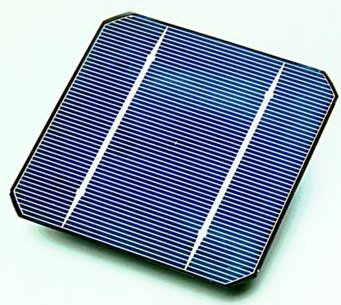
A finished solar panel looks deceptively simple — a flat sheet of glass with cells beneath. The manufacturing chain that produces it is one of the more complex in modern electronics, spanning silicon refinement, crystal growth, cell fabrication, and module assembly. Here's how a 2026 solar panel actually gets made.
1. Silicon refinement
The starting material is silicon — second most abundant element in the Earth's crust, but useless for solar at natural purity. Quartz sand (silicon dioxide) is reduced in an arc furnace with carbon to produce metallurgical-grade silicon (~98% pure). This is then further refined through the Siemens process or fluidised bed reactor to reach 9-nines purity (99.9999999%) — solar-grade polysilicon. India's polysilicon production has been scaling significantly under the PLI scheme since 2023.
2. Crystal growth — mono vs poly
The purified polysilicon is melted and crystallised in one of two ways:
- Monocrystalline — Czochralski process. A seed crystal is dipped into molten silicon and slowly pulled out, rotating, drawing a single continuous crystal "ingot" up to 2m long. This crystal has uniform structure throughout, which translates to higher efficiency.
- Polycrystalline — molten silicon is cast into a square mould and allowed to cool. Multiple crystals form, separated by grain boundaries. Simpler and cheaper, slightly lower efficiency.
3. Wafer cutting
The ingot is sliced into thin wafers (~150-200 microns thick) using diamond wire saws. The cutting process produces significant silicon dust waste, which modern manufacturers increasingly recycle back into the polysilicon stream.
4. Cell fabrication
Each wafer becomes a solar cell through several steps:
- Texturing — chemical etching creates a microscopically rough surface that traps incoming light.
- Doping — phosphorus is diffused into the top surface to create an N-type layer (the silicon below is doped with boron to be P-type). The junction between the two creates the photovoltaic effect.
- Anti-reflective coating — a thin silicon nitride layer is deposited to maximise light absorption (this is what gives panels their characteristic dark blue/black colour).
- Metallisation — fine silver lines are screen-printed on the front (to collect electricity) and a full aluminium layer on the back (to complete the circuit).
- Firing — the cell is heated to bond the metal contacts into the silicon.
5. Module assembly
Individual cells (~6-7W each) are connected in series with thin metal ribbons (tabbing) and arranged into a matrix typically 60-72 cells for residential modules, 36-cells for solar street light panels.
The matrix is laminated in an oven between:
- Tempered glass on top (impact-resistant, anti-reflective)
- EVA (ethylene vinyl acetate) encapsulant sheets above and below the cells
- Polymer backsheet (or glass for bifacial modules) on the bottom
The whole stack is then framed in anodised aluminium with a junction box on the back for cable connections.
6. Quality testing
Every finished module is tested under simulated sunlight (flash test) to verify it produces its rated wattage. Modules also undergo electroluminescence imaging to detect microcracks invisible to the eye, plus various stress tests (thermal cycling, humidity-freeze, mechanical load) for batch certification.
What's changing in 2026
- Bigger wafers — M10 and G12 wafer formats (182mm and 210mm vs older 156mm) have become standard, allowing higher-wattage panels with the same cell count.
- TOPCon and HJT cells — newer cell architectures pushing module efficiency to 22-24%.
- Bifacial designs — modules that absorb light on both sides, capturing reflected light from the ground for 10-20% extra output.
- Indian manufacturing scale — significant capacity build-out under PLI; less dependency on imports than even 3 years ago.
For Shinesun's solar street lights, the panels are specified as monocrystalline silicon with appropriate wattage for the fixture. To see the products in detail, browse the street light range.