
Why Solar Street Lights are Beneficial for Rural Areas (2026)
Shinesun's editorial team writes about solar lighting based on our manufacturing, installation, and field-service experience across India.
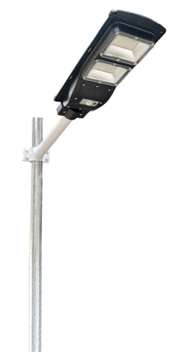
Rural India is where solar street lights deliver some of the highest practical value in any deployment — and where they've already transformed lighting access for thousands of villages and panchayats. The reasons are specific to rural conditions and worth understanding for anyone planning rural installations in 2026.
The rural conditions that favour solar
1. Patchy grid presence
Many rural areas have grid connections, but reliability is far from urban standards. Daily outages, voltage fluctuations, and seasonal disruptions are common. Solar street lights don't depend on grid availability — they keep working through all of this.
2. High cost of new grid extension
Installing new grid-tied lighting in rural areas often requires extending lines, transformers, and metering — a per-fixture cost that can easily exceed the fixture itself. Solar bypasses this entirely.
3. Distributed installations
Rural lighting is often spread across long distances — between villages, along approach roads, at panchayat buildings, in agricultural settings. Solar's independence from cabling makes distributed deployment practical in ways grid lighting isn't.
4. Limited maintenance infrastructure
Rural areas often lack dedicated electrical maintenance crews. Solar lights with LiFePO4 batteries need minimal attention for 8-10 years — well-suited to "install once, leave alone" deployment patterns.
5. Abundant sunlight
Most of rural India gets 5-7 peak sun hours daily — well above what's needed for properly sized solar lighting. The natural resource is overprovisioned for the application.
Specific rural applications
Village street lighting
Internal village roads, main approach roads, common areas like panchayat offices, schools, and temples. Typical specs:
- 30-60W LED on 6-8m pole
- 2-3 day battery autonomy
- Motion sensor for battery efficiency
- Robust mounting for monsoon and wind exposure
School and educational facility lighting
Compound roads, approach paths, security around school buildings. Particularly valuable for evening classes, women's literacy programs, and after-hours community use. Better light = better attendance.
Agricultural / farm installations
Around storage facilities, equipment areas, paths between fields and farm housing. Combined with solar pumps and solar fencing for a complete off-grid setup.
Healthcare facility lighting
Primary health centres, sub-centres, anganwadis. Reliable lighting is genuine public health infrastructure — emergency arrivals, evening consultations, night security.
Religious site lighting
Temples, mosques, gurudwaras, churches — particularly those active in evening hours. Solar lighting handles intermittent occupancy efficiently with motion sensors.
Public safety installations
Bus stops, panchayat office surroundings, market areas. Well-lit public spaces directly improve security, particularly for women's mobility after dark.
The economic case in rural settings
Grid extension cost
Bringing grid power to a previously unlit pole in rural India can cost ₹20,000-100,000+ depending on distance, terrain, and local utility procedures. A solar fixture providing equivalent lighting costs ₹8,000-15,000 installed. The grid extension also adds ongoing tariff costs.
Operating cost
Grid-tied fixtures need monthly bill collection from the local body — often a real administrative burden in rural settings. Solar fixtures have no ongoing bills.
Service economics
Rural service calls are expensive (travel time, lack of nearby technician). Solar fixtures' long maintenance intervals (panel cleaning few times a year, battery replacement once a decade) match the practical service capacity.
Government schemes supporting rural solar
- PM-KUSUM — solar pumps for agricultural use; complementary to solar lighting in farm settings
- State-level solar lighting schemes — vary by state; many include subsidies or full-installation for panchayat-level lighting
- MNRE off-grid programmes — historical and ongoing support for rural solar lighting
- BRGF (Backward Region Grant Fund) and related programmes have funded rural solar lighting in many districts
Implementation considerations specific to rural settings
Theft and vandalism
Modern all-in-one fixtures with pole-top sealed components are far harder targets than older split designs. Battery in a sealed pole-top unit removes the main historical theft incentive (lead-acid scrap value).
Wildlife
Animals (cattle, dogs, sometimes wildlife) can trigger motion sensors. Adjust sensitivity if false triggers are frequent. PIR sensors tend to be more selective than microwave for this application.
Foundation conditions
Rural soils vary widely — alluvial, rocky, sandy. Foundation design needs site-specific consideration. Suppliers experienced in rural installations typically provide foundation guidance.
Lightning protection
Rural installations are often more exposed than urban ones. Include surge protection and proper earthing on all rural fixtures; lightning rods on tall poles.
Community involvement
Rural lighting projects work best with local community engagement — panchayat coordination on placement, local resident training on basic care (panel cleaning), village-level maintenance ownership.
Where rural solar lighting is most transformative
- Previously unlit areas — the marginal benefit of any lighting is highest where none existed
- Pathways between dwellings and common areas — public safety, particularly for women and elderly
- School and healthcare access points — educational and health outcome impact
- Religious and community gathering sites — social fabric reinforcement
- Approach roads to remote villages — emergency response improvement
What good rural solar deployment looks like
- Site survey before specification (not catalog-only sizing)
- Quality components — LiFePO4, monocrystalline panels, MPPT controllers, IP66 housings
- Proper installation including foundation, earthing, lightning protection
- Community engagement for cleaning and care
- Documented warranty terms accessible to the local body
- Service network reachable for warranty claims
- Annual or biennial inspection visits
What can go wrong (and what to avoid)
- Cheap fixtures procured on lowest-bid basis without spec verification — fade in 1-2 monsoons
- No earthing or lightning protection — fixtures damaged on first thunderstorm
- No follow-up service — fixtures eventually fail and aren't replaced
- No panel cleaning protocol — gradual output decline, eventual fixture "failure" that's actually charge starvation
- Suppliers chosen without service network in the deployment region
Shinesun in rural projects
Shinesun supplies solar street lights for rural and panchayat-level projects across India with site-appropriate specifications, durable LiFePO4 components, and service support for ongoing maintenance. For rural project enquiries, contact the team with location, scale, and any government scheme details.