
What Happens If You Put Regular Batteries in Solar Lights? (2026)
Shinesun's editorial team writes about solar lighting based on our manufacturing, installation, and field-service experience across India.
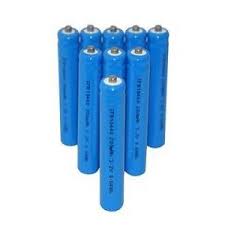
Short answer: don't. Regular alkaline batteries can't be charged by a solar panel, will leak or fail quickly when the controller tries, and in some cases create a safety risk. Here's what actually happens, and what to use instead.
Why regular batteries don't work
Solar lights are designed around rechargeable battery chemistries (LiFePO4, Li-Ion, NiMH, or lead-acid). Regular alkaline AA/AAA or D-cell batteries are primary (non-rechargeable). When a solar charge controller tries to push current into a primary cell, three things happen:
- Heat builds up — the cell can't absorb the current. Internal pressure rises.
- Electrolyte leakage — the cell vents or splits its casing, releasing corrosive electrolyte that damages contacts and surrounding components.
- In rare cases, rupture or fire — particularly with cheap or damaged alkaline cells. Modern controllers have some protection but it's not designed for this use case.
What about regular rechargeable batteries?
This is more nuanced. Standard NiMH AA cells (the kind used in cameras, remote controls) are rechargeable and can work in some basic solar garden lights — many off-the-shelf decorative solar lights use exactly these. However:
- Capacity is usually much lower than purpose-built solar batteries — limiting runtime.
- Charging profiles don't match — many controllers expect NiMH or LiFePO4 specifically, and using the wrong cell shortens life.
- Cold-weather performance is poor for NiMH.
For decorative garden lights with replaceable AA-sized batteries, NiMH replacements are usually fine. For sealed street lights with integrated battery packs, use only the manufacturer-specified replacement.
What you should use instead
- LiFePO4 cells — the standard for modern outdoor solar street lights. Long life, thermal stable, low fire risk.
- Li-Ion cells — used in compact fixtures (e.g., gate lights). Replace with the same chemistry and voltage.
- NiMH cells — appropriate for low-output decorative garden lights with replaceable AA batteries.
- Lead-acid / SMF batteries — legacy systems only. If you have one, consider upgrading to LiFePO4 next service cycle.
How to identify your battery type
Check the manufacturer documentation or look at the printing on the cell. Common markings:
- "LiFePO4" or "LFP" — lithium iron phosphate
- "Li-Ion" or "ICR/INR/IMR" — lithium-ion
- "NiMH" — nickel-metal hydride
- "SLA" or "VRLA" — sealed lead-acid
- Plain alkaline branding (Duracell, Energizer alkaline, etc.) — DO NOT use in solar charging
If you've already put alkaline batteries in a solar light
Remove them as soon as practical. Check the battery compartment for leaked electrolyte — if present, clean carefully (gloves; use baking soda solution to neutralise). Inspect terminals and surrounding components for corrosion damage. If damage is significant, the fixture may need professional service or replacement.
Shinesun fixtures
Shinesun's solar street lights use integrated LiFePO4 battery packs as standard, sized for the fixture wattage. Battery replacement at end of life (typically 8-10 years) should always use the manufacturer-specified pack. For service questions or replacement battery sourcing, contact the team.