
Types of Batteries Used for Solar Power Storage (2026)
Shinesun's editorial team writes about solar lighting based on our manufacturing, installation, and field-service experience across India.
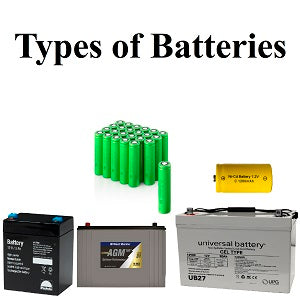
Battery technology has been the single biggest force shaping solar lighting over the past decade. In 2026, several battery types remain in use across solar applications — but the right answer for any given fixture has narrowed considerably. Here's the current view of battery options for solar power storage.
LiFePO4 (Lithium Iron Phosphate)
The 2026 standard for solar street lights and larger solar storage applications.
Key properties
- Cell voltage — 3.2V nominal (12.8V for 4-cell pack)
- Energy density — 90-160 Wh/kg (lower than Li-Ion but enough for fixed installations)
- Cycle life — 2000-4000+ cycles
- Lifespan — 8-10 years in solar lighting service
- Thermal stability — does not catch fire under fault conditions
- Operating temperature — wide range, handles Indian heat well
- Round-trip efficiency — 95-97%
- Cost — moderate; has fallen significantly since 2020
Where it fits
- Solar street lights (any size)
- Solar storage systems for rooftop solar
- Commercial backup / UPS applications
- Anywhere needing long life and thermal safety
What's improved 2017 → 2026
- Manufacturing costs fallen significantly
- Domestic Indian production capacity expanding
- Cell-level energy density improving
- Cell-to-pack designs reducing pack-level weight
Lithium-Ion (NMC, LCO, NCA — traditional Li-Ion)
Still appropriate for compact fixtures and weight-sensitive applications.
Key properties
- Cell voltage — 3.6-3.7V nominal
- Energy density — 150-250 Wh/kg (higher than LiFePO4)
- Cycle life — 500-1500 cycles depending on chemistry and conditions
- Lifespan — 4-6 years in solar lighting service
- Thermal behaviour — heat-sensitive; can vent or catch fire under severe fault
- Round-trip efficiency — 92-95%
- Cost — moderate; commodity at small sizes
Where it fits
- Compact solar gate lights (small, enclosed format)
- Small wall fixtures
- Indoor emergency lights
- Portable / temporary solar lighting
- Anywhere weight or volume matters more than maximum lifespan
Where it doesn't fit
- Pole-mounted street lights meant for 8+ year service
- High-heat applications (Rajasthan summer, equipment yards)
- Fire-sensitive installations (educational, residential, hospitality)
Sealed Lead-Acid (SLA / VRLA)
Legacy chemistry. Mostly displaced from new street light installations in 2026.
Key properties
- Cell voltage — 2V nominal (12V for 6-cell battery)
- Energy density — 30-50 Wh/kg (low)
- Cycle life — 300-800 cycles
- Lifespan — 2-3 years in solar lighting service
- Thermal behaviour — generally safe; some venting risk under fault
- Round-trip efficiency — 75-85% (worsens with age)
- Cost — cheapest upfront; expensive over lifetime due to short lifespan
Where it might still fit (rare in 2026)
- Budget cheap-import street lights (avoid these)
- Legacy installations that already have lead-acid (upgrade to LiFePO4 at next replacement)
- Very large grid-tied UPS systems where Wh/kg matters less than upfront cost
For new solar street light installations, lead-acid is no longer the right answer in 2026. The LiFePO4 cost gap has shrunk enough that lifecycle economics favour LiFePO4 in nearly every case.
Nickel-Metal Hydride (NiMH)
Used in small decorative solar lights with replaceable AA-format batteries.
Key properties
- Cell voltage — 1.2V nominal
- Energy density — 60-120 Wh/kg
- Cycle life — 500-1000 cycles
- Lifespan — 1-2 years in budget decorative lights
- Cold-weather performance — poor
Where it fits
- Budget decorative garden stake lights with AA-format batteries
- Festoon-style decorative strings
- Indoor solar emergency lights at small scale
Newer / emerging chemistries (mostly not in lighting yet)
- Sodium-ion — promising for stationary storage; not common in lighting fixtures yet
- Solid-state lithium — premium applications, not commodity for solar lighting yet
- Flow batteries — large grid storage only, not relevant to lighting
Comparing the practical choices
| Property | LiFePO4 | Li-Ion | Lead-Acid | NiMH |
|---|---|---|---|---|
| Lifespan (yrs) | 8-10 | 4-6 | 2-3 | 1-2 |
| Cycle life | 2000-4000+ | 500-1500 | 300-800 | 500-1000 |
| Thermal safety | High | Moderate | High | High |
| Energy density | Moderate | High | Low | Moderate |
| Round-trip efficiency | 95-97% | 92-95% | 75-85% | 70-90% |
| Hot climate behaviour | Excellent | Degrades | Degrades | Tolerant |
| Upfront cost | Moderate | Moderate | Lowest | Low |
| Lifetime cost | Best | Moderate | High | High |
How to choose for your application
Solar street lights, all sizes
LiFePO4. Non-negotiable for new installations meant to last.
Compact gate lights, small wall fixtures
Li-Ion is acceptable. LiFePO4 if available.
Decorative stake lights
NiMH AA-format is fine. Li-Ion better if budget allows.
Indoor emergency lights
LiFePO4 or Li-Ion depending on form factor.
Large solar storage (rooftop)
LiFePO4. Sometimes lead-acid for very large legacy installs.
Battery sizing — Wh, not Ah
Watt-hours (Wh) is the meaningful unit for sizing — combines voltage and capacity:
- Battery Wh = LED wattage × nightly hours × autonomy days × 1.3 safety factor
- 40W LED × 12 hours × 2 days × 1.3 = 1250 Wh
- At 12V, this is 104 Ah; at 24V, 52 Ah
End-of-life and recycling
- LiFePO4 — recyclable; recycling industry developing in India
- Li-Ion — recyclable; established recycling channels
- Lead-acid — well-established recycling industry; high recycle rates
- NiMH — recyclable; smaller-scale industry
For Shinesun fixtures, end-of-life battery service is part of warranty / service support. Contact the team for recycling and replacement guidance.
Shinesun's battery choices
Shinesun's main street light range uses LiFePO4. Compact gate fixtures use Li-Ion where appropriate. Battery chemistry is documented on product datasheets for transparency. For battery specs or service questions, contact the team.