
Solar Street Light Lightning Protection (2026)
Shinesun's editorial team writes about solar lighting based on our manufacturing, installation, and field-service experience across India.
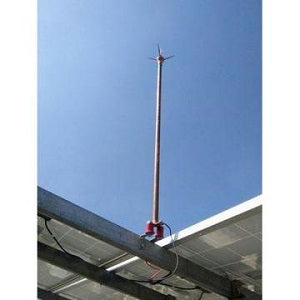
Solar street lights are tall, isolated, electrically connected outdoor installations — by definition lightning-attractive. In Indian conditions, particularly during monsoon and pre-monsoon thunderstorms, lightning is a real cause of solar street light failures. Here's what protection actually means, what to specify, and what's appropriate for different installations in 2026.
How lightning damages solar lights
Direct strikes are rare but devastating — the fixture is typically destroyed and may need full replacement. Far more common are induced surges:
- Direct strike — lightning hits the pole or fixture directly. High-energy event; fixture usually a total loss.
- Nearby strike — strike within a few hundred metres induces a voltage spike on the fixture's electronics. Controller, sensor, and driver electronics are the typical casualties.
- Power grid surge — not relevant to off-grid solar street lights (no grid connection).
- Atmospheric surge — non-strike high-charge atmospheric conditions can damage sensitive electronics over time.
The three layers of lightning protection
1. Lightning rod / arrester
For tall installations (9m+ poles) or open exposed sites, a lightning rod above the fixture intercepts strikes and channels them safely to earth. Components:
- Air terminal — pointed rod mounted above the fixture
- Down conductor — heavy copper cable connecting rod to earth
- Earthing system — copper rod or plate driven into ground
This is essential for arterial road lighting, industrial yards, and any installation where direct strikes are statistically likely.
2. Surge protection device (SPD)
An SPD inside the fixture absorbs induced voltage spikes before they reach sensitive electronics:
- MOV (Metal Oxide Varistor) — clamps voltage above a safe threshold
- GDT (Gas Discharge Tube) — for high-energy events
- Combination SPD — both, for layered protection
SPD adds modest cost to the fixture and is standard in quality commercial fixtures. Look for "Class II" or "Class III" SPD ratings on the datasheet.
3. Earthing / grounding
Proper earthing is the foundation of any lightning protection:
- Pole earthing — connect the pole to a dedicated earth electrode at the base
- Earth pit — copper rod (typically 1-3m) or copper plate buried in conditioned soil
- Resistance — earth resistance should be below 10Ω (ideally below 5Ω for commercial installations)
- Equipotential bonding — for multi-pole installations, bond all earthing systems together
What level of protection for what installation
Residential (3-6m poles, low-density sites)
SPD in the fixture is sufficient for most cases. Pole earthing recommended but not always mandatory. Lightning rods rarely needed.
Society / commercial internal roads (6-8m poles)
SPD plus pole earthing. Consider lightning rod on tallest fixtures or fixtures in exposed positions.
Main commercial / industrial roads (8-10m poles)
SPD, robust pole earthing, equipotential bonding across the installation, lightning rods recommended for exposed positions.
Arterial / highway / very tall installations (10m+ poles)
Full lightning protection: SPD, lightning rods, robust earthing, equipotential bonding, regular inspection schedule.
High-lightning regions (NE India, parts of West Bengal, Konkan)
Specify higher protection level than the pole height alone would suggest. The frequency of strikes makes the math favour the protection cost.
Common lightning damage patterns
- Single fixture dead after monsoon thunderstorm — induced surge damaged controller or driver
- Multiple adjacent fixtures dead — significant nearby strike; check earthing of all
- Pole-top damage — direct strike; lightning rod missing or inadequate
- Sensor dead, rest working — partial induced surge damage
- Gradual electronics failures across season — repeated atmospheric stress on under-protected fixtures
Inspection and maintenance
- Pre-monsoon — verify earthing resistance, check lightning rod and down conductor
- Post-monsoon — inspect for any visible damage, check all fixtures for normal operation
- Annual — measure earth resistance, replace any corroded earth electrodes
- Post-storm — visual inspection after any significant local thunderstorm
Costs and ROI of protection
Adding SPD to a fixture typically costs ₹500-1500. A lightning rod and earthing setup for a single pole runs ₹2,000-8,000. Fixture replacement after strike damage runs ₹8,000-30,000 plus installation labour and downtime. The math overwhelmingly favours protection on exposed sites.
What to ask suppliers
- Is SPD included in the fixture, and what class?
- What pole earthing is recommended and supported?
- For tall poles, is a lightning rod option available?
- Does the warranty cover lightning damage with documented earthing?
- Are inspection protocols documented for commercial installations?
Shinesun's lightning protection
Shinesun's commercial-grade fixtures include integrated SPD as standard, with documented earthing recommendations and lightning rod options for tall and exposed installations. For lightning protection specs on commercial projects, contact the team.