
Solar Light Battery Voltage — What You Need to Know (2026)
Shinesun's editorial team writes about solar lighting based on our manufacturing, installation, and field-service experience across India.
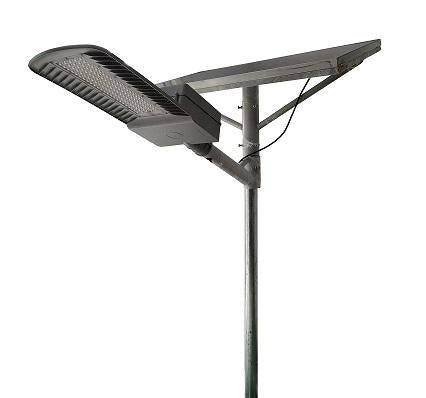
Battery voltage is one of those specs that most buyers ignore — until something goes wrong, or it's time to replace a battery. The voltage on the battery has to match what the controller and LED expect, or the fixture either won't work or will damage itself. Here's what voltage actually means for a solar light in 2026.
Standard solar light battery voltages
- 3.2V / 3.7V — single LiFePO4 / Li-Ion cell. Used in compact gate lights and small wall fixtures.
- 6V — small lead-acid (legacy) or two-cell lithium packs.
- 12V — the most common voltage for solar street lights. Standardised across most fixtures, panels, and controllers.
- 12.8V — nominal voltage of a four-cell LiFePO4 pack. Functionally compatible with 12V systems.
- 24V / 48V — used in larger commercial installations and very-high-wattage fixtures.
Why 12V became standard
Twelve-volt systems became the de-facto standard for solar street lighting because:
- Matches the legacy lead-acid battery standard that dominated through the 2010s
- Manageable current for typical fixture wattage (40W at 12V = 3.3A — easy to wire)
- Panel sizing and controllers became commodity at 12V
- Modern LiFePO4 4-cell packs are voltage-compatible with 12V controllers
For higher-wattage fixtures (above 100W), the conversation shifts to 24V or 48V to keep current manageable. Below that, 12V remains universal.
Nominal vs operating voltage
A "12V" battery isn't actually 12V most of the time. The voltage varies through the charge cycle:
- Lead-acid 12V — 10.5V (fully discharged) to 14.4V (fully charged)
- LiFePO4 12.8V nominal — 10.0V (fully discharged) to 14.6V (fully charged)
- Li-Ion 12V nominal — 9.0V (fully discharged) to 12.6V (fully charged)
The controller manages charging within the safe range for the chemistry. Mixing chemistries (e.g., replacing a lead-acid pack with a LiFePO4 pack without changing controller settings) is a common cause of premature battery failure.
Voltage matching when replacing a battery
When replacing a battery at end of life:
- Match the nominal voltage exactly — 12V replaces 12V, 24V replaces 24V
- Match or improve the chemistry — LiFePO4 replacing lead-acid is a typical upgrade, but the controller may need configuration changes
- Match or exceed capacity (Ah) — higher capacity gives longer autonomy
- Match or exceed cycle life — important for any battery seeing daily cycling
For Shinesun fixtures, use the manufacturer-specified replacement pack — controller settings and pack form factor are matched.
Voltage and capacity together — Wh matters
Capacity in amp-hours (Ah) only tells you usable energy when combined with voltage. A "100Ah" battery at 12V holds 1200Wh; the same Ah rating at 24V holds 2400Wh. Sizing solar lights uses Wh as the meaningful unit:
- Battery Wh = LED wattage × nightly hours × autonomy days × 1.3 safety factor
- Example: 40W × 12h × 2d × 1.3 = ~1250Wh
- At 12V, this is ~104Ah; at 24V it's ~52Ah
What goes wrong with battery voltage
- Low-voltage cutoff (LVD) triggered — battery drained below safe minimum; controller disconnects load. Common after extended cloudy stretch or aged battery.
- Voltage sag under load — aging battery can't hold voltage when LED is at full output; LED dims or cuts off prematurely.
- Overvoltage damage — usually means a faulty controller couldn't taper charging. Battery swells or fails.
- Mismatched chemistry voltage — replacing a chemistry with different voltage curve without controller reconfiguration.
Practical guidance for buyers
- Verify the battery voltage and chemistry on the product datasheet, not just the box
- For replacements, source the specified pack from the supplier rather than off-the-shelf alternatives
- Don't mix old and new cells in a multi-cell pack — mixing voltages causes uneven cycling and accelerated failure
- For commercial installations, ensure the supplier provides voltage and chemistry documentation for warranty and replacement purposes
Shinesun fixtures
Shinesun's main street light range uses 12V (or 12.8V nominal LiFePO4) systems with sized capacity for the rated wattage. Larger commercial fixtures use 24V or 48V as appropriate. For specific voltage and battery questions, see product datasheets or contact the team.