
Lumens in LED Solar Lights — What the Numbers Mean (2026)
Shinesun's editorial team writes about solar lighting based on our manufacturing, installation, and field-service experience across India.
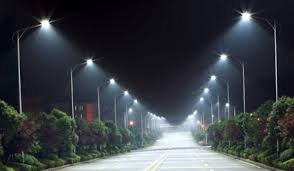
Lumens are the only honest measure of how bright a light actually is. Wattage tells you how much energy the fixture uses; lumens tells you how much light it produces. In 2026, the gap between these two numbers in LED solar lights varies enormously by fixture quality — which is why "lumens per watt" matters more than either number alone.
The three brightness terms you'll see
Lumens (lm)
Total light output from a fixture. A modern 40W solar street light delivers around 5000-6000 lumens. A small garden path light might be 50-150 lumens. Lumens are independent of distance — they describe the source, not the lit area.
Lux (lx)
Light intensity falling on a surface. One lux = one lumen spread over one square metre. Lux drops with distance from the source (inverse square law), which is why pole height and fixture spacing matter so much for street lighting.
Lumens per watt (lm/W)
The efficiency ratio. A premium 2026 LED chip delivers 150-170 lm/W; system-level efficacy after driver losses is typically 130-160 lm/W in quality fixtures. Below 100 lm/W usually indicates older or budget LED chips.
2026 lumen benchmarks by fixture type
- Garden path / stake lights — 50-200 lumens each (warm white preferred)
- Wall accent lights — 100-400 lumens
- Gate lights — 200-600 lumens (mixed warm/cool)
- Solar street lights (residential, 30-40W) — 4000-6000 lumens
- Solar street lights (commercial, 60-100W) — 8000-15000 lumens
- Solar flood lights (motion, security) — 1000-5000 lumens (when triggered)
- Heavy-duty street lights (150W+) — 20000+ lumens
Lux requirements by application
Indian roads and area lighting standards use lux at ground level as the design target:
- Pathways and walkways — 5-10 lux average
- Residential streets — 5-15 lux average
- Society / society internal roads — 10-20 lux average
- Main roads — 15-30 lux average
- Commercial / industrial parking — 20-50 lux
- Security-sensitive areas — 30-100 lux on demand
Lower targets work in low-traffic residential areas; higher targets matter for safety-critical, security, or high-traffic zones.
Why two fixtures sold as "40W" can be very different
The wattage label is what the fixture uses; lumens are what it produces:
- Premium 40W fixture: 150 lm/W × 40W = 6000 lumens
- Budget 40W fixture: 90 lm/W × 40W = 3600 lumens
That's a 67% gap from chip quality alone. Always check the rated lumens, not just wattage. Quality suppliers state both prominently; budget suppliers often state only wattage.
Colour temperature and perceived brightness
Cool white (5000-6500K) appears brighter to the human eye than warm white (3000K) at identical lumens — by about 10-15% in low-light conditions. That's why streets use cool white (apparent brightness matters for safety) and gardens use warm white (atmosphere matters more than apparent brightness).
How lumens degrade over time
LED chips don't burn out like incandescent bulbs — they slowly lose brightness. Quality LED packages are rated for L70 at 50,000+ hours (still delivering 70% of original lumens after 50,000 hours of operation). Cheap chips can drop to L70 in 10,000-20,000 hours.
This matters because a fixture that started at 6000 lumens and drops to 4200 (L70) is still "working" but visibly dimmer. Quality matters most for fixtures expected to last 8-10 years.
What to ask for when buying
- Rated lumens at the stated wattage
- Lumens per watt (system efficacy, not just chip)
- LED chip manufacturer (Bridgelux, Lumileds, Osram are typical premium brands)
- L70 / L80 rating at 50,000 hours
- Colour temperature (Kelvin) and CRI (colour rendering index, ≥80 preferred)
If a supplier can answer all five, you're looking at a quality fixture. If they can't, brightness claims are unverifiable.
Common lumen mistakes
- Buying on wattage alone — a quality 40W often beats a budget 60W
- Ignoring colour temperature — wrong CCT for the application looks wrong even at correct lumens
- Over-lighting gardens — too many lumens kill atmosphere
- Under-lighting safety-critical areas — insufficient lux at ground level despite high fixture lumens
- Trusting inflated marketing claims — "10000 lumens super-bright" on a fixture with no spec sheet usually isn't
Shinesun fixtures
Shinesun publishes lumens, wattage, colour temperature, and lumens-per-watt on all main product pages. For application-specific lumen and lux calculations (commercial layouts, multi-pole installations), contact the team.