
How Much Power Does a Regular Street Light Consume? (2026)
Shinesun's editorial team writes about solar lighting based on our manufacturing, installation, and field-service experience across India.
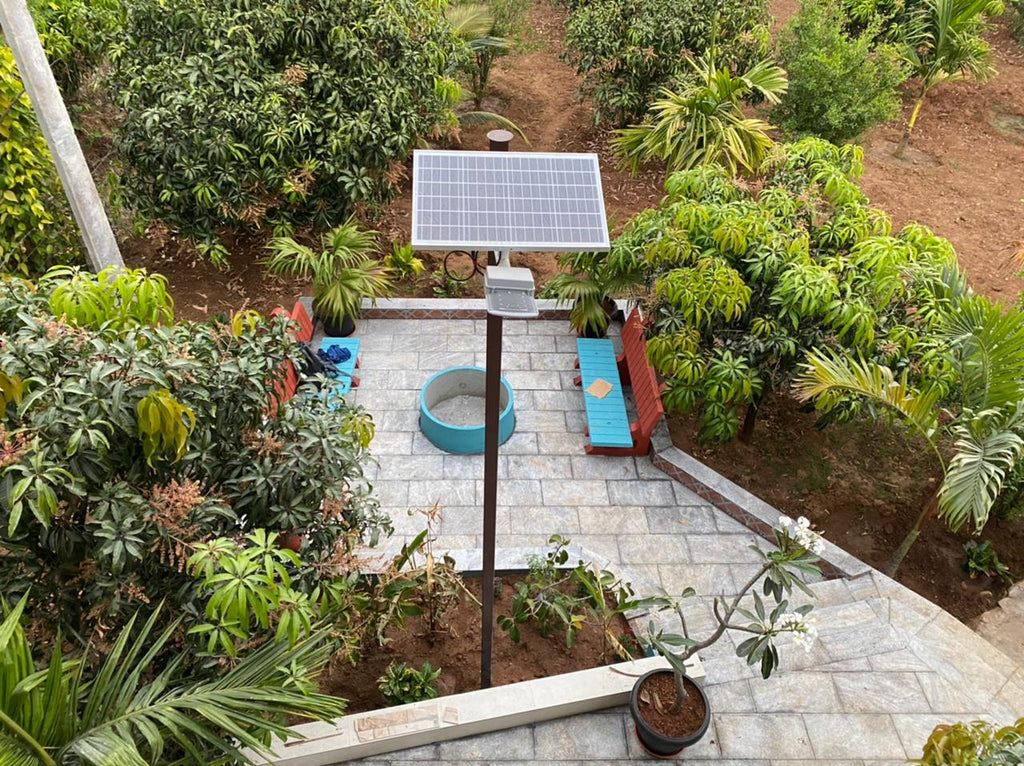
To understand why solar street lights make economic sense, it's useful to know what the grid-tied alternative actually consumes. Power consumption varies enormously by technology — from old 250W sodium-vapour fixtures to modern 50W LED fixtures delivering equivalent light. Here's the 2026 view of street light power consumption and what it means for solar comparisons.
Power consumption by technology
Modern LED street lights (2026 standard)
- Small residential street — 30-50W (5000-7500 lumens)
- Standard road — 60-100W (10000-15000 lumens)
- Wide commercial road — 100-200W (15000-30000 lumens)
- Arterial / highway — 200-400W (30000-60000 lumens)
HID (sodium vapour, metal halide — legacy)
- Small residential — 70-150W (lumen output lower than equivalent LED)
- Standard road — 250-400W
- Arterial / highway — 400-1000W
Old sodium-vapour fixtures (the yellow-orange ones from the 1990s-2000s) typically consumed 2-3× the power of equivalent modern LEDs while delivering inferior light quality.
Mercury vapour, incandescent (obsolete)
- 500W-1000W common in older installations
- 3-5× power of equivalent modern LEDs
- Mostly phased out across India
How power consumption translates to annual cost
For a single grid-tied LED street light running 12 hours/night:
- 40W fixture — 175 kWh/year. At ₹6-8/kWh, ₹1,000-1,400/year.
- 60W fixture — 263 kWh/year. At ₹6-8/kWh, ₹1,580-2,100/year.
- 100W fixture — 438 kWh/year. At ₹6-8/kWh, ₹2,630-3,500/year.
- 200W fixture — 876 kWh/year. At ₹6-8/kWh, ₹5,250-7,000/year.
For older HID fixtures still in service:
- 250W sodium vapour — 1095 kWh/year. At ₹6-8/kWh, ₹6,570-8,760/year.
- 400W sodium vapour — 1752 kWh/year. At ₹6-8/kWh, ₹10,510-14,020/year.
This is per fixture. Multiply by the number of fixtures and the cost adds up quickly. A 50-fixture residential society with old 250W HID fixtures was spending ~₹350,000/year on electricity alone; upgrading to LED or solar dramatically reduces this.
What affects actual consumption
Operating hours
Most street lights run dusk-to-dawn, typically 11-13 hours in India depending on season. Reduced operating hours (motion sensor, scheduled dimming) reduce consumption proportionally.
Driver and ballast losses
- LED drivers: 5-10% loss
- HID ballasts: 10-15% loss
Quoted "wattage" usually includes these losses.
Voltage variations and grid quality
Indian grid voltage can vary significantly. Cheap fixtures may consume more or less than nameplate depending on grid voltage; quality fixtures with proper drivers stabilise consumption.
Power factor
Resistive-load fixtures have power factor near 1.0. Some older HID fixtures have power factor of 0.6-0.8, meaning grid utilities supply more current than the "active power" rating suggests. This affects utility billing in commercial tariffs.
Comparing grid to solar — fixture for fixture
For an equivalent lit area, a 40W solar fixture replaces a 40W grid LED fixture or roughly 100-150W of older HID. The "battery uses no grid power" comparison is:
- Solar 40W: 0 grid kWh/year. Annual grid cost: ₹0.
- Grid LED 40W: 175 kWh/year. Annual cost: ₹1,000-1,400.
- Grid HID 250W: 1095 kWh/year. Annual cost: ₹6,570-8,760.
Across 10 years and at scale, the difference becomes substantial. For a 50-fixture commercial site replacing legacy HID with solar, the 10-year electricity cost saved is ₹3.3-4.4 million.
Power consumption in solar context
Solar fixtures still "consume" power — they consume sunlight. A 40W solar fixture's panel typically delivers 80-120W of peak output for ~5-6 hours per sunny day. That's far more than the fixture uses at night, which is why fully sized solar fixtures stay charged through normal monsoon conditions.
Power and CO2 — environmental angle
India's grid mix is ~70% fossil in 2026. Each kWh consumed corresponds to ~0.7 kg CO2.
- Single 40W grid LED fixture, annual: 175 kWh × 0.7 = 122 kg CO2/year
- 50-fixture installation, annual: 6.1 tonnes CO2/year
- Same installation solar: zero grid CO2 (some embedded in manufacturing, but operational is zero)
For ESG-conscious organisations and government installations, this becomes a meaningful sustainability metric.
What "lumens per watt" actually means for power consumption
The efficacy ratio determines how much light you get per watt consumed:
- Modern LED — 130-160 lm/W
- Sodium vapour — 80-100 lm/W (with poor colour rendering)
- Mercury vapour — 35-65 lm/W
- Incandescent — 10-15 lm/W
An older HID fixture nominally rated at 250W might deliver 25,000 lumens. A modern LED at 100W can deliver 14,000-16,000 lumens. The lumen output per fixture matters more than nominal wattage for like-for-like comparisons.
What this means for buyers
- If you're still running legacy HID street lights, the case for upgrading to LED or solar is overwhelming
- For new installations, solar typically beats grid LED on TCO and convenience
- For commercial installations with high tariffs, solar payback is fastest
- For sites with frequent outages, solar reliability advantage matters
Shinesun solar street lights
Shinesun's solar street lights deliver light output comparable to grid LED alternatives at zero grid power consumption. For specific consumption / output comparisons or commercial site analysis, contact the team.