
Best Solar Street Light Manufacturers in India (2026)
Shinesun's editorial team writes about solar lighting based on our manufacturing, installation, and field-service experience across India.
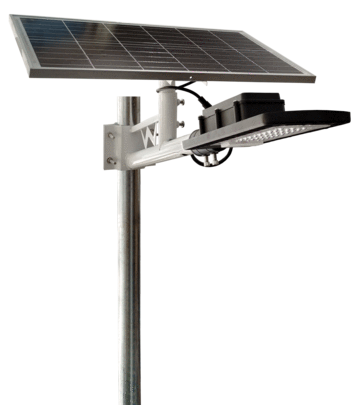
"Manufacturer" is a word the Indian solar street light market uses loosely. Some companies actually design and assemble fixtures; others rebrand imports; some just hold inventory under their own name. For buyers — particularly commercial buyers ordering at scale — knowing how to evaluate a manufacturer matters more than the brand on the box. Here's the 2026 view.
The different kinds of "manufacturer" in the Indian market
Real design + assembly manufacturers
Companies that design their own fixtures, source components from established suppliers (panels, LiFePO4 cells, branded LED chips), and assemble in their own facilities. These are the actual manufacturers worth dealing with for commercial projects.
Assembly-only manufacturers
Companies that import sub-assemblies and complete final assembly in India. Less control over component quality but still meaningful local presence for service and warranty.
Rebadgers / resellers
Companies that import finished fixtures and slap their name on them. Service depends entirely on the original manufacturer. Quality varies wildly. Common at the budget end of the market.
Pure traders
No manufacturing operation at all; just inventory and sales. Service essentially nonexistent.
How to tell which kind a "manufacturer" is
Signals of a real manufacturer:
- Published address with manufacturing facility location
- BIS (Bureau of Indian Standards) registration / certifications
- Datasheets with component-level specifications (LED chip brand, battery chemistry, panel manufacturer)
- Test certificates available on request
- Independent warranty terms per component
- Reference installations they can show
- Service network across multiple cities
- Engineering documentation for foundation, mounting, and pole specs
Red flags for rebadgers / traders:
- "Manufacturing" address that's actually just an office
- No BIS certification
- Vague specifications ("high-quality LED", "lithium battery" without chemistry)
- No test certificates available
- Warranty terms that suspiciously match imported product warranty terms
- "Project references" that turn out to be photo libraries
- Marketplace-only presence (Amazon, Indiamart) with no real business address
What to ask any solar street light manufacturer
- Where is the fixture manufactured / assembled? — verifiable address and willingness to discuss
- Where do you source the solar panels? — should name a specific supplier or have in-house
- What LED chip is used? — should name brand (Bridgelux, Lumileds, Osram, Cree)
- What battery chemistry, and from what supplier? — LiFePO4 expected for street lights
- What's the warranty on each major component? — should be separate for panel, battery, LED driver
- Do you have test certificates for IP rating, surge protection, etc.? — quality manufacturers do
- Can you share recent reference installations? — real projects with visit option
- What's your installation and service support? — particularly for commercial orders
A manufacturer comfortable answering all eight is generally worth dealing with. One who hedges or won't engage is generally not.
Standards and certifications to look for
- BIS (Bureau of Indian Standards) — for solar PV products and lighting
- IEC standards — international standards for solar PV (61215, 61730) and LED (62717, 62722)
- IP rating certification — for housing (typically IP65 or IP66)
- BIS certification for LED chips — Bureau of Indian Standards for the LED end product
- ISO 9001 — for manufacturer quality management systems
- ALMM listing (MNRE Approved List of Models and Manufacturers) — List-I for modules, List-II for cells (mandatory from 1 June 2026 for government, PSU, and CPSU projects)
ALMM compliance is a particularly useful filter from 2026 onwards. List-II for solar cells becomes mandatory for government, PSU, and CPSU procurement from 1 June 2026, alongside the long-standing List-I requirement for modules. Even for private buyers, manufacturers using ALMM-listed components have typically established better component traceability than those who can't.
What separates quality manufacturers in India today
Component sourcing transparency
Quality manufacturers publish what's inside their fixtures. Panel manufacturer, battery cell supplier, LED chip brand — all should be available on datasheets or on request.
Real engineering capability
Can size a fixture for your specific application (pole height, area, autonomy requirements). Provide foundation and mounting specs. Engineer for site conditions like coastal salt or desert heat.
Quality control infrastructure
Documented testing at incoming inspection, in-process, and final test. Sample environmental testing. Batch traceability for warranty claims.
Service network
For commercial buyers, post-sale service matters as much as fixture quality. A manufacturer with documented service presence across the regions you operate matters more than one with the cheapest fixture.
Documentation
Datasheets, test reports, installation guides, warranty terms in writing. The trail of paper a quality manufacturer can produce when asked is itself a quality signal.
Pricing as a quality signal
For 40W all-in-one solar street lights in 2026:
- Below ₹4,000 — almost certainly rebadged import with major component compromises. Avoid for anything meant to last.
- ₹4,000-7,000 — budget end of quality range; verify specs carefully
- ₹7,000-12,000 — typical quality range for genuine Indian-assembled fixtures with proper components
- ₹12,000+ — premium / specialised; verify what justifies the premium
The cheapest option isn't always wrong, but it deserves more scrutiny.
Common manufacturer-related buyer mistakes
- Buying from marketplace-only sellers for fixtures meant to last 8+ years
- Choosing on lowest quote alone without verifying component sourcing
- Ignoring warranty terms (many cheap suppliers have warranty terms that don't cover anything meaningful)
- Skipping site visits for commercial orders
- Not verifying service network coverage for the installation region
For commercial buyers specifically
- Tender / spec quality — well-written specs filter out non-serious bidders
- Quality manufacturer sample evaluation — test sample fixtures before bulk orders
- SLA / service commitments — written, with penalty clauses
- Spare parts availability — multi-year commitment for replacement components
- Documented installation procedures — manufacturer should be able to support installer teams
About Shinesun
Shinesun is a Bangalore-headquartered solar lighting company assembling solar street lights, garden lights, gate lights, flood lights, and emergency lights for the Indian market — under both the legacy Tapetum brand and the Shinesun brand. Components are sourced from established suppliers (LiFePO4 cells, branded LED chips, monocrystalline panels). For specific manufacturing or sourcing questions, contact the team.