
5 Reasons Why LEDs Are the Best Choice for Solar Lighting (2026)
Shinesun's editorial team writes about solar lighting based on our manufacturing, installation, and field-service experience across India.
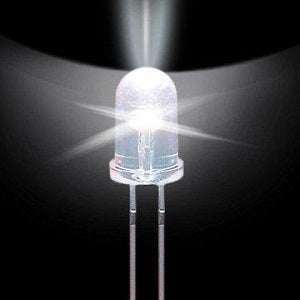
LEDs and solar work so well together that the question "why LED?" feels almost rhetorical in 2026. But the technical reasons LEDs became — and stayed — the default light source for solar fixtures are worth understanding when comparing fixtures or making the case for solar in a new installation. Here are the five reasons that actually matter.
Reason 1: Efficacy (lumens per watt)
This is the headline reason. Modern LED chips deliver 130-170 lumens per watt — far more light per watt of electricity than any other practical lighting technology:
- LED (2026) — 130-170 lm/W
- CFL — 50-70 lm/W
- Sodium vapour (old street lights) — 80-100 lm/W (with poor colour rendering)
- Halogen — 15-25 lm/W
- Incandescent — 10-15 lm/W
For solar lighting, where every watt of light costs you a watt of battery capacity overnight, this efficiency advantage is transformative. A solar light using LEDs delivers usable brightness from a panel and battery that would barely run a CFL of the same lumen output.
Reason 2: Long lifespan
LEDs don't burn out like filaments — they slowly fade. Quality LED packages are rated for L70 at 50,000+ hours, meaning still 70% of original output after 50,000 hours of operation. That's:
- ~16 years at 8 hours/night
- ~5.7 years at 24 hours/day (commercial continuous)
- Matched lifetime to LiFePO4 batteries (8-10 years to first replacement)
This matters for solar lighting because pole-top access for service is expensive. A fixture that runs for a decade between major service events is genuinely lower-cost than alternatives requiring annual or bi-annual maintenance.
Reason 3: Low heat and high efficiency at high efficacy
LEDs convert about 50-60% of input electricity to light (with the rest as heat). That's modest by chemistry standards but dramatically better than:
- Incandescent — 5-10% to light, 90%+ to heat
- Halogen — 10-15% to light, 85%+ to heat
For solar fixtures, low heat output means:
- Less battery capacity wasted heating instead of lighting
- LED chips can be packed more densely without thermal damage
- Compact all-in-one fixtures stay within safe operating temperatures
- Driver and battery electronics aren't thermally stressed by adjacent LEDs
Reason 4: DC operation (native to solar)
Solar panels produce DC. Batteries store DC. LEDs run on DC. This natural alignment means:
- No DC-to-AC conversion needed (which loses 5-15% of energy in inverters)
- No starter ballasts or warm-up cycles (CFLs and HIDs need both)
- Instant on/off, no flickering during startup
- Easy dimming and PWM control for motion-sensored fixtures
- Simpler driver electronics, fewer failure modes
Reason 5: Lighting quality (colour rendering and directionality)
Quality LED chips deliver:
- CRI 80+ — colours look natural, faces look healthy under the light
- Tuned colour temperature — choose 3000K for warm residential, 5000K for security clarity
- Directional output — light goes where you point the fixture, less waste upward (light pollution)
- Consistent output — no warm-up, no end-of-life dimness
This compares favourably to older sodium-vapour street lights (yellow, low CRI) and CFL fixtures (warm-up time, omnidirectional waste).
What LEDs are not as good at
Honest list — situations where LEDs are not ideal:
- Very high single-point output — for stadium-scale lighting, large HID fixtures still compete (though LED is catching up)
- Extreme cold outdoor — most LED drivers operate well to -20°C; below that, specialised designs needed
- UV / sterilisation applications — LEDs in UV are improving but still trail mature UV technologies
None of these matter for solar street and garden lighting in Indian conditions.
What changed in LED tech 2017 → 2026
- Efficacy — moved from ~100 lm/W to 130-170 lm/W
- Cost per lumen — fallen significantly; LED has become commodity
- Driver reliability — failure rates have dropped, real lifespans now approach chip lifespans
- Colour quality — high-CRI options widely available
- Form factor flexibility — chip-on-board (COB), surface-mount (SMD), and chip-scale (CSP) all mature
The pace of improvement has slowed in the last 2-3 years as the technology has matured — but the absolute level is now very high.
What to look for in LED specs on solar fixtures
- Rated lumens (not just wattage)
- Lumens per watt (system level, not just chip)
- LED chip manufacturer (Bridgelux, Lumileds, Osram — premium; no-name — budget)
- L70 rating at 50,000 hours
- Colour temperature in Kelvin
- CRI (colour rendering index) — 80+ for residential
- Driver type and rated lifespan
Bottom line
LEDs are the right answer for solar lighting because they're efficient, long-lasting, low-heat, DC-native, and produce high-quality light. The combination is what makes solar lighting genuinely competitive with grid-tied alternatives in 2026 — and is the reason solar lights have moved from niche to mainstream over the past decade.
Shinesun's LED choices
Shinesun fixtures use branded LED chips with rated lumens, efficacy, CRI, and lifespan documented per product. For specific LED specifications on individual fixtures, see product pages or contact the team.